Brad Pitt Quits Acting to Produce a New Word

The world of acting may still be coming to terms with Brad Pitt’s announcement that he will quit acting in three years’ time, but the world of lexicography may soon be welcoming a new innovater.

In making his announcement that he is going to hang up his script at the age of 50, the actor announced that instead, he is going to go behind the camera, as he has enjoyed “the producerial side”.

There seems no obvious reason why “producerial” doesn’t work as a word, even though it clearly doesn’t. Sometimes a word just sounds wrong, and that is enough reason to feel uncomfortable around it. Words ending in ‘r’ which have an ‘-ial’ tacked on the end can work. Managerial is a perfectly fine word. Or if Brad Pitt had wanted to go behind the camera in a different way, he could have had a successful directorial career.

But this is not a universal linguistic rule, it seems, and unlike some situations, where you can add a prefix or a suffix to make up a word that at least sounds OK, with this suffix, you can’t. Teacherial, actorial, hookerial – none of these add a sensible adjectival element to these professions.

It could be as simple as the fact that they are not filling a linguistic need – we don’t really need an adjective from these words, they are not filling a linguistic hole, so they simply sound wrong.

And to prove that such words are not necessary, you only have to check out the Spanish versions of the Brad Pitt story. “He disfrutado mucho el lado producerial,”, the translation declares. Producerial is not translated into a neat Spanish alternative, it seems to be producerial in any language. And so the first thing that Brad Pritt has produced since his announcement is a word that nobody needs.
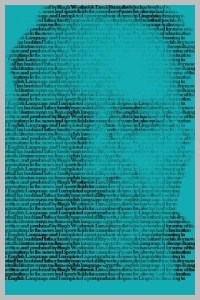
A portrait in words heralds latest dictionary

The arrival of the new edition of the American Heritage Dictionary is no ordinary dictionary launch – it really is a new edition for the interconnected age.

But before we get to that, let’s deal with Wordability’s bread and butter. While there are 10,000 new words in this latest edition, and some great ones at that, the list tells us less about very recent language trends than the new UK volumes that Wordability recently discussed. This is because those books were annual updates. The American tome is a brand new edition which has been 11 years in the making.

Instead, what many of the new additions demonstrate is the English language’s endless creativity when it comes to the formation of new words. And this, of course, is what Wordability loves. Flexitarian, a vegetarian who occasionally lapses and eats meat or fish, is a wonderful example of English being a flexilanguage (note to American Heritage Editors – you might want to consider flexilanguage in your next edition, as in ‘English is a great flexilanguage which exhibits superb wordability’. At this rate, I could have my own dictionary.)

I am also fond of backronym, which is the formation of an acronym from a previously existing word. For example, wiki is a collaborative website, but it is also now an acronym, or more properly backronym, standing for ‘what I know is’. While I remember, I should mention I look forward to lots of snow (something new on Wordability) in the next few months.

The dictionary also has a spectacular array of scientific words, such as Spaghettification, the extreme stretching of an object by tidal forces and therefore nothing to do with the effect that pasta restaurants are having on the high street. Most magnificently of all comes uvulopalatopharyngoplasty, A surgical procedure for treating severe obstructive sleep apnea, a word that probably takes as long to say as the surgery does to perform.

But what is most interesting about this release is the marketing plan behind it. There is a large print edition, of course, but buying this now gives users access to a website and an app, so that they can look up words on the moves. The publishers still expect to sell a lot of hard copies, but they also recognise that nowadays, people simply look words up on whatever electronic device comes to hand.

Hugh Westbrook, Wordability, in Words

Most entertaining of all is the You are Your Words website, launched to coincide with the new edition. This fun site allows you to put in a photo of yourself, together with some words which you feel sum you up (and put on the spot to come up with at least 400 characters is harder than it might appear). The site then gives you a picture of yourself drawn in words. You can even play around with the colours. This is how your Wordability author looks in blue.

We are asked to describe ourselves all the time in all sorts of settings – meeting people at parties, getting to know new colleagues, submitting CVs. We always think of these things as words on a page, not images. While the Your are Your Words image is a bit of fun, it might stop to make us think about the image of us people form when we start to speak.

The Unspeakable Awards: What is the Worst New Tech Word?

Technology is a rich source of new words, as Wordability has mentioned on more than one occasion. But it’s probably fair to say there are good technology words and bad technology words fighting for their place in the lexicon.

To mark their ever widening influence, Computeractive magazine has revealed the winner of its first “Unspeakable” award. The dubious distinction is bestowed upon the “most annoying or horrible” new word to enter dictionaries in the last 12 months, with the results decided by an online YouGov survey of 2,054 people.

Before I tell you the winner, I will say that I don’t think it is one I would have voted for. If pressed for a view, I find all the twee twitter words the most aggravating, governed as they are by the contention that you can put tw- at the front of anything and make it intelligible. I think that’s a load of old twosh.

Twitter words make three entries: Twittersphere, which means means the Twitter world at large and is ironically the only Twitter word I actually like; Tweetup, which is a meeting organised on Twitter and is much more representative of the kind of ghastly effect that the micro-blogging site has had on language; and Twitpic, which is a picture on Twitter and has ‘Twit’ front and centre, which seems about right.

But let’s hail the winner, which picked up 24% of the vote. The first recipient of the “Unspeakable” award is Sexting. Its victory probably owes much to popular news over the last 12 months. After all, there has never been such an era for the sending of explicit imagery via mobile phones in the whole of human history.

Paul Allen, the editor of Computeractive, believes in plain English, and his publication prides itself on its jargon-free advice. He worries that Techlish, a technlogy-laded version of English, is about to swamp our everyday language unless we are careful about it.

Wordability spoke to Mr Allen about the survey. He agreed the growth of technology inevitably meant a sprouting of new words, and added: “A lot have become very useful, they define a shift in human behaviour, such as Google as a verb.”

But he added: “People in marketing have spotted how these new words have become ways of getting coverage so they keep inventing them. Sexting is plain silly, a tabloid dream come true.”

Mr Allen also said that tech words have a way of bestowing a sense of exclusivity on the people who use them. “You may make other people feel a bit silly. It’s not intentional, but they can be exclusive words which are not inviting people in.”

Here’s the top 10. Take a look, and let me know what you think. Why don’t you leave a comment on what you think should also have been in the list:

1. Sexting: The sending of sexually explicit photographs or messages by mobile phone

2. Intexticated: Unable to concentrate while driving because of being distracted by texting.

3. Defriend: To remove someone from one’s list of friends on a social networking site.

4. Twittersphere: The collective noun for all postings/Tweets on Twitter.

5. Tweetup: A meeting or get-together that has been organized via Tweets on Twitter.

6. Hacktivist: Someone who hacks into computer data as a form of activism.

7. Clickjacking: Maliciously manipulating a web-user’s action by concealed hyperlinks.

8.= Twitpic: A picture posted as a Tweet on Twitter.

8.= Scareware: A malicious programme designed to trick users into buying unnecessary software such as fake antivirus protection.

8.= Dot-bomb: An Internet venture (dotcom) that has failed and/or gone bankrupt.

All Together Now: It’s Singalongability

An academic has published a study about what makes us join in with certain pieces of music – what gives them, to use her brand-new term, singalongability.

Now Wordability loves the fact that English allows us to put -ability at the end of another word and create something intelligible. Frankly without this, Wordability wouldn’t be, well, it wouldn’t be Wordability. It is the English language’s great wordability which allows it.

So Wordability salutes Dr Alisun Pawley of York University, who worked with Dr Daniel Musselsiefen of Goldsmith’s University, to decide what makes a song singalongable.

They identified four key factors: longer phrases, a greater number of pitches in the chorus hook, male vocalists and higher male voices with a noticeable vocal effort. Their research put Queen’s ‘We Are The Champions’ top of the singalongability list.

But what makes singalongability such a great word is that it has an almost onomatopoeic quality. Its multi-syllable nature, and jaunty rhythm when you say it, make it the kind of word you could actually join in with.

Don’t believe me? Well then, I give you the type of music which is surely the most singalongable in the world – nursery rhymes. So easy to sing along with, even a two-year-old can do it.

Now, try replacing the words of Pop Goes the Weasel, Twinkle Twinkle Little Star and Humpty Dumpty with just one word – singalongability.

Go on, try it. You’ll soon get what I mean.

Text Neck and a Bowl of Guacamole

Wordability always enjoys seeing a new term sweeping across the internet. However, this is tempered when that term is, frankly, a bit silly.

Yes, technological advances have inevitably produced new ways of behaving and the possibility of new medical conditions. Yes, it is probably true that hunching over a mobile phone while texting can cause problems for your neck.

But Text Neck? This is the new name for this condition and it has received mass coverage in the last couple of days. American doctor Dean Fishman, who dreamed up the term and the definition, has even renamed his entire practice and website after it.

But Wordability’s problem is that the name trivialises a condition which is clearly worth thinking about, because it sounds glib. Frankly, it feels like something dreamed up to get headlines and to give people something to joke about, and means they will remember the name but not really think seriously about what it means.

And my personal problem with it? Every time I hear it, I think of Tex Mex. And then fajitas. And then burritos. And then I wonder whether you can get any chiropractic problems from leaning over a bowl of tortilla chips. Guacamole Neck anyone?

iLanguage: How Steve Jobs Changed English

It is rare for somebody to have a profound influence on the way we live our everyday lives, but Steve Jobs was just such a person.

My interest in technology is not of the flashy buttons and whizzy gadgets variety. I am far more taken by the fundamental ways that technological innovation has utterly transformed our lives, and in this respect, the products that Steve Jobs and Apple brought to market achieved exactly this.

But Wordability’s interest is inevitably in the usage of new words, and to that end, I have been pondering how much of a linguistic legacy the Apple co-founder will leave behind.

I think there is one, but it is not as obvious as might first appear. For example, it is a stretch to say that without him, a mac would still only be a rainproof coat and the only thing we would picture when talking about a mouse would be a fairly cute rodent.

As for personal music players, I don’t think that iPod has quite become generic in the way that Google has, as I discussed in a previous post. Users of differently branded MP3 players would be quite aghast to have them called iPods, even though it is used by many as the standard term.

It is also interesting that the phrase iPod generation, coined in 2005 to describe the difficulties faced by those under 35, is more of a play on iPod rather than a description of their musical listening habits. iPod here is an acronym for Insecure, Pressured, Over-Taxed and Debt-Ridden.

But the iPod does give us a clue as to where the Jobs influence is truly felt in newly coined words. In fact, if you just put a lower case ‘i’ in front of any word, it transforms it into an Apple inspired version of itself. If I said I was thinking of producing an iRadiator, an iRockingHorse and an iSunHat, you would instantly picture these items playing music, affording their users instant communication and giving easy access to games of Angry Birds. So he has certainly left us the ‘i’ prefix, and #iSad was a top trending topic on Twitter in tribute, to prove the point.

However, I think that Steve Jobs’ biggest contribution to language is outside the normal remit of Wordability and is more in the realm of what linguists call pragmatics, the study of all the other factors surrounding language which help us to understand it.

Possession of a smart phone means that you can now embellish your everyday conversation with pictures, videos and access to other information instantly, as you talk to people. Touching and swiping have become gestures in conversation every bit as normal as nodding and shaking your head. And access to all this material makes conversation multimedia – instead of trying to describe that picture to the person you are talking to, you just show it to them instead.

So it could be argued that the ubiquity of Apple devices has made language different by adding all manner of elements to it so it is not just verbal, and the way that we communicate with people in person is now different because of the sophisticated devices in our pocket. And that would mean that one of Steve Jobs’ legacies is a subtle but permanent shift in the way we talk.

Welcome back to Glee

I am not a fan of Glee, which is returning to UK TV screens, but I am amused by the word doing the rounds to describe its fans. Apparently, they are known as Gleeks.

I’m sure there are other TV shows which have spawned unusual words to describe its fans. But instead of making me rush to my TV set, the word Gleek may be setting me off on an alternative quest.

It turns out that Gleek was a popular card game around 400 years ago, where cards were exchanged to try and gain sets. A Gleek was three of a kind, while a mournival was four of a kind. There was a range of other delightful terminology.

It’s a lovely example of a word changing its meaning over a very long period.

A Feast of Lexicography

It’s been a fertile few weeks for lovers of new words. The Oxford English Dictionary has just issued its quarterly update, with details of its newest entries. This follows hot on the heels of new editions of two concise dictionaries, both of which achieved media coverage for their particular choice of trendy new word.

The OED has highlighed a number of the new words in its update. These include ambo, a member of an ambulance crew; kewl, an exagerrated version of cool; and Britcom, a British situation comedy.

What is interesting is how long it has taken for some words to actually be included in the OED. Wordability will always be interested in new word updates from dictionary publishers. But this blog will primarily be looking to pick up on new words and usages before they are finally legitimised by lexicographers, especially given how long this appears to take.

For example, the OED is now including stitch-up, which is of course the framing of an individual. It is, I’m sure, a word that most of us are familiar with. The OED even cites the first usage as 1980, making its 30-year wait hugely surprising. Zaatar, a middle eastern spice mix, has waited even longer and was first cited in 1917. A Zaatar stitch-up perhaps?

Also interesting are some of the words in the full list of newbies which are not highlighted by the editors. These include afterfeather, framboidal, house conventicle, picocell and take-no-shit. This week’s homework from Wordability is to find out the meaning of the above words and then put them into a coherent sentence. I expect many of you will find a suitable usage for the last word on this list in response.

Other dictionaries have recently put new words on bookshelves. Back in August, The Concise Oxford Dictionary celebrated its 100th anniversary with offerings such as mankini, jeggings, sexting and cyberbullying.

A week or so later, the new edition of Chambers Dictionary appeared, with words such as crowdsourcing, paywall and staycation, though interestingly, sexting did not pass the Chambers test, pointing to an interesting difference in criteria between rival dictionary editors.

But almost more eye-opening was the outpouring of nostalgia for words being removed from dictionaries. Oxford’s decision to discard cassette tape led to much online breast-beating as people pointed out that they were still using cassette tapes, and that despite CDs, MP3s and others, cassettes were still a valid way to listen to music.

But even more bizarre was the reaction to an announcement from Collins. Collins has not even released its new dictionary but did take the opportunity of the flurry of dictionary news to announce that some words would not be making the cut for its next edition later this year.

There seemed to be particular sadness over the loss of charabanc, a mode of horse-drawn transport which is clearly outdated but seemed to affect people disproportionately by its departure.

I don’t think this reaction was anything to do with a group of disenfranchised charabanc drivers fighting back. It seemed instead to point to a wistfulness for a golden age and an acknowledgement that former, more innocent times have long since passed.

Having said that, any declaration that a word is going out of date is clearly a challenge for hacks everywhere. Within days, the Sun, writing about Arsenal, said: “The night they lived to fight another day when, at one time, the whole out-of-control charabanc seemed to be heading for the rocks below.”

Charabanc may yet be saddling up for a reprieve.

What is Wordability?

There is no such word as Wordability. But then again, there is. Because I’ve just used it. So let’s start again.

Wordability is the ability of a language to create and assimilate new words. English is particularly adept in this regard. English has great wordability. And that is the subject of this blog.

Of course, I made that definition up. But when I was toying with blog titles, Wordability emerged as a currently non-existent word which nonetheless sounded like it should exist. Moreover, it felt like it aptly summarised what I was trying to get across. And that is that we should celebrate the English language’s remarkable ability to create new words. It skilfully adds prefixes and suffixes to existing words, it borrows with reckless abandon from other languages, and it brutally ascribes new shades of meaning to old words. And myriad other things as well.

In some ways, I am an unlikely champion of the ever-changing nature of language. I am linguistically pedantic by nature, and can rant with the best of them over an error or usage which I find aurally offensive. But as a post-graduate linguist, I learned to acknowledge that language is defined by its users, not by books, and that it changes all the time according to what speakers are doing. I am both a pedant and a non-pedant by turns. If only there were a word for someone who can straddle both states simultaneously. Bi-pedant? Schizopedant? Pedant-on-the-Fence? All suggestions welcome.

If you search for wordability, you won’t find it in any official dictionary, so it can’t currently be added to the more than one million words in English that have been identified by the Global Language Monitor. It does appear in the online Urban Dictionary, which defines it as “being able to create a new word and having the skill to place it in casual conversation, without anyone else noticing that it’s not really a word.”

When I found that definition, I almost ruled out Wordability as my title. But The Urban Dictionary is not an official arbiter. It is an admittedly wonderful collection of words and usages contributed by online users around the world. But it has no actual jurisdiction if I wanted to choose a different meaning. So that’s what I did.

I did briefly toy with alternatives. Wordalicious? Too much like a description of cake. Wordaging? Too much like a definition of some depraved sexual activity. New Words in the English Language? Too much like something that would simply make you go to sleep. So Wordability it was.

What did surprise me was finding a punchy web address to support it. Wordability.com was gone, snapped up by a Canadian transciption service. Wordability.co.uk was registered to a yet to be revealed online presence. Wordability.ltd.uk, which hadn’t occurred to me anyway, was taken by an online game called Wordability, which appears to be a variant on Scrabble, its main innovation seeming to be that it cares little which direction your word runs in, so long as it runs.

But wordability.net was available, and is now starting its quest for some of the odder and more entertaining new words and usages entering the English language. Let the journey begin.