Amazeballs to Zhoosh: Collins’ First Fruits

The dictionary revolution has truly started. Collins recently announced plans to open up the dictionary-making process to the public, and the What’s Your Word feature is now a permanent slot on the company’s website, allowing anybody to submit a word for lexicographical consideration.

Well Collins has now revealed the first words which it will include in its online dictionary. It’s a pleasingly eclectic bunch, reflecting a wide range of subjects and showcasing many words which have long since deserved their place in official reference books.

Unsurprisingly, words from technology provide fertile ground for the list. BBM and Bing carry the flag for Blackberry and Microsoft, while Twitter is well represented with three entries, Tweetup, Twitterer and Twittersphere. Bashtag, a critical hashtag, is also included. It’s also good to see more generic terms like Liveblog, Captcha and Cyberstalking making the cut.

One trend in the list is new definitions for existing words, such as Facebook as a verb, as in To Facebook someone, a usage which Wordability discussed last year. My niece will also be pleased to see that Sick, meaning good, has now been included, as it means I will no longer give her a hard stare every time I hear her say it.

Much slang and informality has been recognised for the permanent place it now has in the language. As well as the titular Amazeballs (enthusiastic approval) and Zhoosh (to make more exciting), words such as Bridezilla (an intolerable planner of her own wedding), Frenemy (a friend who behaves like an enemy) and Mummy Porn (erotic fiction for women) are bound to get attention.

There are some unusual additions. Indian cookery is a surprisingly tasty element to the list of words, with Dosa and Sambar being included, as well as Daal as an alternative spelling of Dal. Some regional dialect words are also in, such as Frape from the South West, meaning tightly bound, or Marra, a mate in Northern England. There were also some I had not heard before which simply made me laugh, such as Hangry, meaning irritable because you haven’t eaten, a state I am perpetually in, or Photobomb, which means to go into the background of somebody’s photo without realising it.

It really struck me though how useful this whole enterprise has been. I was frankly surprised to see some of the words and usages included for the first time, such as Faff as a noun, meaning something is a bit awkward to do, or Oojamaflip, a term for something when you can’t quite remember what it is. It’s a reminder that it does take a long time for terms to make it to the dictionary.

Nevertheless, Collins’ efforts to let the world at large add to the dictionary-making process is to be applauded. This first tranche of words helps its online dictionary get bang up to date. With the initiative remaining in place, it will be in pole position to add words as soon as they gain some currency and will surely help the company reflect English as it is spoken today.
Stoptober? No, Just Stop!

The UK Government’s upcoming campaign to try and help people give up smoking is a noble effort. Less noble is the linguistic approach they have taken to try and sell their campaign. They want you to stop smoking for 28 days in October. So welcome to Stoptober.

I fear we could be on a slippery slope here. Just because Movember is now well established in the lexicon and the calendar as the month in which men sprout facial hair and collect money for cancer charities, it doesn’t mean that we can all now jump on the bandwagon, grab a month and attempt to rename it as a way of promoting our own campaign. Stoptober feels a little like this to me.

And where will it end? Let’s run a series of self-help sessions to lift people’s morale – welcome to Peptember. What if people need it after a period where they have found life really dull – good old Boregust. And how about Christmas conviviality, and a month leading up to it which is full of drinking. Well, I’ll leave you to your own December conclusions.

Good luck to the Department of Health, and to all those people who want to give up smoking and who manage to achieve it because of this campaign. But world at large, please don’t continue to adopt months, change their names, and assume you will get instant success. Or it’s Banuary for all of you.

New Words Which are not Ridic

The tail end of summer is always a fertile time for lovers of new words. ‘Tis the season of dictionary updates, and as each publisher puts out their own list of additions, so column inches and discussions ensue about their relative merits as English vocabulary enjoys a brief moment in the media spotlight.

Now, as Wordability prepares to enter its second year (a year already, amazing!), I have decided to buck my usual trend and not bemoan the length of time it takes for established words to gain acceptance. And it would be easy. After all, OED online has finally recognised Tweeps, a person’s Twitter followers, a word which while recent has certainly gained enough credibility over the last couple of years to have deserved official recognition before now. Meanwhile in the States, Merriam-Webster has included sexting and gastropub for the first time, words that have been around for some time.

No, what has bothered me about this particular round of coverage is the reaction of some commentators and in discussion pages about some of the words which have been included. The OED’s acceptance of Ridic and Mwahahaha, Chambers adding Glamping and Defriend to a section of its thesaurus – words such as these have seen the language pedants roll up their sleeves and go to work.

The curmudgeons argue that such words defile the English language, that its purity and beauty is somehow soiled by these trendy new terms as they gain usage and then acceptance. And of course, everybody who gives this opinion completely misses the point.

Because English is not a static museum piece, it is not a thing put into a book to be learnt as it is. No, it is a beautifully evolving stream, which is allowed to constantly change and grow to truly reflect how its speakers use it. Its incredible flexibility is one of the principal reasons behind its success as a global tongue, and not acknowledging this is simply not getting it. It is vital for dictionary makers to add new words as they become popular and embedded, and not listen to the luddites who would still speak like Shakespeare.

And people may want to view the situation in China, where natural evolution of the language is not allowed. Commonly used English words and phrases have now been included in the latest edition of the Modern Chinese Dictionary, and scholars have argued that Chinese law itself has been broken by the move.

Pedants in the English-speaking world may think they want a language which doesn’t change, and may believe they want dictionary makers to ignore the language that is actually spoken. But it is vital that lexicographers continue to reflect the language as it truly is, and that we all celebrate the fact that we live somewhere where they are allowed to do that.

Eastwooding Makes My Linguistic Day

It would have been easy to assume that when Clint Eastwood was lined up to speak at the Republican National Convention, Mitt Romney might have been sitting back and looking forward to to the positive publicity glow which the grizzled actor’s words would bathe him in.

Alas, no. This is Mitt Romney we are talking about, Wordability’s unlikely folk hero, and a man dogged by linguistic disaster wherever he treads.

And so it is with Clint. His ringing endorsement is being remembered not for the positive words he spoke about Mr Romney, but about the bizarre scene he acted out when he accosted an invisible Barack Obama, who was represented by an empty chair. And so, Eastwooding was born.

As Tebowing before it, so images are swamping the internet of people pointing at, basically, empty chairs. They are Eastwooding. The word is sweeping across the globe, and is rapidly gaining in usage.

Will it last beyond the week? Unlikely, and if it does, only until election time in a couple of months. Is it the word for which Clint would want to be remembered? Definitely not. And as for Mr Romney? He will be hoping that come debate time, Mr Obama remembers to turn up. He wouldn’t want to be Eastwooding live on national television.

Is Romney Hood A Case of Obamaloney?

I think Mitt Romney has been reading Wordability. The Republican candidate for the US Presidency has featured on these cyber pages a disproportionate amount of times in the last few weeks, so has clearly decided that if I am going to write about him, he had better actively coin a new word rather than have one made for him.

And so is born Obamaloney. Now non-Wordability fans will conclude that Mr Romney is looking for a word with which to attack the president, and feels that this neologism sums up the idea that Mr Obama’s attacks on him are full of nonsense, or baloney, to borrow the vernacular.

Others might contend that he came up with the word to counter Romney Hood, the Obama language attack which seeks to characterise his tax plans as stealing from the poor to benefit the rich.

But of course, they would be wrong. Mr Romney was keen for some positive coverage on Wordablity, and so he got into the world of coining new words in order to curry favour with me.

The problem? The word has to be good. It has to trip off the tongue. It has to be obvious what it means. And does Obamaloney succeed in any of this? Er, no.

Another fine Romneyshambles then.

Collins Makes The Dictionary Democratic

A new initative by Collins dictionaries could change the way that dictionaries are compiled forever. The company is asking members of the public to submit words to be considered for future editions.

Submission is clearly not a guarantee of success – all suggested words are put through the same rigorous assessment that a word selected by an editor would then undergo. But the amount of coverage this story has received, together with the number of words being suggested, shows just how interested people are in the evolution of English and the new words that are constantly emerging.

It is also encouraging to see some of the words being suggested, with Wordability favourites such as omnishambles and Tebowing battling with cyberstalking, amazeballs and mantyhose for attention. At this stage, nobody knows how many of these will finally be accepted. But if they are, it will prove that the acceptance process is becoming as quick as it needs to be in the age of the internet.

The level of interest has been something of a surprise to Alex Brown, the head of digital at Harper Collins. Wordability spoke to him shortly after the launch of the What’s Your Word initiative, and during the conversation, the 2,000th word was submitted. It was prairiedogged, the feeling of helplessness that overtakes you when co-workers in neighbouring cubicles constantly pop their heads up to ask you trivial, silly or frivolous questions. It was subsequently rejected by editors.

Its rejection confirms that this is still serious dictionary-making, with the submission process the only part which has been opened up. Alex told me: “This isn’t Urban Dictionary. We still have a team of editors and researchers who moderate to see if the words meet the minimum level of criteria and we are not changing that as we see it as a strength. The site opens a window on that whole process.”

He said that while they expected to receive words from technology and social media, there have been some surprises. “We have been surprised by the number of regional dialect words, and some of them are difficult to find evidence of because they are spoken not written. The global nature has also been a surprise, with quite a lot of words from India, for example, which are concepts around religion or food.”

Alex said that What’s Your Word will now be a permanent feature of the Collins process. At the moment, words which are approved still have to wait a few weeks to receive their dictionary stripes, but in time, he would like to see that process made live.

One of the advantages of this process is that words can now reach dictionaries quicker. I have often bemoaned how slow the Oxford English Dictionary is to accept new words, and while Collins will still have the final say, What’s Your Word will perform the vital process of recognising that language change itself has changed, and that the dictionary process needs to evolve along with that.

Games Lanes Power The Olympic Family

It was always obvious that we would use various new words and phrases as a result of the Olympics. But in the early few days, organisers must have been hoping that the words would be of a sporting nature.

Sadly not. Instead, we were introduced to the phrase Games Lanes, as parts of London became paralysed by the closing down of main arteries across the UK’s capital. And who gets to ride in the Games Lanes? Members of the Olympic Family.

The phrase Olympic Family, a kind of catch-all which seems to encompass anybody with any tangential connection to the Games, has become negative because of its association with empty seats in stadiums, with large areas dedicated to this mystical family sitting unused. It is not currently a family that people are keen to put on their Christmas list.

Now it’s all down to the competitors. Hopefully their feats will prove so stirring that when we look back over the words which defined the Games, external controversies will not be on the podium.

Another Fine Shambles For Romney

Mitt Romney is rapidly emerging as Wordability’s most unlikely hero. Who knew! He has already charmed us with his caring attitude towards his dog, and delighted us by not knowing the name of the country he is trying to lead.

Now, as he winds his gaffe-strewn way across the globe, to ensure that everyone knows exactly who he is before November’s election, he might be wishing he had stayed at home. His questioning of London’s readiness and enthusiasm for the Olympics, followed by increasingly desperate attempts to limit the damage, rapidly saw his trip labelled a Romneyshambles.

It’s wonderful to see a clever neologism like this making some headway, building as it does on Omnishambles’ re-emergence into public consciousness earlier this year. In a single word, the would-be president’s efforts are distilled, summed up and spat out, and it satisfies every opponent’s desire for a linguistic stick with which they can beat him.

Mr Romney must have thought his surname made him pun-proof. Who knew!

Derecho Set To Swamp The Jet Stream

It is odd that with the weather so prominently diabolical across the globe, no new words have emerged to sum up the meteorological misery.

Instead, we have all become experts on weather phenomena, and previously obscure terms have suddenly leapt forward to become commonplace and act like new words to many.

The most notable is Derecho,  which is a land directional hurricane with extreme winds blowing in one direction. Such a storm caused havoc in the eastern United States recently, causing the word to emerge from its hitherto weather-geek state and become widely used by a newly knowing public.

Such was the word’s impact, the Global Languge Monitor picked it as one of its top words for the first half of 2012. I’m sure all US residents will be hoping it is not similarly prominent in the remainder of the year.

On the other side of the pond, you can be sure that Jet Stream will feature in many lists as one of the defining words of 2012 for the UK. Suddenly, we’re all experts on where it is meant to be at this time of the year, and we are all praying that the damn thing will move so we can get some sun. I never thought that ‘The  Jet Stream Is Moving’ would become a headline we would hear and instantly understand.

And if it’s not the jet stream, residents in Newcastle will tell you they are experts in super cell storms, having been doused by one in the last few weeks.

Will some new wild weather terms emerge? Probably. But in the interim, we can all enjoy sounding a bit cleverer as we bandy about some words which have suddenly achieved a new lease of life in the English Language.

WTF! BFD is TNA

It’s not quite true to say that BFD is a TNA, but many have been saying it’s the new LOL.

BFD as an abbreviation meaning ‘Big F***cking Deal’ (language cleaned up because I know my mother reads this blog) is not new. But it has recently emerged into political discussion in America, thence onto Twitter and is now being touted by linguists as the next big things in abbreviations.

Of course, I’m not actually sure there is a next big thing in abbreviations. Linguistics isn’t showbiz, sadly. It would be nice to imagine that the abbreviation police are trawling the internet and that as soon as they come across this blog and TNA (Trendy New Abbreviation), the metaphorical trumpets will come out and it will start to adorn all short-form communication within minutes.

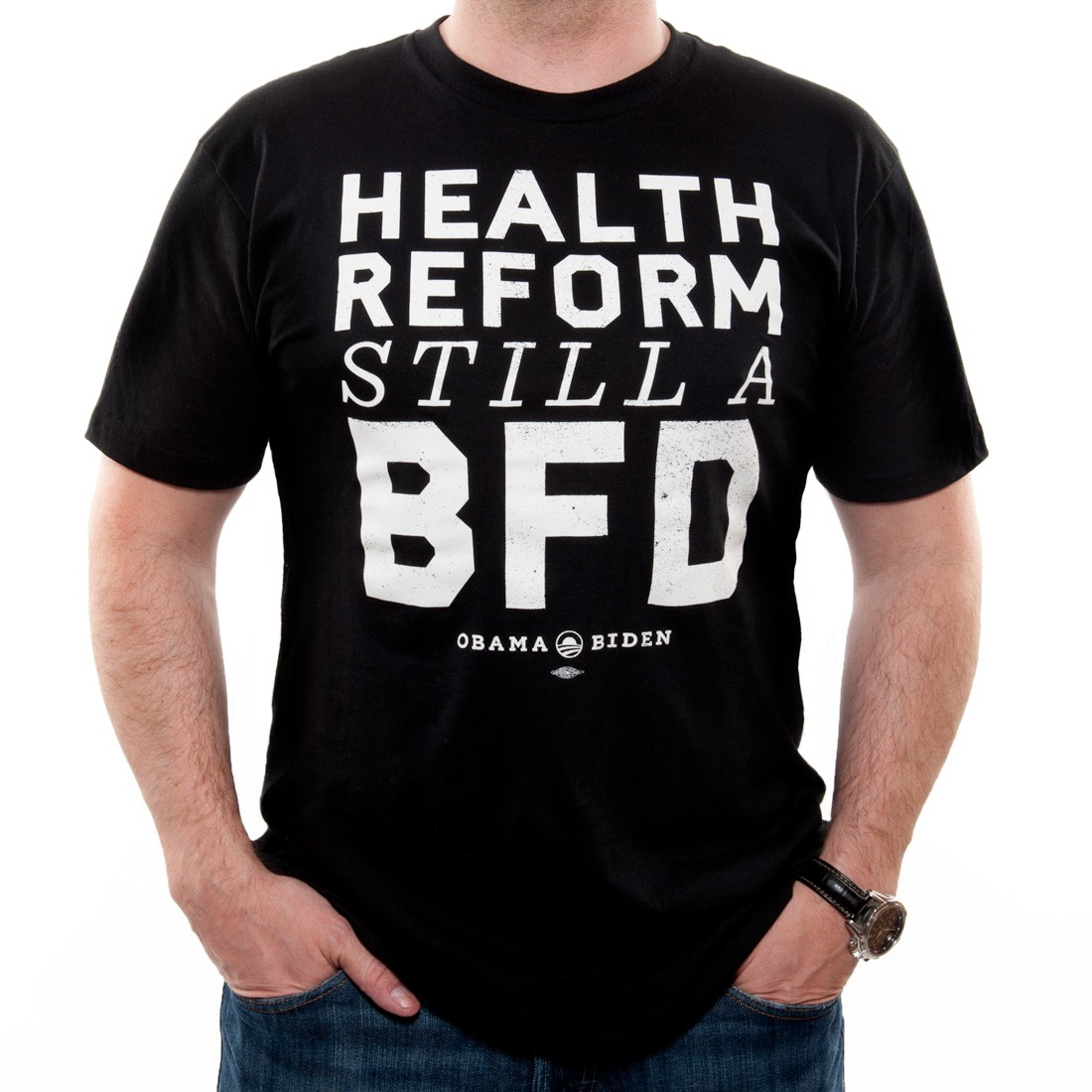
BFD T-shirtBut I digress, badly. Two years ago, US Vice President Joe Biden said that Barack Obama’s healthcare bill was not just a big deal, it was a “big f***ing deal” (hopefully my mother is still reading, you see). And with the bill recently being upheld by the Supreme Court, the Obama administration has taken to selling suitably emblazoned BFD T-shirts, (for a BFP, incidentally). The Romney campaign has criticised the behaviour as unpresidential, and the Twittersphere has gone crazy with BFD-related postings.

So the debate has been about whether BFD will become as well established as its elder statesmen, with LOL cited as as the one to beat, which begs the question of what David Cameron might believe BFD stands for. The article hyperlinked above says that the jury is still out, and quotes linguist Allan Metcalf and his scale to decide whether the word will last. The scale awards marks of 0, 1 or 2 for each of five categories:  frequency of use, unobtrusiveness, diversity of users, ability to generate related neologisms, and endurance of the concept it describes. Mr Metcalf gives BFD a paltry three points in total, suggesting it is au revoir to BFD.

I’m not so sure. I think the process of new word acceptance is beginning to change, thanks entirely to the internet. The article mentioned above says this process has not changed for a number of years, and that it takes time for a new word to bed in and get established. But with the power of global communication, and the velocity with which things become cemented on Twitter and other social media, new words and ideas now become part of the fabric of society substantially quicker. The abbreviations we now take for granted are all children of the texting age, a period that is no time at all in the entire history of human language.

It would not surprise me at all if the current popularity of BFD is a long-running thing, and it becomes just as established as all the others. And then we’ll just be saying that the debate was a BFD over nothing.