Banish The Banished Words List

I fear that by the end of this blog, people are going to be condemning me as a curmudgeon with no sense of humour. Ah well.

Lake Superior State University has been receiving global coverage for its annual list of words which should be banished, a list which it has been issuing for close on four decades. It contains a dozen words which it says should immediately be sent packing from the English language.

Now on Wordability, I have certainly commented that I dislike certain new words and phrases, and hoped that they don’t catch on. But once they do cement their place in the language, well that’s just linguistic life. And just because you don’t like them, there is nothing you can do about it. Thankfully, English is not a language where membership is decided by fusty academics behind closed doors, and I find myself slightly aggravated by the idea of banishing words, even though it is clearly tongue in cheek. I assume, anyway.

Fiscal Cliff tops the new list. But it is typical of all of the words on the list. It came into being because it needed to, because it fulfilled a linguistic gap that was demanding to be filled, so to banish it is to banish the concept itself or to ignore the need to find a way of talking about it. Spoiler Alert is an equally useful linguistic shorthand, YOLO has become a vital tool of social communication, and Trending is the perfect descriptor of what is happening on social networks, despite my wife telling me it is not a word whenever I use it.

Frankly, all these words need to exist. Do some of them offend my ears? Yes. Should we therefore get rid of them, just because they irritate us? Of course not. And I do find it slightly rich of Lake Superior University to run its results on the same page as its slogan, ‘Redefining The Classroom’, which is a phrase which sounds much worthier of banishment than any of those I have previously mentioned.

One final note – I would imagine that the American Dialect Society believes these words should not be banished either, as many of them made it to the shortlist for its word of 2012. But in the end Fiscal Cliff and Yolo, to name but two, lost out to hashtag.

I’m slightly surprised by the result – for me, hashtag has been well established for some time and was already entrenched before last year. But that’s just my view. What is clear is that it is a modern word which is necessary. So expect to see it on a list of words which should be banished any moment now.

A Sombre Way To End The Year

A sombre word of the year to end 2012. Lexicographers at the Australian National Dictionary Centre have recognised the growing trend in Afghanistan for soldiers to die at the hands of their supposed Afghan colleagues. ‘Green-on–blue’ deaths have shot up in the last 12 months, affecting Australians in particular, and so ‘green-on-blue’ is the Australian word of the year.

The move typifies the downbeat nature of many of this year’s choices, from Omnishambles to Bluster, reflecting a sense that the last 12 months have been a difficult affair. And while that has been true, it has not been wholly the case. The Olympics-engendered feelgood summer in England was anything but depressing, and even though all of us who lived it knew it was an oasis away from the daily storm, it was no less enjoyable for all of that and no less a part of the year that has been.

Only the Van Dale dictionary in the Netherlands seems have come up with something more positive, with its Dutch word of the year unveiled as Project X-feest, a party organised via social media which ends up in a riot. Positive with a hint of negative, really.

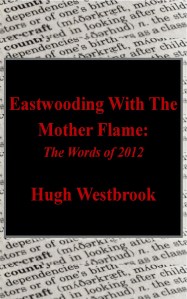
The complexity of the year, together with the sense that one negative word doesn’t do it justice, was the reason for Wordability’s decision to go with five words of the year, each summing up a particular aspect of 2012. And if you want to rediscover those words in print as well as on your kindle, you now can,  as Eastwooding with the Mother Flame: The Words of 2012 is now available as a paperback in addition to the electronic version.

So as the year draws to a close, what can we expect in 2013. Well, assuming the Mayans were wrong, we can reasonably expect more depression, more hardship and more new words which reflect the dispirited mood which pervades the globe.

But I hope we see more than that, and we see linguistic creativity continue to flourish in a positive way, giving us new words which not only make us smile but also sum up things which have occurred which have made people’s lives a little richer.

Meggings – The Fashion Dreggings

They’re the latest thing to hit the high street. They’re leggings. For men. So they’re Meggings! Of course they are.

This piece of linguistic tomfoolery was probably the inevitable outcome once jeggings had taken a foothold in the market. The jeans/leggings combo may be a fashion success, but I fear they have opened the floodgates to what may become a new kind of lexical hybrid.

It is far from certain that anyone will ever wear Meggings, but if they do, we can only fear what might come next. Dress your dog in Deggings, combine them with a skirt and call them Skeggings, decorate them with breakfast and name them Eggings, stick them on a leotard and call them,er, Leggings. But you get my point.

Anyway, this is all a bit unnecessary. Surely they should just be displayed as leggings, albeit in menswear. After all, there are male and female equivalents of certain types of clothing and nobody has felt the need to differentiate them neologistically in the past. When women started wearing trousers, nobody thought to call them Wousers. Different kind of thing altogether, really.

Don’t Fall Over The Fiscal Cliff

There is a late entrant in the word of the year stakes. More likely, there is a front-runner for the 2013 crown. It is becoming hard to avoid the Fiscal Cliff.

The Fiscal Cliff is a term that has been coined to describe a looming financial precipice in the United States. It is a confluence of coming togethers of the end of certain tax laws and a decrease in Government spending, and commentators are worried about the effect on the US economy if legislation is not passed which could prevent all of this from happening.

Ben Bernanke, the chairman of the US Federal Reserve, is being credited with coining the phrase, having used it in evidence to the House Financial Services Commission at the end of February. He actually isn’t the first, as it appeared in analysis of George Bush’s tax cuts two years after the end of his presidency. But there is no doubt that Mr Bernanke’s usage put the term on the linguistic map.

That said, it is only in the last few weeks that it has found its way into general conversation and started appearing in earnest across the media. Given that the fiscal cliff is just around the corner, that is not really a surprise.

Maybe what is a surprise is that the term has simply been accepted and is being used by everybody, probably without really understanding it. I feel the same way about it as I did about haircut entering the vernacular last year – a term that was popular among economic commentators crossed over into the mainstream and using it seemed to confer some kind of special, inside knowledge on the users, it is almost said with a nod and a wink to those also on the inside.

For the rest of us, we hear it and then have to go and look it up and try and understand it. Shorthand phrases are good for encapsulating stories and letting everybody know what the subject is, but when they are used regularly in conversation as if everybody knows what they mean, then that can become annoying.

Thank goodness the Simpsons have been around to help explain it.

Do You Want Fries With Your Dictionary?

I wonder if Australia’s Macquarie dictionary is regretting the fact that it allows people to submit words for inclusion.

The Australian arm of McDonald’s is lobbying for the word Macca’s to be included in the next update. Macca’s is the abbreviation by which the chain is known by many across Australia, and the company feels that this level of lexical awareness makes it worthy of official acclamation.

A recent survey found that 55% of Australians refer to McDonald’s by the abbreviation, the only country where it is used.

McDonald’s Australia’s chief marketing officer Mark Lollback said the abbreviation “reflects our place in the Australian community. We’re the second most recognised abbreviation after footy.”

May I take this opportunity to urge Macquarie to reject this idea. Heaven only knows how many other brands will decide to target dictionary inclusion as a marketing exercise if this succeeds. And that would be a supersized irritation.

Nyasasaurus To See You

Nyasasaurus parrintoni
Nyasasaurus parrintoni. Credit: Natural History Museum, London / Mark Witton

New words emerge when new concepts or objects come along. Well, not always. A brand new word in the natural history lexicon pertains to one of the oldest things on earth.

Researchers have identified what could have been the first dinosaur to walk on earth. Its full biological name is Nyasasaurus parringtoni, though of course it is taking its place in the dinosaur pantheon as Nyasasaurus.

It has a great history, aside from being 245m years old. The fossil used to identify it was found in South Africa in 1930 and had been a mystery until researchers linked it to some samples in Cape Town.

It is called Nyasasaurus because it was found next to Lake Nyasa. It’s a shame that it was decided not to name the creature after the lake as it is called today, as Malawiasaurus has a nice ring to it.

But in years to come, when children are learning about dinosaurs and are being told about those that came at the start of the evolutionary chain, it will be interesting to look back on the moment that Nyasasaurus took its first steps towards becoming as well known as the Tyrannosaurus Rex. Even though it came chronologically first.

The Top Words of 2012

And so the time has come for Wordability to reveal its word of the year. But I’m not quite going to do that. Because I don’t think that one word does justice to 2012. So in total, Wordability has five words of the year. And a new book – but more of that anon.

The danger of picking one word is that it only tells some of the story. The Oxford Dictionary choice of Omnishambles absolutely gives us a word that says a great deal about 2012. But what about the Olympics, and that incredible feeling that careered across Britain throughout that glorious summer. To ignore that is to miss a part of the year.

And should we go with a new word or something old which has resurfaced? Wordability has shown over the year that brand new words and redefinitions of existing words are equally important when it comes to semantic change in the English language. So I think it is important to include both.

So without further faffing, here are my top five words of the year:

New Words of the Year

Mother Flame: The journey of the Olympic Flame started the Olympics for real for most people in the UK, and the crowds who lined the streets throughout the country to see it were surprisingly large and enthusiastic. The whole process spawned a raft of new words associated with the procession.  Mother Flame, the original flame travelling with the torch and used to relight it when it went out, was my favourite.

Eastwooding: An odd choice? Yes. Eastwooding as a word was never destined to last more than five minutes. And yet what a five minutes. Spawned by Clint Eastwood’s extraordinary empty chair conversation with Barack Obama at the Republican Convention, Eastwooding became a social phenomenon as people raced to share photographs of themselves interacting with unoccupied items of furniture. I have chosen it as a word of the year because in many ways it is the quintessential demonstration of how a new word can arrive and thrive in our interconnected world. And then, just as quickly, fall off a cliff.

Gangnam Style: The music sensation of the year and a phrase that has entered the language. You only have to hear of anybody dancing Gangnam Style to know what kind of performance they are putting in, and plenty of famous people have been queuing up for their five minutes of strutting their horse-like stuff.

 Re-emergence of the Year

There were two contenders for this. Omnishambles, as we know, curried favour elsewhere. But I have plumped for Ineptocracy, a term for a form of government in which those utterly incapable seem to grab the top jobs. Like Omnishambles, it sums up the slightly random state of Government which seems to prevail in many countries this year, and the attitude towards them from the people. And from a Wordability point of view, Ineptocracy is the most viewed article and most searched for term across the blog in 2012, so it is clearly a word demanding of attention.

Redefinition of the Year

No dispute about this one – the furore over Misogyny in Australia takes this award. The global argument this led to about what the true definition of the word is, and whether Australian lexicographers were right to amend their definition, really encapsulates what semantic shifts tell us about changes in society.

So these are my top five, but so many other words have caught my attention – Goalgasm, Lesula, Papple, Marmageddon, Swapportunity to name just a few of my favourites – that even a list like this does not do it justice.

So I have produced a book of the words of the year, which is available right now from the Kindle Store on Amazon, just by clicking here. In it you will find more on all these words, and a great deal more. It’s a portrait of not only the language change of the year but a picture of what has really mattered to us as a society over the last 12 months.

A Shambles of a Year

In many ways, the Oxford Dictionary choice of Omnishambles as the word of the year is an excellent one. It’s a great word, it sums up the mood of the times and it has become hugely popular during 2012.

But I can’t help being a little disappointed. As I said some months ago when the word flew back into public consciousness, it is not an original 2012 word. Omnishambles was actually coined in 2009 in the political comedy The Thick of It, and only now has it crossed from the Westminster to the global village. It would have been much more satisfying if the OED word of the year was one that came into being this year, as previous winners have been, rather than one which has simply been popularised.

I also wonder about the Oxford relationship with Labour leader Ed Miliband. Last year’s winner, Squeezed Middle, was coined by Mr Miliband, while the first recorded use this year also came from him, during Prime Minister’s Questions. Clearly we need to listen to what young Ed says next year if we want to take bets on the winner for 2013.

I was certainly surprised by the OED’s US word of the year, GIF, a computing term which has been around for a quarter of a century. They said it had really come into its own in 2012. But I must say in the tracking I have been doing throughout the year, it was not something I had really paid attention to.

There were some good words on the two shortlists, with Games Makers, To Medal, and Mobot representing the Olympics, and pleb reminding us of Andrew Mitchell. In the US I was pleased to see perennial Wordability favourite Nomophobia, fear of losing your mobile phone, under consideration.

Of course it is easy to carp. What are your words of the year, I hear you saying? Well fear not. I shall reveal my words of the year in the next couple of weeks, together with a very special announcement. And even though Omnishambles has certainly been on my shortlist as well, I can confirm now that it won’t be the winner.

What is the Future for Gangnam Style?

I read an interesting piece a few weeks ago about the Gangnam Style phenomenon. It said that linguists were doubtless having a fine time working out how it had become an idiomatic expression.

The question for me is – has it become an idiomatic expression? For those of you unfamiliar with the worldwide hit (and to my shame I must admit I was ignorant of it until recently, when a South Korean friend showed the video to my wife), Gangnam Style is a Korean music and dance phenomenon which has swept the world. Dictionary definitions, such as they are, refer to it as a Korean neologism for the lifestyle of those in the upscale Gangnam district of Seoul, while the wider definition is emerging as replicating the leg wagging, horse-like dance moves of the international smash hit.

But has it become wider than that yet, in a linguistic sense? When people refer to doing things Gangnam Style, are they talking about taking on an attitude and a way of doing things, or are they just referring to people copying the dance. I think it is the latter. At the moment, the internet is awash with soldiers, prisoners and Eton pupils performing their own takes on the song. But that’s currently all it is, albeit on a vast scale.

So while Gangnam Style will undoubtedly be cited as one of the words of the year when it comes to wrapping up the language of 2012, its meaning is likely to remain fixed to musical interpretations, rather than something which has become more entrenched in society.

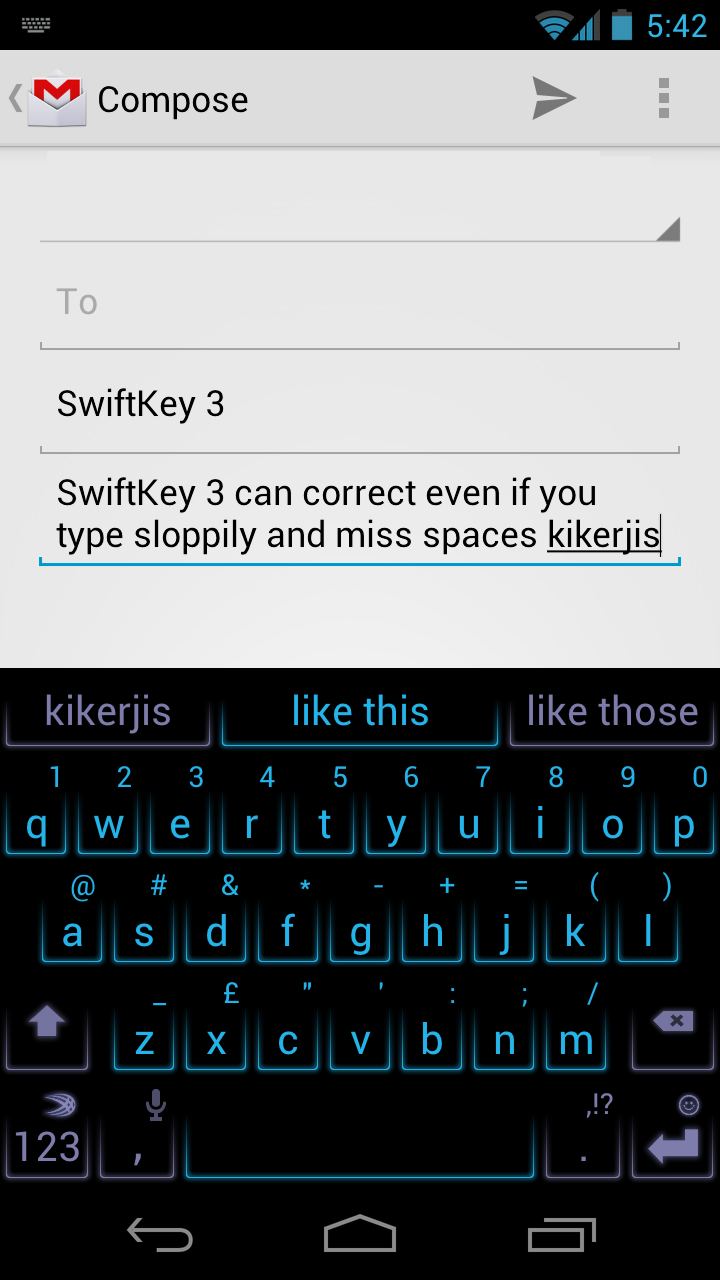
The Swiftkey Way To Learning New Words

The number of new words contributed to the English language by technology is well known. But how does a company which provides technology to help with language and communication cope with the ever-expanding tide of vocabulary?

Swiftkey
Swiftkey in action

Swiftkey has garnered praise and awards for its predictive text app. Its nifty software allows users of Android devices to speed up their typing by anticipating what they are going to type and then suggesting it for them.

I wondered how the Swiftkey database keeps up to date, to ensure that it can offer users the newest words on the block. So I asked Dr Caroline Gasperin, who leads a team of eight language processing engineers responsible for most language-related tasks at the London-based company.

She explained that Swiftkey learns an individual’s linguistic habits, and that by extension this grows its global database as a result.

“Your SwiftKey will learn any word you teach it, you only have to type it once and it will be included in your personal language model on your device,” she said.

“Through the Personalisation feature – which allows you to sync it with your Gmail, Facebook and Twitter accounts – and through continuous use, SwiftKey learns the words you use and the contexts in which you use them so that its predictions and corrections are based on your own way of writing.”

This learning can then feed into the overall word database to help the word corpus grow. Caroline said: “We’ve started putting in place the infrastructure for learning new words from our user base.

“As users use the Personalisation feature of SwiftKey, we are able to collect statistics about the words they use and identify words that we did not know before. We are putting in place a semi-automatic process to identify which of those words could become part of a standard dictionary and consequently become part of our downloadable language modules.

“This process consists of observing the frequency of use of words over time: words which used to have few occurrences across our user base, but which start becoming more frequent over time, and which are mentioned by several of our users instead of by just one or a few, are considered as good candidates for being added to our dictionaries.

“It’s worth adding we take our users’ privacy extremely seriously and have policies in place to safeguard this. We do not process a user’s data personally.”

Dr Caroline Gasperin

So has the way that new words are assimilated changed, and is the process quicker than before? Caroline said: “We look into how many different people have used an unknown word in order to consider it as a potential new word in the language instead of a personal word.

“We take our users’ privacy seriously, so we’ve developed ways to discover words in wide use instead of focusing on single users.

“We haven’t followed users’ language use for long enough to know whether new words are being adopted faster than before, but we are working on getting those statistics.”

I have long since believed that new words are being created and accepted into the language considerably quicker than before, with technology the principal driver behind that evolution. It would be interesting to revisit Swiftkey at some point soon to see whether those promised statistics back up that theory. And the company also gives us a very clear steer about how its core business has to adapt to the ever-changing delights of the English language.