Another Fine Shambles For Romney

Mitt Romney is rapidly emerging as Wordability’s most unlikely hero. Who knew! He has already charmed us with his caring attitude towards his dog, and delighted us by not knowing the name of the country he is trying to lead.

Now, as he winds his gaffe-strewn way across the globe, to ensure that everyone knows exactly who he is before November’s election, he might be wishing he had stayed at home. His questioning of London’s readiness and enthusiasm for the Olympics, followed by increasingly desperate attempts to limit the damage, rapidly saw his trip labelled a Romneyshambles.

It’s wonderful to see a clever neologism like this making some headway, building as it does on Omnishambles’ re-emergence into public consciousness earlier this year. In a single word, the would-be president’s efforts are distilled, summed up and spat out, and it satisfies every opponent’s desire for a linguistic stick with which they can beat him.

Mr Romney must have thought his surname made him pun-proof. Who knew!

Derecho Set To Swamp The Jet Stream

It is odd that with the weather so prominently diabolical across the globe, no new words have emerged to sum up the meteorological misery.

Instead, we have all become experts on weather phenomena, and previously obscure terms have suddenly leapt forward to become commonplace and act like new words to many.

The most notable is Derecho,  which is a land directional hurricane with extreme winds blowing in one direction. Such a storm caused havoc in the eastern United States recently, causing the word to emerge from its hitherto weather-geek state and become widely used by a newly knowing public.

Such was the word’s impact, the Global Languge Monitor picked it as one of its top words for the first half of 2012. I’m sure all US residents will be hoping it is not similarly prominent in the remainder of the year.

On the other side of the pond, you can be sure that Jet Stream will feature in many lists as one of the defining words of 2012 for the UK. Suddenly, we’re all experts on where it is meant to be at this time of the year, and we are all praying that the damn thing will move so we can get some sun. I never thought that ‘The  Jet Stream Is Moving’ would become a headline we would hear and instantly understand.

And if it’s not the jet stream, residents in Newcastle will tell you they are experts in super cell storms, having been doused by one in the last few weeks.

Will some new wild weather terms emerge? Probably. But in the interim, we can all enjoy sounding a bit cleverer as we bandy about some words which have suddenly achieved a new lease of life in the English Language.

WTF! BFD is TNA

It’s not quite true to say that BFD is a TNA, but many have been saying it’s the new LOL.

BFD as an abbreviation meaning ‘Big F***cking Deal’ (language cleaned up because I know my mother reads this blog) is not new. But it has recently emerged into political discussion in America, thence onto Twitter and is now being touted by linguists as the next big things in abbreviations.

Of course, I’m not actually sure there is a next big thing in abbreviations. Linguistics isn’t showbiz, sadly. It would be nice to imagine that the abbreviation police are trawling the internet and that as soon as they come across this blog and TNA (Trendy New Abbreviation), the metaphorical trumpets will come out and it will start to adorn all short-form communication within minutes.
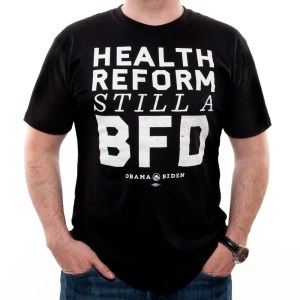
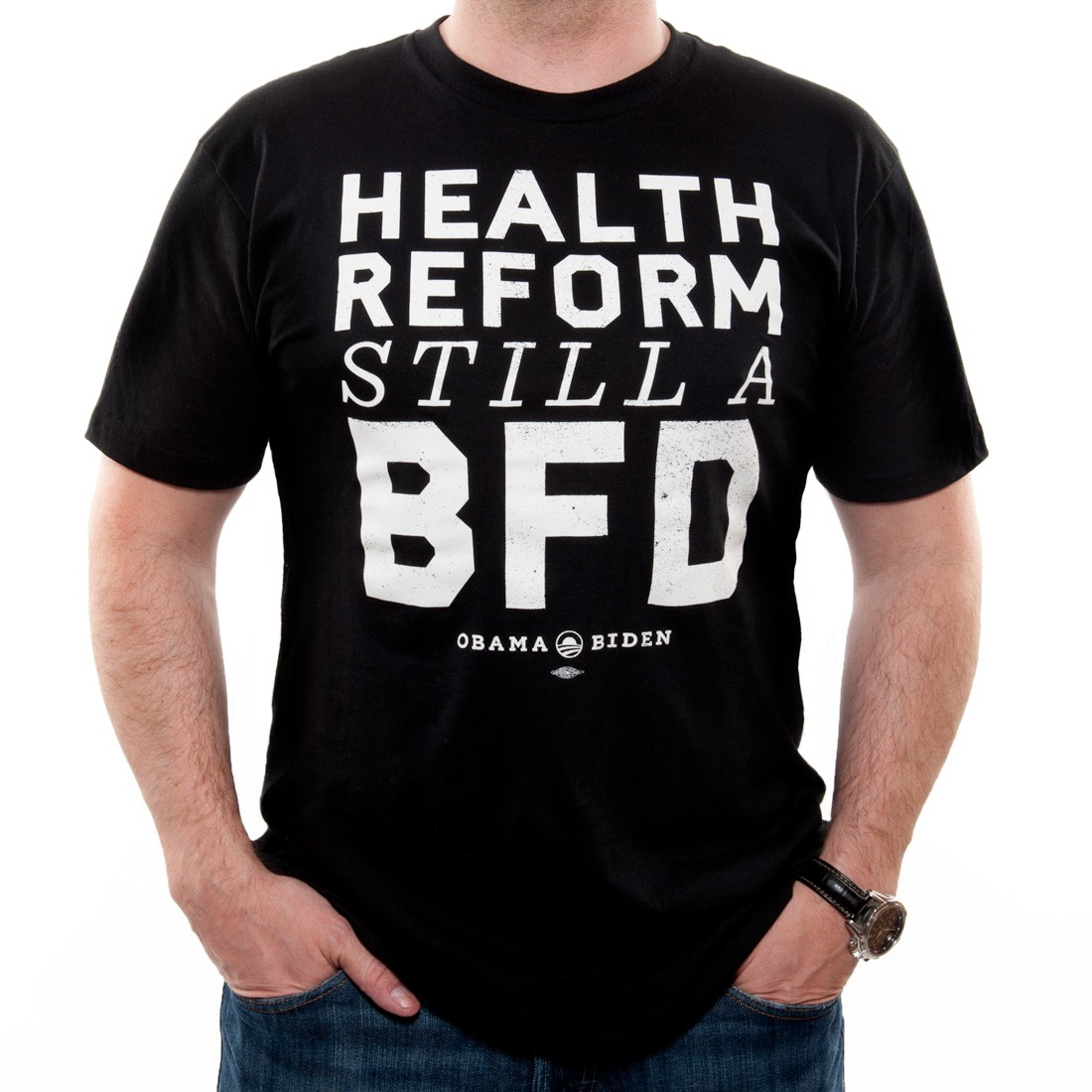
BFD T-shirtBut I digress, badly. Two years ago, US Vice President Joe Biden said that Barack Obama’s healthcare bill was not just a big deal, it was a “big f***ing deal” (hopefully my mother is still reading, you see). And with the bill recently being upheld by the Supreme Court, the Obama administration has taken to selling suitably emblazoned BFD T-shirts, (for a BFP, incidentally). The Romney campaign has criticised the behaviour as unpresidential, and the Twittersphere has gone crazy with BFD-related postings.

So the debate has been about whether BFD will become as well established as its elder statesmen, with LOL cited as as the one to beat, which begs the question of what David Cameron might believe BFD stands for. The article hyperlinked above says that the jury is still out, and quotes linguist Allan Metcalf and his scale to decide whether the word will last. The scale awards marks of 0, 1 or 2 for each of five categories:  frequency of use, unobtrusiveness, diversity of users, ability to generate related neologisms, and endurance of the concept it describes. Mr Metcalf gives BFD a paltry three points in total, suggesting it is au revoir to BFD.

I’m not so sure. I think the process of new word acceptance is beginning to change, thanks entirely to the internet. The article mentioned above says this process has not changed for a number of years, and that it takes time for a new word to bed in and get established. But with the power of global communication, and the velocity with which things become cemented on Twitter and other social media, new words and ideas now become part of the fabric of society substantially quicker. The abbreviations we now take for granted are all children of the texting age, a period that is no time at all in the entire history of human language.

It would not surprise me at all if the current popularity of BFD is a long-running thing, and it becomes just as established as all the others. And then we’ll just be saying that the debate was a BFD over nothing.

Have You Ever Made a Throne Call?

UK supermarket chain Asda has coined a neologism in an attempt to drum up interest in its range of mobile phone tariffs.

It has commissioned research into phone usage and discovered that nearly one in five men admit to making a call on their mobile while in the toilet. They have dubbed such communications Throne Calls.

It’s quite funny. But that’s about it. It’s a pretty blatant attempt at new word creation with the sole aim of garnering publicity for Asda products, rather than a move to enrich the language. I don’t think it has a long-term future as a new word. It’s hardly fulfilling a crushing chasm in the language, while few people are likely to own up to making throne calls. And the Urban Dictionary did it four years ago, but it seems to have had absolutely no usage since then, so that kind of proves the point.

And if it did catch on, who knows what might follow? All suggestions for what SMS could stand for are gratefully accepted.

Does Hate-watching Define a Generation?

We all know that there is a certain insidious pleasure in watching something that is really, really bad. I have enjoyed many conversations about the worst film ever made (it’s Flowers in the Attic, in case you were wondering). But there is a difference between stumbling across something which happens to be bad, and then critically savaging it limb from limb, and actually seeking out that which we detest on a regular basis and then avidly watching it.

But so it is with hate-watching, a newly identified social trend which involves people choosing to watch garbage on television and then tweeting about how much they detest it. Recent US drama Smash is generally cited as the most hate-watched programme around.

I have a number of issues with this. Let’s start with the language side of it, Wordability’s bread and butter. Because I can’t find a reliable alternative explanation, I’m guessing that the word comes from a Twitter hashtag #hatewatching. But that doesn’t appear on that many tweets, suggesting that many of the people partaking are not necessarily conscious that they are now in a newly-defined trend. Tweets which begin “I hate watching…” seem to be much more common. All of which means that commentators have pinned the label onto the activity to pigeon-hole it, rather than the word evolving naturally.

Hate-watching as a term also conjures up immediate assocations for me which detract from what it actually means. The use of ‘Hate’ implies to me an ideological and active hatred, a sense of the politics of hate, rather than a critical and therefore harmless loathing. Hate-watchers, just on a gut reaction to the word, sound like people who preach a culture of hate and then see how that pans out, rather than the more passive people they are, with their only weapon being a keyboard and a slightly cavalier approach to grammar.

But leaving the word aside, it is more what hate-watching says about 21st century life than anything else. As I said at the outset, we all discover and take delight in things that are terrible. But after we have seen them once, surely we have better things to do with our time than to endure them again. Is life becoming so empty, so devoid of useful activity, that we have to fill the vacuum with things we don’t actually like, and then talk about them. For me, hate-watching says something quite fundamental about how people are frittering away their time on earth, and that is a waste that I really do hate to watch.

Why You Don’t Want To See Planetrise

We all know that a beautiful sunrise can be a fabulous thing. But astronomers have now identified something which might be even more spectacular to view, if you weren’t being ripped apart by gravitational forces at the time, that is.

The two-planet system Kepler-36, a mere 1,200 light years away, features two planets which are closer to each other than any other pair of planets found in the past. Kepler-36b is just under 11 million miles from its star, while its large, gaseous neighbour, Kepler-36c, is only 1.2 million miles further away.

All of this proximity means that every 97 days, 36c appears to rise in the sky as it passes its smaller, rocky chum, leading to a phenomenon which astronomers have named Planetrise.

PlanetriseFabulous as it must look, the event causes huge gravitational tides which stretch and squeeze both planets.

Given that this is the first time this has been observed, it seems unlikely that planetrise will become a term which will we see a great deal of in the future.

And if planetrise should ever come to Earth on a regular basis, you can assume that the planets in our Solar System will have shifted their orbits to such an alarming degree that there will be nobody left back here to write blogs about it.

To Gold or Not To Gold

I heard the same interview on two different BBC radio stations yesterday, and it elicited the same response from two different presenters.

Talking about medal prospects for the upcoming Olympics, British Olympic Association chairman Colin Moynihan said that Australia would expect “to gold” in certain events.

Given that I have already been hearing people experiencing paroxysms of rage at “to medal”, which is making its quadrennial reappearance into the lexicon to coincide with the Games, you can only imagine the incredulity with which “to gold” was treated.

It could have just been a one-off – I can find no evidence of this usage anywhere else at the moment. But it could equally be that athletes will be “golding”, “silvering” and “bronzing” come the end of July. And if that does prove to be the case, remember where you read about it first.

OED Feels the Bogan Backlash

The Oxford English Dictionary has never worried about justifying the length of time it takes for words to be accorded official status in one of their quarterly updates. Wordability has consistently argued that some words take a bewilderingly long time to get recognition, and in its latest update, editor John Simpson espouses the value of watching and waiting as words bed down.

This of course is all very well, but if a word has been around since the 1980s before it is finally recognised, is that not a bit too long? It is especially lengthy when that word is so well established that people then take issue with the definition.

So it is with Bogan, a word from down under which has been defined in the new OED update as a boringly conventional or old-fashioned person or an uncouth or uncultured person.

It is the “uncultured” reference that has caused controversy. Many people in Australia and New Zealand are happy to refer to themselves as bogans, on the understanding that it refers to heavy metal-listening, jeans and black T-shirt-wearing beer drinking types. They argue that they are not “uncultured”, just different cultured. Dave Snell, an offended bogan, has even completed a PhD on bogan culture.

All of this proves yet again that many of the new words touted by the OED are not new at all. If they are as old as this one, then their inclusion risks causing controversy because they are so well established that their official definition is queried.

Actually, Wordability is much more interested in a recent blog about words that Oxford experts are tracking, albeit that they are not yet officially recognised. These include squoob, a conflation of squeezed and boob and referring to a prominent cleavage protruding from a tight bodice, and phablet, which combines phone and tablet.

Will these appear in the official OED list any time soon? Undoubtedly not. But it’s word like these, if they gain any kind of regular usage, which will continue to appear on Wordability.

The Latest Word on Gay Marriage

Gay marriage is a hot political topic like never before. US President Barack Obama has backed it, individual American states are embroiled in legislation over it, while across the pond, David Cameron’s UK coalition is consulting on allowing it.

From a language point of view, the issue is fascinating. Because one of its side effects is to spawn a plethora of debate over the status of the word marriage itself.

It is important to remember just how important words are where marriage is concerned. It is one of those rare things in life where simply saying some words can effect a tangible change in somebody’s status as a person. So long as location and celebrant are approved, the act of listening to certain words and then saying “I do” moves someone from the status of being single to being married. Words enact the change.

So the use of the word marriage itself has to be important. Googling the question “Does there need to be a new word for marriage” brings up a range of debates and articles, with suggestions such as Holy Matrimony, Sanctirage or Garriage finding their way onto the internet.

But all of these miss the point. By trying to introduce new words for marriage, any sense of equality is immediately lost. If gay marriage becomes more and more accepted, calling it something else will still make it be perceived as something else, and the very way it is referred to will confer a sense that it is not equal. The current debate on Twitter, where the hashtag #gaymarriage is prevalent, makes the point. A number of people are pointing out that this hash tag gives a sense that #gaymarriage is a different type of marriage, and surely it should just be called marriage. So I think the quest for a different name is a way for people to undermine the very idea of this kind of union and strip it of its legitimacy by calling it something else.

Much more reasoned is the idea that dictionaries themselves will have to redefine marriage as a union between two people, and not a union between a man and a woman. Ben Zimmer of the Visual Thesaurus has written an excellent account of the history of the word’s definitions, and I commend it as vital background on this subject.

It is clear that this debate is going to run and run. It will only be over when the term Gay Marriage itself has been consigned to history.

Unsourcing: Free Work By Another Name

Big companies like saving money. So far, so obvious. But the growth of social media has allowed them to find a new way to provide services they used to provide before, at a fraction of the cost and quicker and better than in the past.

Basically, instead of setting up costly call centres armed with legions of people able to answer people’s questions, they simply direct people to other users, who will fight with each other to answer the questions themselves. This has become particularly prevalent in the tech and electronic sectors, where internet-linked geeks quite like to be first to help others with the relevant information.

And as every good trend deserves a word, The Economist has now given it one – welcome to the world of Unsourcing.

I must say that I find this word bizarre. Crowdsourcing, the use of large groups of people to pull together information, feels like an action to achieve a goal. Outsourcing, getting your call centre needs fulfilled by a third party, makes sense as it implies organising a service outside your organisation.

Unsourcing suggests that you stop doing something. This is of course true – you stop employing lots of people, but unemploying is already in the lexicon and is hardly the kind of word you would want to associate with a modern new way of behaving. But you don’t really un- the sourcing in this case, if I can get away with saying that, you merely redirect the source. In addition, unsourced is a perfectly legitimate word for information which is unverified. So it seems a strangely inappropriate word.

Even though it is back in the news now, the Word Spy website says it was first used in 2001 and was recognised as a trend in the IT industry back then. It says a lot for unsourcing’s sedately growth that it is only now that it seems to be back in public recognition and in with a chance as being recognised as a commonly used word.