Don’t Fall Over The Fiscal Cliff

There is a late entrant in the word of the year stakes. More likely, there is a front-runner for the 2013 crown. It is becoming hard to avoid the Fiscal Cliff.

The Fiscal Cliff is a term that has been coined to describe a looming financial precipice in the United States. It is a confluence of coming togethers of the end of certain tax laws and a decrease in Government spending, and commentators are worried about the effect on the US economy if legislation is not passed which could prevent all of this from happening.

Ben Bernanke, the chairman of the US Federal Reserve, is being credited with coining the phrase, having used it in evidence to the House Financial Services Commission at the end of February. He actually isn’t the first, as it appeared in analysis of George Bush’s tax cuts two years after the end of his presidency. But there is no doubt that Mr Bernanke’s usage put the term on the linguistic map.

That said, it is only in the last few weeks that it has found its way into general conversation and started appearing in earnest across the media. Given that the fiscal cliff is just around the corner, that is not really a surprise.

Maybe what is a surprise is that the term has simply been accepted and is being used by everybody, probably without really understanding it. I feel the same way about it as I did about haircut entering the vernacular last year – a term that was popular among economic commentators crossed over into the mainstream and using it seemed to confer some kind of special, inside knowledge on the users, it is almost said with a nod and a wink to those also on the inside.

For the rest of us, we hear it and then have to go and look it up and try and understand it. Shorthand phrases are good for encapsulating stories and letting everybody know what the subject is, but when they are used regularly in conversation as if everybody knows what they mean, then that can become annoying.

Thank goodness the Simpsons have been around to help explain it.
The Top Words of 2012

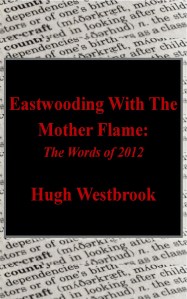
And so the time has come for Wordability to reveal its word of the year. But I’m not quite going to do that. Because I don’t think that one word does justice to 2012. So in total, Wordability has five words of the year. And a new book – but more of that anon.

The danger of picking one word is that it only tells some of the story. The Oxford Dictionary choice of Omnishambles absolutely gives us a word that says a great deal about 2012. But what about the Olympics, and that incredible feeling that careered across Britain throughout that glorious summer. To ignore that is to miss a part of the year.

And should we go with a new word or something old which has resurfaced? Wordability has shown over the year that brand new words and redefinitions of existing words are equally important when it comes to semantic change in the English language. So I think it is important to include both.

So without further faffing, here are my top five words of the year:

New Words of the Year

Mother Flame: The journey of the Olympic Flame started the Olympics for real for most people in the UK, and the crowds who lined the streets throughout the country to see it were surprisingly large and enthusiastic. The whole process spawned a raft of new words associated with the procession.  Mother Flame, the original flame travelling with the torch and used to relight it when it went out, was my favourite.

Eastwooding: An odd choice? Yes. Eastwooding as a word was never destined to last more than five minutes. And yet what a five minutes. Spawned by Clint Eastwood’s extraordinary empty chair conversation with Barack Obama at the Republican Convention, Eastwooding became a social phenomenon as people raced to share photographs of themselves interacting with unoccupied items of furniture. I have chosen it as a word of the year because in many ways it is the quintessential demonstration of how a new word can arrive and thrive in our interconnected world. And then, just as quickly, fall off a cliff.

Gangnam Style: The music sensation of the year and a phrase that has entered the language. You only have to hear of anybody dancing Gangnam Style to know what kind of performance they are putting in, and plenty of famous people have been queuing up for their five minutes of strutting their horse-like stuff.

 Re-emergence of the Year

There were two contenders for this. Omnishambles, as we know, curried favour elsewhere. But I have plumped for Ineptocracy, a term for a form of government in which those utterly incapable seem to grab the top jobs. Like Omnishambles, it sums up the slightly random state of Government which seems to prevail in many countries this year, and the attitude towards them from the people. And from a Wordability point of view, Ineptocracy is the most viewed article and most searched for term across the blog in 2012, so it is clearly a word demanding of attention.

Redefinition of the Year

No dispute about this one – the furore over Misogyny in Australia takes this award. The global argument this led to about what the true definition of the word is, and whether Australian lexicographers were right to amend their definition, really encapsulates what semantic shifts tell us about changes in society.

So these are my top five, but so many other words have caught my attention – Goalgasm, Lesula, Papple, Marmageddon, Swapportunity to name just a few of my favourites – that even a list like this does not do it justice.

So I have produced a book of the words of the year, which is available right now from the Kindle Store on Amazon, just by clicking here. In it you will find more on all these words, and a great deal more. It’s a portrait of not only the language change of the year but a picture of what has really mattered to us as a society over the last 12 months.

A Shambles of a Year

In many ways, the Oxford Dictionary choice of Omnishambles as the word of the year is an excellent one. It’s a great word, it sums up the mood of the times and it has become hugely popular during 2012.

But I can’t help being a little disappointed. As I said some months ago when the word flew back into public consciousness, it is not an original 2012 word. Omnishambles was actually coined in 2009 in the political comedy The Thick of It, and only now has it crossed from the Westminster to the global village. It would have been much more satisfying if the OED word of the year was one that came into being this year, as previous winners have been, rather than one which has simply been popularised.

I also wonder about the Oxford relationship with Labour leader Ed Miliband. Last year’s winner, Squeezed Middle, was coined by Mr Miliband, while the first recorded use this year also came from him, during Prime Minister’s Questions. Clearly we need to listen to what young Ed says next year if we want to take bets on the winner for 2013.

I was certainly surprised by the OED’s US word of the year, GIF, a computing term which has been around for a quarter of a century. They said it had really come into its own in 2012. But I must say in the tracking I have been doing throughout the year, it was not something I had really paid attention to.

There were some good words on the two shortlists, with Games Makers, To Medal, and Mobot representing the Olympics, and pleb reminding us of Andrew Mitchell. In the US I was pleased to see perennial Wordability favourite Nomophobia, fear of losing your mobile phone, under consideration.

Of course it is easy to carp. What are your words of the year, I hear you saying? Well fear not. I shall reveal my words of the year in the next couple of weeks, together with a very special announcement. And even though Omnishambles has certainly been on my shortlist as well, I can confirm now that it won’t be the winner.

What is the Future for Gangnam Style?

I read an interesting piece a few weeks ago about the Gangnam Style phenomenon. It said that linguists were doubtless having a fine time working out how it had become an idiomatic expression.

The question for me is – has it become an idiomatic expression? For those of you unfamiliar with the worldwide hit (and to my shame I must admit I was ignorant of it until recently, when a South Korean friend showed the video to my wife), Gangnam Style is a Korean music and dance phenomenon which has swept the world. Dictionary definitions, such as they are, refer to it as a Korean neologism for the lifestyle of those in the upscale Gangnam district of Seoul, while the wider definition is emerging as replicating the leg wagging, horse-like dance moves of the international smash hit.

But has it become wider than that yet, in a linguistic sense? When people refer to doing things Gangnam Style, are they talking about taking on an attitude and a way of doing things, or are they just referring to people copying the dance. I think it is the latter. At the moment, the internet is awash with soldiers, prisoners and Eton pupils performing their own takes on the song. But that’s currently all it is, albeit on a vast scale.

So while Gangnam Style will undoubtedly be cited as one of the words of the year when it comes to wrapping up the language of 2012, its meaning is likely to remain fixed to musical interpretations, rather than something which has become more entrenched in society.

Frankenstorm May Be Monster Mistake

Sometimes people can just get a new word wrong. It must have seemed such a good linguistic idea  when Hurricane Sandy started its progression northwards up the eastern United States and prepared to amalgamate with other systems, so creating a super storm. What a great joke to dub it Frankenstorm, a monster storm for the Halloween season.

The problem is of course that it sounds funny, it automatically raises a smile as a word. But given the devastation that Frankenstorm is now predicted to wreak, it is a hollow and wholly inappropriate joke, where the name selected completely undermines the seriousness of what is expected to happen.

At the time of writing this, I don’t know whether the dire predictions for New York came true. It may be that it turned out to be a Frankenstorm in a teacup, and the name will have gone back to being a bogeyman-type appendage that gets wheeled out in the future as a way of scaring people when the wind begins to howl.

But if havoc ensued, then Frankenstorm will forever be remembered in a ghoulish way and any humour associated with the initial coining will have vanished.

Kozmania – A New Type of Linsanity

You know the story by now. Unheralded American sportsman is given his chance in the big time. He dominates every game he plays, becoming a national icon. His deeds spawn a new word in newpaper headlines. The word mushrooms, with official linguistic recognition not far behind. And then, the ultimate accoloade. He appears in Wordability.

OK, that’s not exactly how the story pans out. But it does seem to be a bit of a trend. Following Jeremy Lin’s basketball success earlier this year, and the associated mushrooming of Linsanity across the globe, comes another unlikely sporting and language star – Pete Kozma.

After six years on the fringes of the big time, Kozma was finally called into the St Louis Cardinals team at the end of August. Almost predictably, he has turned out to be sensational, taking a leading role in the National League series against the Washington Nationals, leading his team to victory and spawning the word Kozmania.

Will Kozmania be another Linsanity? Probably not. Jeremy Lin’s story was as much about him being the first American player of Taiwanese descent to make it in the big time as it was about an unlikely player dominating a sporting arena. And there’s something about the word – Kozmania sounds like something which grabs you for a short time and then you get over it, while Linsanity is more of a state of mind and likely to last longer.

But I could be wrong, and if I am, then who knows how many times that American sporting dream from my opening paragraph will be played out in the years to come. Especially the bit where they end up on Wordability.

Mission Imborisable? Nothing’s Impossible

There is no ignoring Boris Johnson. The Mayor of London, feted by many as a future Prime Minister, has stolen the headlines with a pair of appearances at the Tory party conference in Birmingham.

At the start of his first appearance on Monday night, he was prefaced by a video celebrating his re-election as London head honcho earlier this year. The video was preface by the caption ‘Mission Imborisable’.

A headline writer’s dream? Absolutely. An attempt to get a new word into the dictionary? Absolutely not. And yet…

As Boris coverage increases, and if stories about him and Downing Street continue to be written, the temptation to carry on using Imborisable in connection with any tale of Johnson-esque derring-do may prove irresistible to sub-editors up and down the land.

So while I do not see a future in which the OED features a word loosely defined as ‘an unlikely achievement by Boris Johnson’, I do think this is a word that will be around as a piece of political shorthand for the foreseeable future. And that is already an Imborisable achievement.

Pretirement – A New Phase of Life

With lifespans getting longer and the structure of our lives in constant evolution, it is no surprise that changing circumstances are demanding new words.

Tweenagers is a wholly successful and well established example of this, a 21st century word to describe that awkward period between 10 and 14 when children are becoming more sophisticated but are not fully-fledged, hormonally-challenged actual teenagers.

And so at the other end of the scale comes Pretirement, a word which is slowly beginning to appear around the internet. Meanings are still being formed, but it seems to be shaking down into something which describes a new phase, namely the last period of someone’s working life in their early to mid-sixties, as they start to also focus on the things they want to do when they are fully retired.

That would be a good final meaning for pretirement, though there are currently conflicting definitions. For example, Shannon Ward and Diana Stirling believe it is a work-life balance choice that people can make much earlier in life, and have a flourishing website to prove it. Meanwhile, the Urban Dictionary reckons it is the period between higher education and work, the last chance you will have to relax for years. Interestingly, this is the meaning that has been submitted to the Collins new word suggestion project, though comments alongside the entry suggest it has been around in some form since 2005.

Nonetheless, it is clear that pretirement is a word that has not been given any kind of official recognition yet. It is being used to describe a variety of different phases, all of which are becoming a key part of modern life. I suspect it will finally become locked down as the final pre-retirement period, and it will be no surprise if it becomes as much a part of the English language as Tweenager in the next few years.

Will Vatileaks Start A New Precedent?

I do hope that current events in the Vatican are not a sign of linguistic developments to come. I mean, Wikileaks was one thing – it took the idea of a Wiki, and the idea of Leaks, stuck them together, and came up with a title and a concept which, basically, worked.

But that doesn’t mean that -Leaks has now become an acceptable suffix which can be ramrodded onto any story about the unauthorised release of sensitive information. And yet, Vatileaks is now all over the news.

Is this the start of a new Leak inspired linguistic habit, a way of encapsulating a particular kind of scandal with a new language shorthand. I do hope not. As I wrote earlier this year, my loathing of the -Gate suffix was not helped by the Horsegate fiasco, and recent events in Downing Street, involving the Chief Whip and his bicycle, saw the arrival of Gategate, surely the nadir for -Gate and the point when, one hopes, it will finally die its natural death.

If we are ever to be freed from Gate, please do not let Leaks come into its place. We don’t want a language scandal called Leaksgate, now do we?

Whatsapp With The Dutch?

The popular smartphone messaging app WhatsApp has inspired a new word in the Dutch dictionary. Whatsappen, a verb meaning to send an electronic message, will be included in the online Van Dalen dictionary from October.

I know that WhatsApp is very popular and is constantly at the top of the iTunes charts, but I must confess to being slightly surprised at its Dutch popularity. I have never come across anybody telling me they are using it, and I have certainly never heard anybody drop it into conversation in a generic Googling type way. So I suspect this may be a development in the Dutch language that we will not be seeing replicated in English any time soon. It has also been quite fun reading the Dutch coverage using Google instant traslation, as Whatsappen translates somewhat bizarrely as ‘What Juices’.

I also wonder whether other popular apps will start to find their way into the dictionary. After all, causing rampant carnage may sound less offensive if people simply say they were ‘Angry Birdsing’.