Put your money on Brexit

Union JackI am not a betting man, so will not be putting a penny on the outcome of the EU Referendum later this year. The fact that I haven’t got a clue which way it will go is also a contributory factor to that decision.

But if I could find a bookmaker who would give me odds on the Oxford Word of the Year for 2016, I think I could put a wager down now and be confident of collecting my winnings in time for Christmas.

Brexit was not born this year. But this is the year in which it has blossomed and bloomed and become the go-to word to encapsulate the campaign to leave the European Union. The Leave campaign? Doesn’t resonate. The Brexit campaign? Bingo!

I first wrote about Brexit in January 2013, when the word began to be used in relation to a possible UK referendum on the EU at some distant time in the future. At the time I said I was surprised to see that Grexit had spawned cousins and was not just a one-off, especially as Brexit remains as inaccurate then as it was now. We are not debating a British exit from Europe, rather a UK-wide one. UKexit still doesn’t cut it.

Nonetheless, the word works. People understand it, it is an easy term to rally behind, it seems to fully encapsulate its subject. It has comfortably bequeathed us Brexiteers to mean people supporting a Brexit, and we all just nod and get on with it. Sometimes a word just fits, and this is one of those times.

In fact, so little do people now care about its etymology that they use Brexit as the catch-all term for stories about Northern Ireland as well, paying no heed to the linguistic snub to which the country is being subjected.

Already secure in the Oxford Dictionary online annals, the word is now fully established in the English language. If the vote in June goes in favour of staying, Brexit will still hang around to fuel the debate. After all, as the Scottish Referendum has shown us, just because a vote ends up leaving the status quo intact it doesn’t mean that the debate over having the vote again won’t recur.

And of course, if the UK does leave the EU, then we won’t be able to escape the word Brexit at all. Either way, I think its coronation as the word of the year is already assured.

Don’t be Scared of Putinophobia

There has been an interesting example this week of of a neologism being used to deflect attention from the substance of a story.

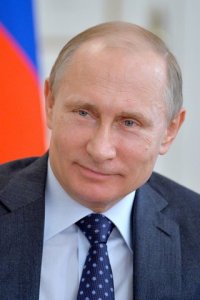
Vladimir Putin
Vladimir Putin (image http://www.kremlin.ru)

Amid the many people entangled in the aftermath of the leak of documents from Panama is the Russian President Vladimir Putin. I should of course point out that the President himself was not mentioned at all in Panamanian dispatches – instead, a number of people or organisations with connections to him have been cited. Such revelations inevitably focused attention on President Putin himself.

So how did his official spokesman deal with all of this? Simple. He used a word nobody had ever heard before and, sheep-like, everybody focused on that word and used it in their headlines, rather than actually pursuing the story.

The word was ‘Putinophobia’.

Dmitry Peskov said: “This Putinophobia abroad has reached such a point that it is in fact taboo to say something good about Russia, or about any actions by Russia or any Russian achievements.” Brilliant moving of the goalposts. Invent a term which everybody will latch onto and is likely to be used again, and use it as a way to get people to focus on something else rather than the substance of the story. The art form of coining a new word as a way of owning the story.

Given the way that David Cameron has now become embroiled in the Panamian fallout, can we expect to see one of his spokesmen using this formulation as a way of moving the attention away from him? Maybe the criticism will be described as ‘Cameronophobia’ or ‘Toryphobia’. However, given the level of criticism currently being levelled at the Prime Minister, it is hard to imagine #toryphobia replacing #resigncameron as a popular Twitter hashtag any time soon.

Beware the Smombie Apocalypse

Sometimes a word is so perfect that once somebody mentions it, everbody else has to follow suit. One such example has flooded the press in the UK in the last few days. It is the rise of the Smombie.

Smombie, short for Smartphone Zombie, describes behaviour which we increasingly see the world over, and which we are all almost certainly guilty of. It is the habit of checking your mobile phone while walking along and becoming oblivious to all around you, running the risk of causing yourself, and others, zombie-like danger.

The sudden appearance of the word is not tied into anything particular. Smombie was actually named as the German youth word of 2015, though this itself was not a popular decision as the word seemed more to denigrate smartphone users rather than celebrate them and was noted as not being used particularly prominently among German youth.

Your Wordability author in Smombie mode

Its sudden UK fame is tied into a Sunday Times feature a few days ago, using the German victory as a springboard to describe the increasing amount of smombie activity around the country. It  illustrated this with quotes from motoring organisations about the dangers this poses which are similar to driving while texting, and even mentioned that there are now ‘Smombie Lanes’ in some cities to allow texters to amble in peace without distracting those seeking a quicker route to their destination.

I think this word is interesting on a number of levels. The first is who uses the word and who it is aimed at. It is quite right that Smombie is pejorative. It accurately describes the way that people walking and using their phones are utterly unaware of everything around them, but it is true that this surely makes it coined by those who look down on such behaviour, not those to whom technology is as innate as breathing, the younger generation. So if it is to gain any currency, it is likely that it will be as a term of criticism.

I also wonder whether Smombie itself is the word that will ultimately catch on. Phubbing, one of my perennial favourites of recent years, is a great amalgam of Phone and Snubbing and does the job beautifully of describing that anti-social act of looking at your phone rather than joining in with the people who you are actually with. But in some ways, it is not immediately apparently what it means, it is only when you say that it is short for phone snubbing that it truly hits its mark.

Great as Smombie sounds, I feel the same way about this word, and that it needs the explanation to give it its context. And that may be the key to its future. Smartphone Zombie is actually perfect, it completely gets its meaning across and you could genuinely see people using it. I think this is a case where the abbreviation could ultimately lose out to the long from.

Smartphone zombies are undoubtedly here to stay. I think the only issue left is how we will continue to refer to them. And making sure we get out of their way, of course.

Language Flowers in Italy

Daisy Pollen Flower
Daisy Pollen Flower

An attractive story from Italy, not just because it allows me to decorate the pages of Wordability with this delightful picture of a daily pollen flower. An eight-year-old may now see a word which he invented recognised as an official Italian word.

Matteo, a schoolboy in the town of Copparo in central Italy, used the word Petaloso in a school project to describe a flower as ‘full of petals’. His teacher Margherita Aurora was so impressed she contacted the Accademia Crusca, guardians of the language, and received an encouraging reply.

They said that while the word was not yet in sufficient usage to be able to garner official recognition, it was “well formed word, and could be used in Italian. Your word is beautiful and clear.”

Of course it only takes a bit of social media encouragement and publicity for the word to start being used an awful lot, in order to force lexicographic minds, and while the initial flurry will certainly not be sufficient to get it officially recognised as a word, repeated genuine usage might just do the trick.

Do we need a word for ‘full of petals’ in English? Doubtful, and doubtful as well that it wound quite as lyrical as Pelatoso does. And maybe the lilt of Italian is part of its appeal. After all, other words apparently on the radar for official Italian recognition include Photoshappare and Spoilerare, both of which are ugly Italianisations of English words which I suspect the language could well do without.

So good luck to Pelatoso and who knows, maybe it could make the jump to English and make our own language that tiny bit more beautiful.

A Squirmish In The Polls

As US election year dawns, so the role of language in the campaign will come to the fore once more. During the 2012 election campaign, I wrote about how the finding of the right word could potentially swing the entire poll, while also noting how Mitt Romney’s travails with language could have contributed to his dismal final result.

So it’s disappointing to note that in the 2016 version so far, the times that language has come to the fore have been more the subject of ridicule and controversy than anything else. Last month it was Donald Trump and his use of the term schlonged. This time around, Trump is still at the centre of things, but even more central to events is Sarah Palin.

It is the use of the word ‘Squirmish’ which has caused all the fuss this time. In her much-dissected endorsement of the Republican front-runner, Palin referred to squirmishes happening around the world, meaning a kind of low-level skirmish. Interestingly, after the inevitable initial amusement, criticism and Twitter reaction, there seems to have been an almost grudging respect for the term. Some have said they find it actually quite useful, while dictionary.com used it as a way to discuss the way that words are introduced in election campaigns generally, while also saying Palin was not the first person to use it.

While I doubt that Palin was aware of the 19th century citations to which dictionary.com alludes, and whether it was a deliberate neologism or a cock-up, there is no doubt that squirmishes has emerged as the first word of this year to be associated with the campaign, and it appears to have a certain amount of momentum to keep it in the public domain for at least a few weeks.

I suppose the level of squirmishes between the candidates might dictate how long it stays current for.

Schlonged By Trump

The language of political debate has always fascinated me, and the way that the choice of words can influence the direction of a campaign can never be underestimated.

How disappointing then that when the subject of language comes to the fore in the American Presidential campaign, it should be over the nuances of a crude piece of Yiddish. But how much less surprising that Donald Trump should be at the centre of it.

Basically, Trump voiced the opinion that Democrat rival Hillary Clinton had been ‘schlonged’ by Barack Obama in the 2008 election. He claims to have used it as a term for ‘beaten’, claiming it was just a description for her having lost out. But as has been demonstrated widely online in the last few days, ‘schlong’ is Yiddish slang for penis, and the verbal form of that is not exactly common usage in the way that Trump claims. Cue much debate about the grammatical rules behind creating a verb from a noun, analysis of just how little usage schlonged has had over the years and fortunately very little linking to the Urban Dictionary definition of the term.

Questions have also been asked over whether Trump genuinely thought that his use of the term was correct, or whether it was actually a sexist put-down and therefore much more deliberate. I think the jury is out on this point, but regardless of whether it was intended or accidental, the put-down element is unavoidable and has been fundamental to the discussion that this comment has created.

So what does this mean for the future of English – is schlonged going to emerge as a new piece of widely used Yiddish slang, or will it just be something talked about purely in the context of this Trump/Clinton contretemps.

My instinct is the latter. Trump is such an extreme and divisive character, it is hard to imagine a term that he has used taking off widely, as people will not want to be associated with it, especially as it is a long way from being an innocent put-down. I think it is likely to be a term that is remembered, but not one that enters everyday use. It is however a shame that one of the first linguistic stories of the campaign is this one.

And if Trump’s campaign ends with him losing, I wonder how the competition will refer to his defeat?

Tears of Joy for Word of the Year

Face with tears of joyThe era of a new language has truly arrived. This year, Oxford Dictionaries has named an emoji as its word of the year.

It’s a bold choice, but a rock-solid one linguistically. No single word has dominated 2015, as Collins’ recent choice of binge-watch for their word the year vividly demonstrates. Instead we are at the dawn of a new way of communicating, and the Oxford choice confirms this.

The trend has been obvious for the last 12 months. The Global Language Monitor started the ball rolling by picking an emoji as its word of 2014. Then earier this year, a linguist described emoji as the fastest evolving language of all time. And so this decision will catapult recognition of that growth into the mainstream.

Casper Grathwohl, President of Oxford Dictionaries, said: “You can see how traditional alphabet scripts have been struggling to meet the rapid-fire, visually focused demands of 21st Century communication. It’s not surprising that a pictographic script like emoji has stepped in to fill those gaps—it’s flexible, immediate, and infuses tone beautifully. As a result emoji are becoming an increasingly rich form of communication, one that transcends linguistic borders.” Amen to all of that.

For the record, the emoji which accepts the accolade on behalf of all its emoji brethren is 😂 –  ‘Face with tears of joy’.  According to mobile technology company Swiftkey, which partnered with Oxford to help decide on the winner, ‘Face with Tears of Joy’ was the most heavily used emoji globally in 2015. It comprised 20% of all emoji used in the UK in 2015, and 17% of all emoji used in the US.

This announcement will be greeted by criticism from some, derision from others. People will complain that it is not a word, will lament what is happening to our language, will somehow feel that Oxford Dictionaries itself is no longer the great arbiter it once was because it is making this decision. All utter nonsense, of course.

Instead, everyone should recognise that language is changing at a pace never before known, that a new lingua franca is emerging for the global, connected era in which we live, and that if hieroglyphs were good enough for the civilised ancient Egyptians, then using images to communicate with others should still be acceptable today. My linguistic tears of joy for this decision are all real.

Other shortlisted words:

ad blocker, noun:
A piece of software designed to prevent advertisements from appearing on a web page.

Brexit, noun:
A term for the potential or hypothetical departure of the United Kingdom from the European Union.

Dark Web, noun:
The part of the World Wide Web that is only accessible by means of special software, allowing users and website operators to remain anonymous or untraceable

lumbersexual, noun:
a young urban man who cultivates an appearance and style of dress (typified by a beard and checked shirt) suggestive of a rugged outdoor lifestyle

on fleek, adjective (usually in phrase on fleek):
extremely good, attractive, or stylish

refugee, noun:
A person who has been forced to leave their country in order to escape war, persecution, or natural disaster.

sharing economy, noun:
An economic system in which assets or services are shared between private individuals, either free or for a fee, typically by means of the Internet.

they (singular), pronoun:
Used to refer to a person of unspecified sex.

How to Muggle Things Up

Literature has been a common source of new words for a very long time. But I doubt whether the replacement of one word created by an author with a new word from the same author has ever created the uproar we have seen this week. But then again, JK Rowling is no ordinary author.

The story is simple. Rowling coined the term Muggle in the Harry Potter series to mean a non-magical person. But in information which has come out this week about Fantastic Beasts and Where to Find Them, next year’s film from Rowling’s wizarding imagination, that word has been changed. The film is set in America, a number of years before the birth of young Potter, and it has been revealed that the Americans don’t call their non-magical counterparts Muggles. No, they call them ‘No-Maj’, meaning they have no magic.

Cue the Twitter outpouring, cue the lamentations of Potter fans united in grief at what they see as the demise of one of their favourite words.

It’s nonsense of course. What might have been more surprising was if American wizards and witches had used the word Muggle. Do people not understand language variation across countries? Is it not entirely likely that a slang term, which is after all what Muggle really is, would be different in America from Britain. Star Eddy Redmayne has now done interviews explaining this and also saying that the term Muggle has not been replaced, as some have erroneously claimed. It is simply that a different word is used by people in a different country, no replacement involved. And when you say it with an American accent, you can fully understand why No-Maj sounds right in a way that the more British Muggle would not.

But the episode is interesting for a couple of linguistic reasons, aside from the social observation that yet again the internet is full of people focusing their energy and anxiety on the most trivial of things. What it does show is how beloved the language of JK Rowling is and how masterful she was with the words she coined and chose for her wizarding world. It would be an exaggeration to say that if she had come up with an inferior word for Muggle then her books would not have succeeded. But it does demonstrate that her consistent choice of the right word, finding ones which have really stuck with the public, gives us insight into why her books have succeeded.

The other thing to mention is that much of the reporting of this story has stressed that Muggle has even been recognised by Oxford Dictionaries. That’s lovely, and I must admit I was surprised by the idea that a reputable dictionary was including a definition for people who aren’t magical. But of course, it doesn’t. Muggle has taken on a new meaning for someone who is ‘not conversant with a particular activity or skill’. I can’t off the top of my head think of another example of a word from literature which has then gained a new meaning in the real world and been given dictionary recognition as a result of that.

So the supposed Muggle controversy isn’t really a controversy at all, and in fact demonstrates Rowling’s acute understanding of the English language. And maybe that is the greatest magic of all.

Binge-Watch the Surprise Choice

Word of the year season is upon us, and I have been wondering of late what words would end up taking the gongs this year, given the generally disappointing nature of the new words which have emerged during 2015.

So in that respect, the first winner out of the blocks is entirely in keeping with the less than stellar linguistic year we have been through. Collins Dictionaries has chosen ‘Binge-Watch’ as its word of 2015.

Now there is no denying that binge-watching, the viewing of multiple episodes of a television series in a short time span, is on the rise. New viewing habits and on demand video services have changed the nature of the way we watch television, and access to box sets is increasing. My concern is not with the word itself, it is more with the fact that it doesn’t feel to me like this year has been the year when binge-watching has come of age. I think it had already come of age and was already entrenched, and this year has not been significantly different to last year, though Collins do cite a 200% increase in usage. I suspect that growth probably happened the year before as well. I also don’t feel it defines the year, like a good winner should. And it featured in the Oxford Word of the Year shortlist in 2013.

To me, some of the other words on the Collins shortlist are more representative of 2015 than the eventual winner. Corbynomics, the economic policies advocated by the UK Labour leader Jeremy Corbyn is included, and Jeremy Corbyn’s influence on the language has already been documented on Wordability this year. Transgender, relating to a person whose gender identity does not fullycorrespond to the sex assigned to them at birth, has been a big discussion point. And Contactless, making payments without signature or PIN, has gone increasingly mainstream this year and would have been a justified winner.

So the benchmark has been set for Word of the Year winners. I hope that subsequent winners will be able to exceed it.

Breastsleeping May be the Answer

One of the difficult issues facing new mothers is feeding their children overnight. The decision over whether or not to have your baby in bed with you is one often fraught with difficulty, with uncertainty over whether it is safe counterbalanced by the fact that for many tired parents, having your child close by is the only realistic option if you want to breast feed.

A pair of researchers may have now solved the problem by writing a paper analysing the practice and coining a term specifically to remove the stigma surrounding it. James McKenna and Lee Gettler propose the word Breastsleeping.

To make the point, they include the term in the title of their paper, which is called: “There is no such thing as infant sleep, there is no such thing as breastfeeding, there is only breastsleeping.” In the abstract they comment that this new word will help to resolve the debate about bedsharing and help researchers understand in greater detail different ways of breastfeeding children.

There has long been a huge debate over whether sleeping with your baby is safe or not, and the creation of this new word is not going to close the issue down. However, it gives legitimacy to the practice by identifying it and analysing it, and the millions of people who do this with their babies may well feel support and backing for their actions by this, especially if the word starts to catch on. And because breastsleeping is so widespread, I think there is a chance that it will.