The bushfires raging in Australia have ravaged large parts of New South Wales. They also serve to highlight that sometimes a theoretical new word can become real in devastating ways.
The term Mega-Fire appears to have been coined two years ago, and though some fires began to be described in this way immediately, it was more of a theory than anything else. A report from the United Nations Food and Agriculture Organization used the term, and said that the definition is more to do with the impact on people and the environment than their specific size.
But in many ways, it was just a theory then. Robert Keane, a research ecologist at the US Forest Service’s Missoula Fire Sciences Laboratory, said: “Mega-fire is more of a concept than a construct. What I interpret it to mean is not only is it large, but it affects a lot of people.”
What I think is particularly interesting is that this is really a technical term and will continue to be used to describe a particular scale and type of fire. At first, it was easy to assume it was a shorthand coined by journalists to boost headlines. But it isn’t, and is something that has a specific meaning for those whose job it is to fight and contain such disasters.
If our climate is changing and fires are going to get worse, this year will not be the only time that mega-fires dominate the news.
If history teaches us anything, it is that the world order changes over time, and yesterday’s superpower is today’s underling. And as we get deeper into the 21st century, so the growing influence of China reminds us that the world in 100 years’ time may have a very different structure of influence to that which exists at present.
So it is interesting to see a linguistic nod in that direction emerging from Chinese sources. The Xinhua news agency published an opinion piece on the US Government shutdown, and posed the question of whether it was time to prepare for a “De-Americanized” world.
It’s not for Wordability to analyse the political and economic arguments surrounding this article, nor to comment on the myriad responses that the piece has garnered. Instead, I simply comment on the amount of attention this has drawn, the number of times the word de-Americanized, or de-Americanization, has now been used in response, and congratulate the Chinese author on coining a simple but effective term to really kick-start the debate and encapsulate the essence of the issue.
This demonstrates once again that in the field of political altercation, the side that comes out on top is sometimes the one that find the right term and defines the debate by controlling the language of the headlines. As the years move on, we may see de-Americanization becoming increasingly used as a term, and it may become the standard word for describing how power is shifting halfway round the world.
Americanization features in all major online dictionaries to mean making something American in character . Its newly-formed antonym will have to wait its turn to take its place. But as it gains acceptance, I wonder if a Chinese equivalent of Americanization will start to be used. Chinafication anybody?
By a quirk of the calendar, Thanksgiving this year falls this on the first night of the Jewish festival of Chanukah.
Both are movable feasts in terms of their specific English date. Thanksgiving is celebrated on the fourth Thursday in November. Chanukah is on a fixed date in the Jewish calendar, but that calender itself is a complex lunar and solar amalgam, where the lunar months are regularly supplemented by an extra month in order to keep festivals in line with their place in the solar cycle.
This complex arrangement means that Hebrew and English dates coincide once every 19 years, though even these are not exact as there can still be slight adjustments either way of a day or two.
But what it really means is that Chanukah is really only early enough once every 19 years to land square on with Thanksgiving, and even then, it would have to be a Thursday. So how rare is this? Well, so rare that it hasn’t happened in over 100 years, and even though it is slated to happen again in 2070 and 2165, it will then be many millennia before the joint celebration falls again. And I dare say that society may not be celebrating Thanksgiving and Chanukah in 70,000 years’ time, though that’s a musing for a different blog altogether.
I digress. The reason this has piqued Wordability’s interest is that the confluence has created something which is being regarded almost as a new festival, one where the traditions and food of both will be combined in one glorious night. And every new festival deserves a new word. So step forward Thanksgivukkah.
Frankly, the best thing about this is that this occurrence is so rare, so this pretty ugly portmanteau will soon retreat into the realms of linguistic obscurity and history where it so richly deserves to dwell. The problem with it is that it just sounds ugly and doesn’t trip off the tongue. And is it really necessary? No, I don’t think so. Chanukah and Christmas meet often enough, nobody who marks both feels a need for a new word. Same with Passover and Easter. Frankly I am glad that most festivals stay in broadly fixed slots throughout the year to avoid more of these linguistic aberrations.
So happy Thanksgivukkah to all who are celebrating – but please, just ditch the name.
It’s clearly not enough for phubbing to have emerged as the best new word of the year. It’s now got the best story as well.
Phubbing – phone snubbing – exploded internationally a couple of months ago. Publications across the globe, Wordability included, reported on how a Melbourne student had spotted the growing trend for people to pay more attention to their phones than other people in social settings and had set up a campaign and the Stop Phubbing website in response. The response to the story was so big that the word quickly became entrenched, and is now even on Oxford Dictionaries radar, as revealed exclusively to Wordability.
It now turns out that the story behind phubbing is a little different. It was in fact the brainchild of an advertising agency, designed to raise excitement about words and ultimately sell print copies of the new Macquarie dictionary.
The McCann agency actually created the word Phubbing during a brainstorming session in May 2012 – a video showing the process has now been released, and the efforts involved perhaps go some way towards demonstrating why the word is so damn good. A lot of brains gathered together to come up with it.
Anti-Phubbing poster
Once the word was established, the website and social media tools swiftly followed. But it wasn’t until Australia’s Herald Sun ran a piece on phone etiquette that the word really took off. Alex Haigh, the alleged student behind the phenomenon but actually an account executive with McCann, contacted the paper to push the Stop Phubbing campaign, and the rest is viral history.
So now that the truth is out there, do I feel slightly hoodwinked? Well a little bit, yes. The romance of the original story has been lost, innocent student conquers the world with his great new word, washed away by advertising agency plans careful viral marketing campaign and worms its way into our consciousness.
But that analysis isn’t really fair. Regardless of its genesis, the rise of phubbing has still demonstrated all that is good about modern word formation. It filled a semantic gap, it’s a great word in its own right and its establishment confirms that the way that words evolve and become established is now utterly different to how it was even a few years ago.
And those behind it agree. The official video, ‘A Word is Born’, is a wonderful watch. If you don’t believe me, take a look for yourself, it is embedded at the bottom of this article.
Susan Butler, publisher and editor of Macquarie Dictionary, said: “The rise of phubbing as an original coinage has been a wonderful illustration of the process by which my word becomes your word becomes our word until finally it is a word which belongs to us all.” McCann executive director John Mascell added: “A Word is Born is a love story about words, and how incredible they are.”
And ultimately, that’s the great thing about this. Yes it comes from marketing, yes it might sell some dictionaries, but the phubbing story tells us so much more than that. It reminds us that language is always changing in new and wonderful ways.
The recent coverage of the inclusion of Twerking in Oxford Dictionaries’ latest online update showed just how much people genuinely care about the state of English and the words that we use.
But lexicography moves on, and the guardians of the Oxford lists are already looking at what the next new words to be included might be.
In an exclusive interview, Wordability spoke to Fiona McPherson, Senior Editor, Oxford Dictionaries, who revealed some of the words which are currently being tracked by lexicographers and which may be the ones which feature prominently in updates of the future. You can watch the full interview here:
So to summarise, the words she selected are:
Bacne – basically, acne on your back
Hatewatch – an old Wordability favourite, first identified last year. The practice of watching something you really don’t like, and chatting to your friends about it while hating it.
Dosant – a cross between a doughnut and a croissant
Legsie – hot on the heels of Selfie’s recent inclusion, a photograph you take of your own legs. One can only imagine where this will end, but politeness means I will decline to suggest it
Appisode – an online episode of a television show
Phubbing – one of the great new words of this year, a personal favourite and one which has already entered everyday use in my household. Phone snubbing, using your smartphone when you are supposed to be talking to someone else
Nocialising – See above
Meme – not a new word, but a new sense, as Meme, a cultural idea which passes from person to person, now starts to become a verb
Lolarious – LOL branches out into its own verb. Not sure what David Cameron’s version would become.
So that’s the latest list – now we sit back and wait to see which of them finally makes it all the way through the selection process.
If I told you that somebody had invented a plant which grows both tomatoes and potatoes, you’d think I was making it up. Or ask me what the point of it was.
But the TomTato plant has indeed gone on sale in the UK. Plant one and you will get a bumper crop of sweet tomatoes on the top half, while the roots will sprout copious potatoes.
I have to say that I find the idea of this kind of grafted plant somewhat peculiar and it leaves me wondering what linguistic delights we may have to look forward to in the future. Brocberries, auberfigs, caulicumbers anyone?
For now though we will simply have to enjoy a plant which can yield us both chips and ketchup simultaneously.
Oxford Dictionaries Online had a major PR success recently, when its quarterly update included the word Twerk, just as Miley Cyrus was hitting international headlines for performing the provocative dance move at the MTV Awards.
Twerking, for those of you who have been hiding under a duvet for the last month to avoid it, is officially defined as “to dance to popular music in a sexually provocative manner involving thrusting hip movements and a low, squatting stance.”
Of course, there were those who bemoaned this development as the death of the English language, or others who criticised lexicographers for responding to the news reports by adding the word in. Then there were those who don’t know the difference between Oxford Dictionaries Online and The Oxford English Dictionary, and proclaimed that Twerk had made it to the OED’s hallowed pages. Which it hasn’t. Not yet, anyway.
Now that the twerking dust has settled I feel it my duty to acknowledge this furore, and also to note that while Twerking has been around for 20 years, 2013 is the year of its populist birth, the year that it really came into public consciousness. It’s a bit like Fracking in that respect, an old word for an established technique for extracting fuel that has emerged front and centre in 2013.
Undoubtedly Twerking will feature as one of the words of this year, when such lists come to be compiled, but it certainly shouldn’t be winning any garlands. This is not the year of its birth, merely the year of its recognition, and while it has undoubtedly played a big part in 2013, other terms have been more prominent and will prove to be more deserving.
And as for the accusation that Oxford Dictionaries jumped into Twerking for its update because of the news agenda, think again. It takes much longer than a couple of days for a new word to be added, and the coincidence of the Cyrus dance and the Oxford announcement was nothing more than that – coincidence. And if you don’t believe me, Fiona McPherson, Senior Editor, Oxford Dictionaries, confirmed this to Wordability. And here’s the video to prove it:
The changing nature of English vocabulary has been neatly summed up by two recent stories from opposing ends of the linguistic spectrum. Both give us an insight of how our dictionaries might look over the next few years, but reached their conclusions in contrasting fashions.
The first was research by Disney’s Club Penguin into the language used by teenagers online. The result, unsurprisingly, is that for the most part, their parents don’t understand it. So Disney has published a Digital Dictionary as part of its overall online safety campaign as a way of helping parents to understand what their offspring are actually talking about.
So no longer will words like Keed, Dub and Derp be mystifying, while parents will be able to understand that in this context, Sick is good and Jelly is bad, and that is not just because of the after-effects of eating too much trifle.
The interesting thing for language watchers of course is whether the words in this specific dictionary have enough staying power to cross over into mainstream dictionaries, and whether this listing is just a passing fad that will fade into history, or is instead a tantalising glimpse of the OED in 50 years’ time.
And talking of 50 years, research by Lancaster University has given us an idea of how much language has changed over the last 50 years. They analysed millions of books, articles and speeches to come up with a list of the 2,500 most common words in the English language, and compared it with a list compiled half a century ago.
The results were not necessarily that surprising. Marriage, Religion and God are all on the decline, Sex and Celebrity are on the increase. Words such as Mobile, Internet and Computer are fairly obvious new arrivals.
The list of disappeared words really does capture the imagination and speak of a world now disappeared. Servant, Plough, Gaiety, Telegraph, Mill, Coal – all are redolent of times gone by. It is good to see Hunger going, but maybe the departure of Handshake points to a decline in manners.
So while the lexicographers of the future consider adding Yolo, Spinout and Noob to their pages in years to come, if they have to make space in printed editions, will Grammar, Comb and Bless be the things that make way? It is a sneak peek of the dictionary of tomorrow.
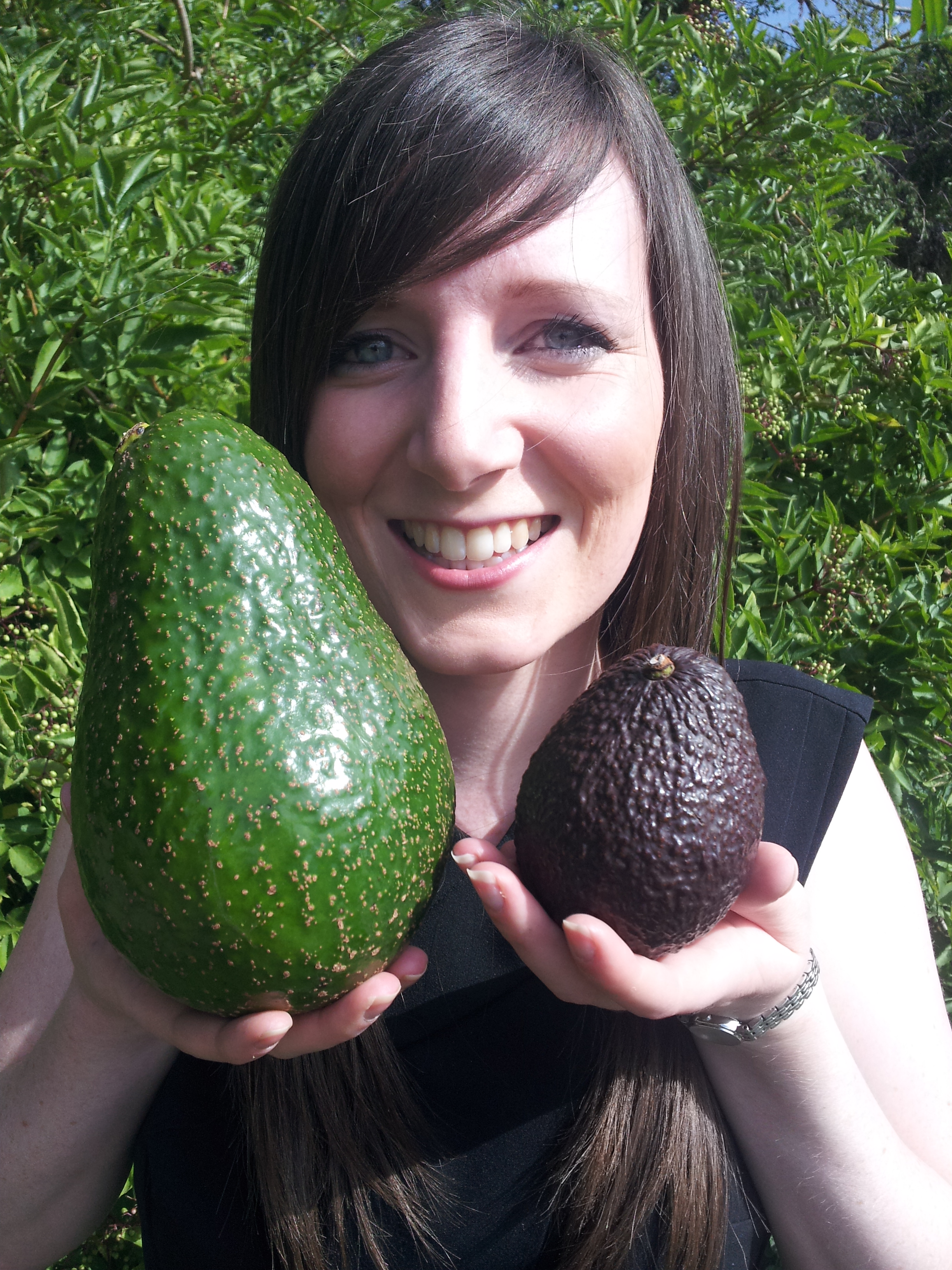
When I read that supermarket group Tesco was going to start stocking the world’s largest avocado, my first thought was that the word for it must already be in wide usage. OK, that was my second thought. My first thought was Yum.
But putting my greed to one side, I quickly Googled the word and discovered to my surprise that Avozilla does not appear to have been in any kind of common currency prior to this announcement. It’s not even in Wikipedia, and everything that’s anything is in Wikipedia. Except for Wordability of course, but that’s just a matter of time.
All of which makes me slightly sceptical about the Avozilla. The way it has been hyped and covered suggests it is a new variety of avocado. The press release trumpets that the fruit “is extremely rare and comes from just four trees grown by one of the world’s biggest suppliers of avocados, in South Africa.” Tesco salad buyer Emma Bonny said: “The Avozilla has a fantastic taste with a rich, juicy, buttery texture, and creamy flavour.” As well as its size, the difference in skin colour and texture are also used to highlight that it is a different variety.
Tesco salad buyer Emma Bonny with an Avozilla
Call me cynical, but isn’t this basically just a big avocado? Don’t you already get some avocados with dark skin and some with light skin? Aren’t all the best avocados buttery and creamy? Is this really a new variety?
The answer is surely in the word itself, and not just the fact that it appears nowhere else except in reference to this launch. New varieties are often amalgams of the different fruits which they represent, such as a Papple, or just some other word or scientific term altogether. But the only derivation I can think of for the Avozilla is Godzilla, and that the -zilla suffix is being used here to denote its monstrous size.
Not a normal way of naming varieties and not one I see catching on beyond the world of marketing spin. Applezilla anyone?
I have been pondering the word Selfie recently. Though not coined this year, it seems to have really emerged into public awareness in the last few months, with a number of mainstream publications focusing on the growth of them or the problems associated with their increasing prevalence. I have been weighing up writing about it for the last few weeks.
A Selfie, in case you don’t know, is a photograph that you take of yourself, normally with your phone, and then share with nearest and dearest via social media. A trend for some time, 2013 is the year when it has become cemented in the English language.
Oxford Dictionaries agrees. In the latest quarterly update to Oxford Dictionaries Online, Selfie has proudly taken its place as a new word. It’s one of a number of words that have taken a refreshingly short time to reach Oxford’s online annals, with Phablet, Space Tourism and Street Food others which seem to have been recognised relatively quickly.
There are also a couple of Wordability favourites making their debuts. Bitcoin was recognised earlier this year as an important word in the ongoing financial saga around the world, while last year’s triumphant Omnishambles has now sealed its emergence with its own entry.
Overall, it is an entertaining update. The challenge now is to write a coherent sentence feature Babymoon, Vom, Twerk, Flatform and Digital Detox. After all of that, I’ll need a glass of Pear Cider.

 Wordability