Derecho Set To Swamp The Jet Stream

It is odd that with the weather so prominently diabolical across the globe, no new words have emerged to sum up the meteorological misery.

Instead, we have all become experts on weather phenomena, and previously obscure terms have suddenly leapt forward to become commonplace and act like new words to many.

The most notable is Derecho,  which is a land directional hurricane with extreme winds blowing in one direction. Such a storm caused havoc in the eastern United States recently, causing the word to emerge from its hitherto weather-geek state and become widely used by a newly knowing public.

Such was the word’s impact, the Global Languge Monitor picked it as one of its top words for the first half of 2012. I’m sure all US residents will be hoping it is not similarly prominent in the remainder of the year.

On the other side of the pond, you can be sure that Jet Stream will feature in many lists as one of the defining words of 2012 for the UK. Suddenly, we’re all experts on where it is meant to be at this time of the year, and we are all praying that the damn thing will move so we can get some sun. I never thought that ‘The  Jet Stream Is Moving’ would become a headline we would hear and instantly understand.

And if it’s not the jet stream, residents in Newcastle will tell you they are experts in super cell storms, having been doused by one in the last few weeks.

Will some new wild weather terms emerge? Probably. But in the interim, we can all enjoy sounding a bit cleverer as we bandy about some words which have suddenly achieved a new lease of life in the English Language.
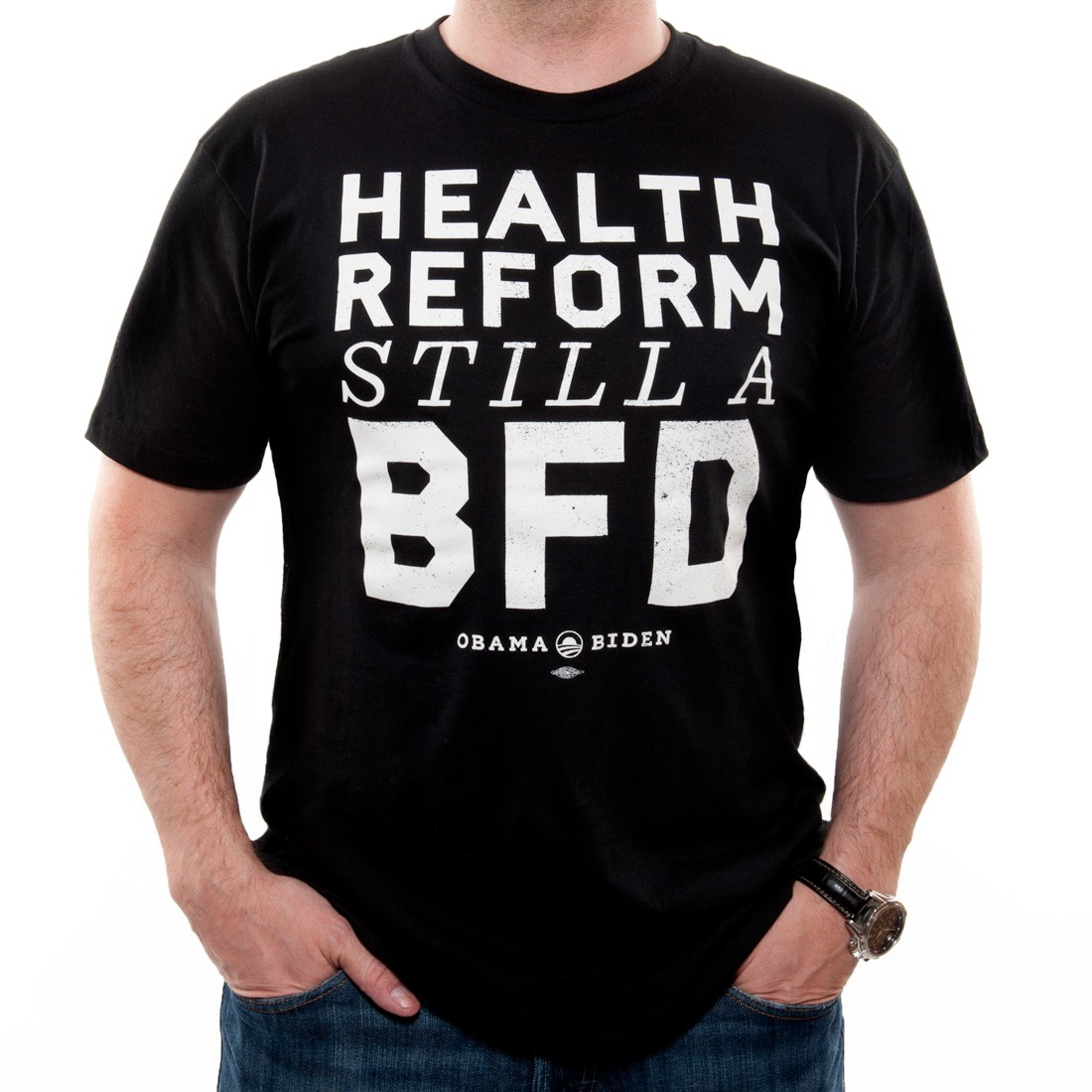

WTF! BFD is TNA

It’s not quite true to say that BFD is a TNA, but many have been saying it’s the new LOL.

BFD as an abbreviation meaning ‘Big F***cking Deal’ (language cleaned up because I know my mother reads this blog) is not new. But it has recently emerged into political discussion in America, thence onto Twitter and is now being touted by linguists as the next big things in abbreviations.

Of course, I’m not actually sure there is a next big thing in abbreviations. Linguistics isn’t showbiz, sadly. It would be nice to imagine that the abbreviation police are trawling the internet and that as soon as they come across this blog and TNA (Trendy New Abbreviation), the metaphorical trumpets will come out and it will start to adorn all short-form communication within minutes.

BFD T-shirtBut I digress, badly. Two years ago, US Vice President Joe Biden said that Barack Obama’s healthcare bill was not just a big deal, it was a “big f***ing deal” (hopefully my mother is still reading, you see). And with the bill recently being upheld by the Supreme Court, the Obama administration has taken to selling suitably emblazoned BFD T-shirts, (for a BFP, incidentally). The Romney campaign has criticised the behaviour as unpresidential, and the Twittersphere has gone crazy with BFD-related postings.

So the debate has been about whether BFD will become as well established as its elder statesmen, with LOL cited as as the one to beat, which begs the question of what David Cameron might believe BFD stands for. The article hyperlinked above says that the jury is still out, and quotes linguist Allan Metcalf and his scale to decide whether the word will last. The scale awards marks of 0, 1 or 2 for each of five categories:  frequency of use, unobtrusiveness, diversity of users, ability to generate related neologisms, and endurance of the concept it describes. Mr Metcalf gives BFD a paltry three points in total, suggesting it is au revoir to BFD.

I’m not so sure. I think the process of new word acceptance is beginning to change, thanks entirely to the internet. The article mentioned above says this process has not changed for a number of years, and that it takes time for a new word to bed in and get established. But with the power of global communication, and the velocity with which things become cemented on Twitter and other social media, new words and ideas now become part of the fabric of society substantially quicker. The abbreviations we now take for granted are all children of the texting age, a period that is no time at all in the entire history of human language.

It would not surprise me at all if the current popularity of BFD is a long-running thing, and it becomes just as established as all the others. And then we’ll just be saying that the debate was a BFD over nothing.

Have You Ever Made a Throne Call?

UK supermarket chain Asda has coined a neologism in an attempt to drum up interest in its range of mobile phone tariffs.

It has commissioned research into phone usage and discovered that nearly one in five men admit to making a call on their mobile while in the toilet. They have dubbed such communications Throne Calls.

It’s quite funny. But that’s about it. It’s a pretty blatant attempt at new word creation with the sole aim of garnering publicity for Asda products, rather than a move to enrich the language. I don’t think it has a long-term future as a new word. It’s hardly fulfilling a crushing chasm in the language, while few people are likely to own up to making throne calls. And the Urban Dictionary did it four years ago, but it seems to have had absolutely no usage since then, so that kind of proves the point.

And if it did catch on, who knows what might follow? All suggestions for what SMS could stand for are gratefully accepted.

Why You Don’t Want To See Planetrise

We all know that a beautiful sunrise can be a fabulous thing. But astronomers have now identified something which might be even more spectacular to view, if you weren’t being ripped apart by gravitational forces at the time, that is.

The two-planet system Kepler-36, a mere 1,200 light years away, features two planets which are closer to each other than any other pair of planets found in the past. Kepler-36b is just under 11 million miles from its star, while its large, gaseous neighbour, Kepler-36c, is only 1.2 million miles further away.

All of this proximity means that every 97 days, 36c appears to rise in the sky as it passes its smaller, rocky chum, leading to a phenomenon which astronomers have named Planetrise.

PlanetriseFabulous as it must look, the event causes huge gravitational tides which stretch and squeeze both planets.

Given that this is the first time this has been observed, it seems unlikely that planetrise will become a term which will we see a great deal of in the future.

And if planetrise should ever come to Earth on a regular basis, you can assume that the planets in our Solar System will have shifted their orbits to such an alarming degree that there will be nobody left back here to write blogs about it.

Unsourcing: Free Work By Another Name

Big companies like saving money. So far, so obvious. But the growth of social media has allowed them to find a new way to provide services they used to provide before, at a fraction of the cost and quicker and better than in the past.

Basically, instead of setting up costly call centres armed with legions of people able to answer people’s questions, they simply direct people to other users, who will fight with each other to answer the questions themselves. This has become particularly prevalent in the tech and electronic sectors, where internet-linked geeks quite like to be first to help others with the relevant information.

And as every good trend deserves a word, The Economist has now given it one – welcome to the world of Unsourcing.

I must say that I find this word bizarre. Crowdsourcing, the use of large groups of people to pull together information, feels like an action to achieve a goal. Outsourcing, getting your call centre needs fulfilled by a third party, makes sense as it implies organising a service outside your organisation.

Unsourcing suggests that you stop doing something. This is of course true – you stop employing lots of people, but unemploying is already in the lexicon and is hardly the kind of word you would want to associate with a modern new way of behaving. But you don’t really un- the sourcing in this case, if I can get away with saying that, you merely redirect the source. In addition, unsourced is a perfectly legitimate word for information which is unverified. So it seems a strangely inappropriate word.

Even though it is back in the news now, the Word Spy website says it was first used in 2001 and was recognised as a trend in the IT industry back then. It says a lot for unsourcing’s sedately growth that it is only now that it seems to be back in public recognition and in with a chance as being recognised as a commonly used word.

A Papple A Day

When is an apple not an apple? When it’s a cross between varieties of pear but still looks like an apple and tastes like a pear. And what do you call such a fruit? According to Marks and Spencer, you call it a Papple.

The new fruit, a hybrid grown in New Zealand, is due to go on sale in the UK retailer’s stores in the next few days, and is currently only called a papple as a temporary measure until another name is found, or so it is claimed. I’d be surprised if that ever changes. Its official name is T109, which will of course not be widely used, not least because it sounds like an Arnold Schwarzenegger sci-fi robot.

The concept of pear crosses having similarities to apples is not a new one. Nashi Pear is perhaps the best known name of the Pyrus pyrofolia species, with Apple Pear being one of the alternative names. A papple is clearly a different fruit, and the use of a name that will stick in people’s minds in the short term is a good way of establishing the brand.

But will it last? Well the appearance of the Papple has allowed people to remind us of the Pineberry, combining the best of the strawberry and the pineapple; the Grapple, which is a grape-like apple; or the Aprium, which combines the apricot with the plum.

What these cross-breed words serve to tell us is that while they sound memorable, they don’t really have any great longevity. We will think about papples and joke about the word for a few weeks, and then they will be likely to fade away, with the word quickly becoming historical and not entering everyday usage. In fact, it will only become current the next time that somebody combines some fruit and puts it in the shops, allowing us once again to trot out all its predecessors. For entertainment’s sake, let’s hope that anything in the future involves a mango.

Grexit – A Eurozone Language Crisis

If things were not bad enough for countries across Europe because of the ongoing economic crisis, they have just got a great deal worse thanks to the spawning of a particularly ugly new word.

Commentators around the globe now have a term to encapsulate the possibility of Greece exiting the Euro – they have called it a Grexit.

Apart from saving headline space for stressed sub-editors, it is hard to see what other function this word serves. It’s not pleasing on the ear, it takes a couple of seconds to work out what it actually means, and it’s frankly unnecessary – Greek Exit is hardly a term that was crying out to be shortened.

It is also not a word that can really be extended – if Spain or Portugal were to consider withdrawal, Spexit or Pexit just don’t cut it. But despite all of this, I expect it to become heavily used, while its prominence in the news cycle makes it likely to feature in many ‘Words of the Year’ lists.

The people I feel really sorry for are online webmail company Grexit, whose operation may now forever be tarnished by association with an economic crisis of which they are not a part. I do hope not. There are many casualties of the economic problems engulfing Europe at the moment. It would be a shame if a piece of linguistic nonsense claimed another.

Shwopping Presents a New Swapportunity

What is it with the need to create new words out of ‘swap’? Earlier this year, Wordability looked at the non-word Swapportunity, which has managed to gain a degree of currency despite being made up for an American Yoplait commercial.

Now UK retailing icon Marks & Spencer has got in on the act. Its new campaign, encouraging people to bring in an old item of clothing to donate to Oxfam whenever buying something new, has prompted them to try and introduce a new word into everyday English. People are shopping and swapping, so they must be Shwopping.

The plan has, hardly surprisingly, garnered significantly publicity, with ‘shwopping’ featuring prominently in all the coverage.

Can M&S claim to have invented it? The company is certainly proud of the word, and chief executive Marc Bolland was quoted as saying: “Within 24 hours this word of ‘shwopping’ might be added to the British language.”

But I wonder whether he checked with environmental campaigners in New Zealand. After all, in December last year, The Big Shwop took place in Wellington, encouraging people to swap one item for another. So maybe not quite as original as we thought.

Personally, I am not sure about shwopping as a word. It sounds a bit to me like I was planning to swap something, but the six pints of beer I drank made it much harder for me to say it. And that would be the only way I would be likely to shwop until I dropped.

Marmageddon – You Either Love it or Hate it

There’s a crisis in New Zealand. The country is set to run out of Marmite. And the headline writers have dubbed it ‘Marmageddon’.

In the spirit of the famous spread, you either love or hate this bit of linguistic dexterity. My feelings towards it match my sentiments towards Marmite on toast. Love it.

I think the reason that it works linguistically is because it is knowingly ludicrous and is almost taking the mickey out of itself. Its in-built sense of irony makes it a success. Of course the disappearance of Marmite off supermarket shelves is not a real apocalypse, especially as it will come back this year once the factory damaged in last year’s earthquake is repaired.

But by being called ‘Marmageddon’, the situation not only becomes easy for headline writing but is also immediately defined as lightweight, an ‘and finally’ story for the end of the news that will make everybody smile.

I don’t expect Marmageddon to last for long or to leap Linsanity-like into official lexical recognition. But wouldn’t it be great if it left a legacy of -ageddon suffixes, to be applied to any suitable words engulfed by a catastrophe. The world’s population of Llamas is becoming extinct – Llamageddon, screams the world’s press. Cotton shortages are affecting popular sleepwear – it’s Pyjamageddon.

But it probably wouldn’t work if there was a worldwide ban on the playing of Bananarama records. After all, that would hardly be a crisis.

Donald Trump Symblomatic of Changing Language

I think my language antennae have had an off day. I’d seen reports claiming that Donald Trump had coined a new word, yet when I read it, I was convinced that he’d done nothing of the sort.

Speaking about the Oscars, and specifically the Vanity Fair party, he described it as boring and “symblomatic” of what was happening at the magazine overall.

Fine, I thought, symblomatic means ‘acting as a symbol of something’, and is a perfectly well-known word. Googling it found a few sporadic uses from the last few years.

But is it a real word? No. Is it in any dictionaries? No. Is it likely to be in dictionaries any time soon? Well, on that one, you never know. I think it is actually quite a useful word and can’t currently think of a viable alternative.

But then again, that could just be symblomatic of the fact that my language antennae are having a really bad day.

(The ‘symblomatic’ moment is at about one minute, 13 seconds. I’m sure Mr Trump won’t mind if you keep the sound turned down prior to that moment).