The true legacy of Boaty McBoatface

It’s the boat I feel sorry for. At the centre of the cocked-up attempt to get the public on board with naming a new research vessel, there is a boat which has no knowledge of the column inches devoted to its moniker. But it seems absolutely certain that it will never be called Boaty McBoatface.
I don’t need to recount the story here. It is well documented that the Natural Environment Research Council elicited help from the public with the naming of its new multi-million pound research vessel, and once the ludicrous but hilarious suggestion of Boaty McBoatface took hold, well there was only going to be one winner. And equally inevitably, it was never really likely that a boat of serious purpose would sail off into chillier climbs with such stupidity emblazoned on its hull.
I am leaving it to others to debate the rights and wrongs of this incident, whether it is funny or not, what David Attenborough thinks and so on. Wordability’s interest is obviously more from the English language point of view, because even though this campaign has made no difference to the boat, it may have inadvertently changed the language itself.
It hasn’t taken long for Boaty’s cousins to come to the fore, with Trainy McTrainface and Horsey McHorseface now well documented. Only this week, a poll to rename a Texan school sees Schoolie McSchoolface in the running. Now it has started, it may never stop.
So the legacy of the Boaty McBoatface story is not that it will bequeath a newly named ship with a name for eternity, but rather it has added a new linguistic twist to the English language, ensuring that whenever the subject of new names is debated, Namey Mc Nameface will bubble to the top of the list.
And maybe that linguistic change will be Boaty’s ultimate legacy. Because next time somebody decides it is a good idea to ask the public to help name something, Boaty will inevitably bob into view as a warning against doing that. And if that is enough to put them off and force people to make decisions for themselves without bothering the rest of us, then Boaty has done its job.
 I am not a betting man, so will not be putting a penny on the outcome of the EU Referendum later this year. The fact that I haven’t got a clue which way it will go is also a contributory factor to that decision.


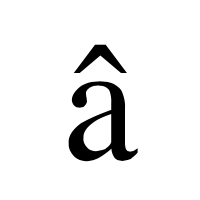 It is never a surprise when a change in the French language causes outcry and controversy. After all, control of the French tongue is heavily proscribed by the Académie Française, an organisation which has defended the purity of the language for many years, fighting in particular against the inclusion of English words in the vocabulary.
 The era of a new language has truly arrived. This year, Oxford Dictionaries has named an emoji as its word of the year.
 Wordability