A Squirmish In The Polls

As US election year dawns, so the role of language in the campaign will come to the fore once more. During the 2012 election campaign, I wrote about how the finding of the right word could potentially swing the entire poll, while also noting how Mitt Romney’s travails with language could have contributed to his dismal final result.

So it’s disappointing to note that in the 2016 version so far, the times that language has come to the fore have been more the subject of ridicule and controversy than anything else. Last month it was Donald Trump and his use of the term schlonged. This time around, Trump is still at the centre of things, but even more central to events is Sarah Palin.

It is the use of the word ‘Squirmish’ which has caused all the fuss this time. In her much-dissected endorsement of the Republican front-runner, Palin referred to squirmishes happening around the world, meaning a kind of low-level skirmish. Interestingly, after the inevitable initial amusement, criticism and Twitter reaction, there seems to have been an almost grudging respect for the term. Some have said they find it actually quite useful, while dictionary.com used it as a way to discuss the way that words are introduced in election campaigns generally, while also saying Palin was not the first person to use it.

While I doubt that Palin was aware of the 19th century citations to which dictionary.com alludes, and whether it was a deliberate neologism or a cock-up, there is no doubt that squirmishes has emerged as the first word of this year to be associated with the campaign, and it appears to have a certain amount of momentum to keep it in the public domain for at least a few weeks.

I suppose the level of squirmishes between the candidates might dictate how long it stays current for.
Schlonged By Trump

The language of political debate has always fascinated me, and the way that the choice of words can influence the direction of a campaign can never be underestimated.

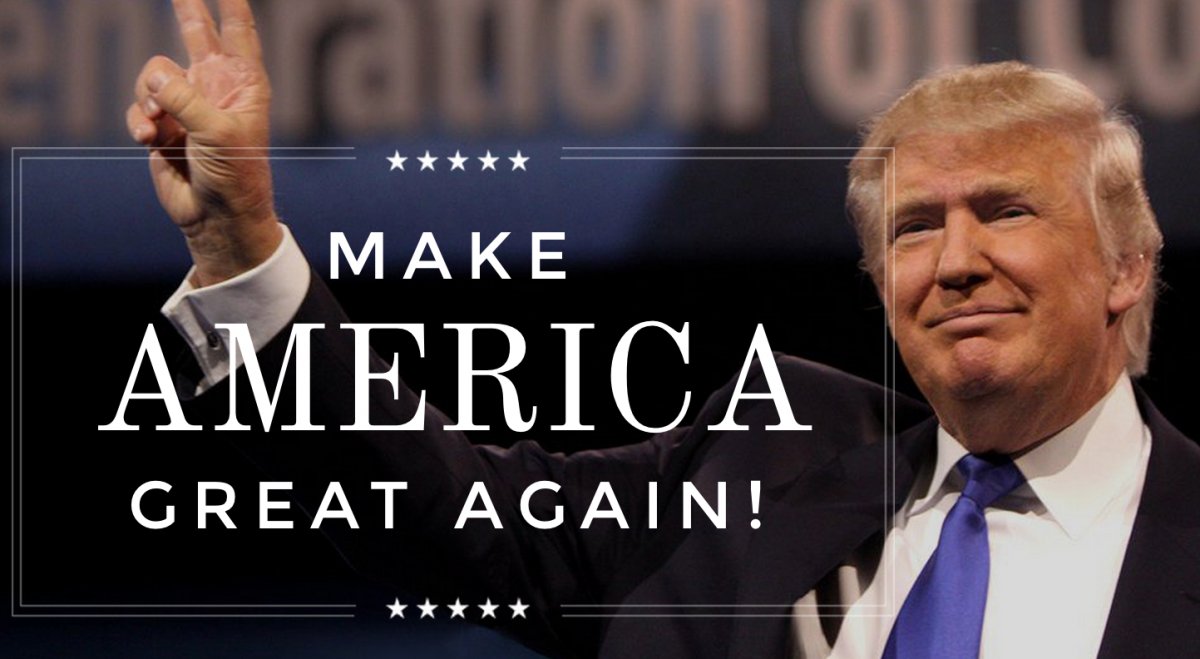
How disappointing then that when the subject of language comes to the fore in the American Presidential campaign, it should be over the nuances of a crude piece of Yiddish. But how much less surprising that Donald Trump should be at the centre of it.

Basically, Trump voiced the opinion that Democrat rival Hillary Clinton had been ‘schlonged’ by Barack Obama in the 2008 election. He claims to have used it as a term for ‘beaten’, claiming it was just a description for her having lost out. But as has been demonstrated widely online in the last few days, ‘schlong’ is Yiddish slang for penis, and the verbal form of that is not exactly common usage in the way that Trump claims. Cue much debate about the grammatical rules behind creating a verb from a noun, analysis of just how little usage schlonged has had over the years and fortunately very little linking to the Urban Dictionary definition of the term.

Questions have also been asked over whether Trump genuinely thought that his use of the term was correct, or whether it was actually a sexist put-down and therefore much more deliberate. I think the jury is out on this point, but regardless of whether it was intended or accidental, the put-down element is unavoidable and has been fundamental to the discussion that this comment has created.

So what does this mean for the future of English – is schlonged going to emerge as a new piece of widely used Yiddish slang, or will it just be something talked about purely in the context of this Trump/Clinton contretemps.

My instinct is the latter. Trump is such an extreme and divisive character, it is hard to imagine a term that he has used taking off widely, as people will not want to be associated with it, especially as it is a long way from being an innocent put-down. I think it is likely to be a term that is remembered, but not one that enters everyday use. It is however a shame that one of the first linguistic stories of the campaign is this one.

And if Trump’s campaign ends with him losing, I wonder how the competition will refer to his defeat?

How to Muggle Things Up

Literature has been a common source of new words for a very long time. But I doubt whether the replacement of one word created by an author with a new word from the same author has ever created the uproar we have seen this week. But then again, JK Rowling is no ordinary author.

The story is simple. Rowling coined the term Muggle in the Harry Potter series to mean a non-magical person. But in information which has come out this week about Fantastic Beasts and Where to Find Them, next year’s film from Rowling’s wizarding imagination, that word has been changed. The film is set in America, a number of years before the birth of young Potter, and it has been revealed that the Americans don’t call their non-magical counterparts Muggles. No, they call them ‘No-Maj’, meaning they have no magic.

Cue the Twitter outpouring, cue the lamentations of Potter fans united in grief at what they see as the demise of one of their favourite words.

It’s nonsense of course. What might have been more surprising was if American wizards and witches had used the word Muggle. Do people not understand language variation across countries? Is it not entirely likely that a slang term, which is after all what Muggle really is, would be different in America from Britain. Star Eddy Redmayne has now done interviews explaining this and also saying that the term Muggle has not been replaced, as some have erroneously claimed. It is simply that a different word is used by people in a different country, no replacement involved. And when you say it with an American accent, you can fully understand why No-Maj sounds right in a way that the more British Muggle would not.

But the episode is interesting for a couple of linguistic reasons, aside from the social observation that yet again the internet is full of people focusing their energy and anxiety on the most trivial of things. What it does show is how beloved the language of JK Rowling is and how masterful she was with the words she coined and chose for her wizarding world. It would be an exaggeration to say that if she had come up with an inferior word for Muggle then her books would not have succeeded. But it does demonstrate that her consistent choice of the right word, finding ones which have really stuck with the public, gives us insight into why her books have succeeded.

The other thing to mention is that much of the reporting of this story has stressed that Muggle has even been recognised by Oxford Dictionaries. That’s lovely, and I must admit I was surprised by the idea that a reputable dictionary was including a definition for people who aren’t magical. But of course, it doesn’t. Muggle has taken on a new meaning for someone who is ‘not conversant with a particular activity or skill’. I can’t off the top of my head think of another example of a word from literature which has then gained a new meaning in the real world and been given dictionary recognition as a result of that.

So the supposed Muggle controversy isn’t really a controversy at all, and in fact demonstrates Rowling’s acute understanding of the English language. And maybe that is the greatest magic of all.

Binge-Watch the Surprise Choice

Word of the year season is upon us, and I have been wondering of late what words would end up taking the gongs this year, given the generally disappointing nature of the new words which have emerged during 2015.

So in that respect, the first winner out of the blocks is entirely in keeping with the less than stellar linguistic year we have been through. Collins Dictionaries has chosen ‘Binge-Watch’ as its word of 2015.

Now there is no denying that binge-watching, the viewing of multiple episodes of a television series in a short time span, is on the rise. New viewing habits and on demand video services have changed the nature of the way we watch television, and access to box sets is increasing. My concern is not with the word itself, it is more with the fact that it doesn’t feel to me like this year has been the year when binge-watching has come of age. I think it had already come of age and was already entrenched, and this year has not been significantly different to last year, though Collins do cite a 200% increase in usage. I suspect that growth probably happened the year before as well. I also don’t feel it defines the year, like a good winner should. And it featured in the Oxford Word of the Year shortlist in 2013.

To me, some of the other words on the Collins shortlist are more representative of 2015 than the eventual winner. Corbynomics, the economic policies advocated by the UK Labour leader Jeremy Corbyn is included, and Jeremy Corbyn’s influence on the language has already been documented on Wordability this year. Transgender, relating to a person whose gender identity does not fullycorrespond to the sex assigned to them at birth, has been a big discussion point. And Contactless, making payments without signature or PIN, has gone increasingly mainstream this year and would have been a justified winner.

So the benchmark has been set for Word of the Year winners. I hope that subsequent winners will be able to exceed it.

Breastsleeping May be the Answer

One of the difficult issues facing new mothers is feeding their children overnight. The decision over whether or not to have your baby in bed with you is one often fraught with difficulty, with uncertainty over whether it is safe counterbalanced by the fact that for many tired parents, having your child close by is the only realistic option if you want to breast feed.

A pair of researchers may have now solved the problem by writing a paper analysing the practice and coining a term specifically to remove the stigma surrounding it. James McKenna and Lee Gettler propose the word Breastsleeping.

To make the point, they include the term in the title of their paper, which is called: “There is no such thing as infant sleep, there is no such thing as breastfeeding, there is only breastsleeping.” In the abstract they comment that this new word will help to resolve the debate about bedsharing and help researchers understand in greater detail different ways of breastfeeding children.

There has long been a huge debate over whether sleeping with your baby is safe or not, and the creation of this new word is not going to close the issue down. However, it gives legitimacy to the practice by identifying it and analysing it, and the millions of people who do this with their babies may well feel support and backing for their actions by this, especially if the word starts to catch on. And because breastsleeping is so widespread, I think there is a chance that it will.

Your Thighbrow’s Connected To…

This week, I have been mostly looking at pictures of women in bathing costumes. For work purposes, you understand.

The reason? The latest fashion trend to sweep social media. It’s the thighbrow.

So what is a thighbrow, I hear you ask, if you can actually bear to. Well, it is the crease which naturally forms in a person’s skin when their hip meets the top of their thigh. Women in swimsuits show them off very well, and they are so named because the shape looks a little like an eyebrow, only it is at the top of your thigh. Social media is now awash with pictures of celebrities showing off their thighbrows for all to admire.

View this post on Instagram

Made in KrisJenner™

A post shared by Khloé (@khloekardashian) on

I can understand why the word has gatherered a bit of momentum. It’s fun, it sounds vaguely clever and moreover it gives people an excuse to post even more pictures of themselves, if they actually needed it. But will it last? Please no. And if so, will it spawn a never-ending trend of other body creases getting their own name as well, will we be subjected to the elbrow or the armpitbrow in years to come.

Hopefully it won’t be long before the thighbrow is given the boot.

From Corbynmania to Trumpism

There are currently election campaigns taking place on either side of the Atlantic, both of which have conspired to be a great deal more interesting that we might have expected. In the UK, the election of a new leader for the opposition Labour party would normally be something of no more than passing interest to most, until the result is announced. And yet, the story has maintained its place in the headlines as the result looms on Saturday.

Meanwhile in the States, the early skirmishes in the battle to become the Republican nomination for president in a year’s time might not normally be front page news as a bloated field battles to be winnowed down to a more manageable number.

So what has elevated these two stories to heights which might not have been expected? I think the answer is the presence of a maverick candidate in each one, somebody who has emerged wholly unexpectedly from the pack to lead the polling and thereby create a wave of momentum which opponents currently seem powerless to stop. In the UK, it is veteran left-winger Jeremy Corbyn. In the US, it is business legend Donald Trump.

Wordability’s interest comes off the back of that. For each of the leading men, a word has been coined to become the key term for their campaign, and they are now bandied about as the standard ways to refer to what is going on. In the UK, we have Corbynmania. In the US, it’s Trumpism.

Of the two, I think Corbynmania is easier to explain and understand. The word refers to the groundswell of support for the 66-year-old and the general sense that he has created a new excitement and engagement in politics, there is currently a hysteria around him which appears to be carrying him to victory. The word describes the mood.

The big question is what will happen once the election is over. Clearly if Corbyn loses, then Corbynmania as a movement is over, in much the same way that Cleggmania is a historical reminder of 2010. If he wins, then it certainly continues, at least for the short term, but could then easily go the same way as the erstwhile Lib Dem leader if his tenure in the hot seat turns out to be less than stellar. Either way, I expect Corbynmania to be remembered as a key word of this year, even if it doesn’t have longevity.

Donald Trump campaign websiteTrumpism is an altogether different case. Rather than a description of support, Trumpism is an ethos and an ideology of itself, and is used in commentary as a way of distancing the Republican front-runner from the rest of the field. You either believe in Trumpism or you don’t, and increasingly, it seems that vast numbers of Americans do.

The problem for me, looking out from the other side of the ocean, is trying to get a true handle on what Trumpism actually means. Even the different definitions of it online seem to be struggling slightly. Is it an ’empty kind of mean-spiritness’, a form of fascism or ‘the whining of the privileged‘. I must admit I don’t entirely get it.

Maybe it’s one of those things you simply understand if you are in the States. If you live and work there, Donald Trump represents something appreciably different from what has gone before and taps into values which it is entirely possible we outsiders fail to grasp and which resonates with enough Americans to make it significant. That could explain why Trumpism may be here to stay for some time.

Well-chosen words have always had the power to influence political debate and campaigning. As these two election battles have shown, winning the lexical war can often be the path to winning the ballot as well.

Grexit Gains Currency

The latest set of additions to Oxford Dictionaries Online has an entertaining range of buzzwords from the last couple of years, as ever from a wide variety of sources.

I think that of all the new words selected for inclusion in this update, Grexit is the one which seems to have the most sticking power. Meaning the potential withdrawal of Greece from the Eurozone, it has shown it has staying power by continually reappearing in the news as the economic problems of Greece continue to multiply.

But it shows a great deal more flexibility than that, because it has already become a term from which others are derived, it spawns its own crop of new words. Brexit, possible British withdrawal from the European Union, is one prime example and is included in this update as well. I think a new word which already has its own sub-genre of related words deserves its official recognition.

Some of my favourite recent words which I never got around to looking at in Wordability make an appearance. Manspreading, “the practice whereby a man, especially one travelling on public transport, adopts a sitting position with his legs wide apart, in such a way as to encroach on an adjacent seat or seats” is a particularly good term and garnered much coverage a few months back. Now it is appearing with increasing regularity in stories across the world and looks set to become fully established as a great term for an act which is somewhat anti-social and unpleasant.

I was also pleased to see fatberg gain some recognition, following a number of stories about ‘large masses of waste in sewerage systems’. The last couple of years seems to have seen an almost competitive rise in stories about increasingly horrendous fatbergs being found in different cities, and as the ghastliness of each subsequent fatberg has increased, so has the word become fixed in people’s minds.

The entry which surprised me the most is MacGyver, a verb meaning “to make or repair (an object) in an improvised or inventive way, making use of whatever items are at hand.” It doesn’t surprise me that the word is used. What surprises me is that it has been included now. Derived from the television show of the 1980s, where lead character MacGyver used all manner of household objects to get himself out of tricky situations, it seems an odd time to finally give recognition to a term which has been around for quite some time. Perhaps it has been enjoying a revival on daytime TV, with a consequent growth in usage.

But that’s just a quibble. Any list which celebrates the fact that awesomesauce, cakeage and beer o’clock are now legitimate members of the English language is all right by me.

A Yuccie New Word

Wordability towers has been very quiet the last few weeks, due largely to the fact that it has been relocated. Now safely ensconced in gleaming new surroundings in the dictionary city of Oxford, not far in fact fact from where it was previously located in the city of the leaning spires, it is time to resume the quest for the new words which are going to show staying power.

Actually, I am sticking to my mantra of last year a little on this, when I felt that the state of semantic creativity was not quite up there with some years of other vintages, and I think that 2015 is carrying on along similar lines. But in the last couple of months, a few words have caught my eye.

In particular, as a cricket fan, the term Pomicide, which was coined across social media and headlines to sum up just how England had crushed Australia in the Ashes, was a perfect word for capturing the level of the annhilation which the home side inflicted on its Antipodean visitors. It is a one-hit wonder word, and will likely disappear as quickly as it arrived, but it will be looked back on as the word of the 2015 cricket summer and may be resurrected should England subject Australia to a similar whipping in the future.

I was also briefly taken by brose, which is basically rose drunk by men, which is apparently happening with increasing frequency. The fact that this word has now been around for a couple of months but there are very few references suggests that it may not be quite the viticultural revolultion I had first supposed, and this is not a word that is going to hang around for very long.

But Yuccie is one which may be with us for the long term. Idenfitied and named on Mashable earlier this year, a Yuccie has elements of both a hipster and a Yuppie  and is a young urban creative soul, who has the creative ambitions of a hipster but the financial and lifestyle desires of a yuppie. As the Mashable piece puts it, a Yuccie is “a slice of Generation Y, borne of suburban comfort, indoctrinated with the transcendent power of education, and infected by the conviction that not only do we deserve to pursue our dreams; we should profit from them.”

Of course the very word itself is problematic. Someone could identify themselves as a hipster without fear of ridicule about using the term. The same is true of yuppie, even if that might be frowned upon for some other reason. But can you honestly see anybody saying ‘I’m a Yuccie’ and being proud of it? I think it’s unlikely. It’s the kind of thing someone in the playground may say to a fellow playmate in order to make them cry. So while it may well have some staying power for social commentators and headline writers, those for whom the term has been coined will surely be less prone to using it, which will inevitbly stymie is growth.

The Mashable article which coined the phrase makes a virtue of this, saying Yuccies are indeed Yucky because of the privileged position they often come from, which gives them the ability to make the kind of career choices which then define them. That’s all very well, but then who wants to identify themselves with a label which wears this connotation as a badge of honour. Not sure.

Nevertheless, the lifestyle described is very real, and if Yuccie is not to be the term which is eventually settled on, then I would suggest that something else will be. It’s worth keeping an eye on.

So I’ll sit in Wordability Towers’ new urban setting and watch the yuccies walk past in their creative way, drink a glass of brose to toast them and watch some more Pomicide on the television.

The Transracial Debate

There are times when a word becomes prominent because it has been coined for something new. There are times when a word becomes prominent because it has become a social media buzzword. But then there are times when the choice of a single word is so inflammatory it can define and fuel a debate and become the single term by which something is remembered. So it is with Transracial.

Transracial is not a new word, but it has now been given a new meaning. Correctly defined as ‘crossing racial boundaries’, and being used for people of one race who are raised in another, the word has shot into into public consciousness because of a redefinition which has proved divisive in the extreme.

The debate started following the story of Rachel Dolezal, the head of the Spokane, Washington chapter of the National Association for the Advancement of Colored People, who revealed that despite living as a black woman, she had actually been born white. When she went on television to explain herself, she said that she was ‘transracial’, in other words that she felt like a black woman in a white woman’s body and had made an apparently legitimate decision to change herself in order to satisfy this.

Linguistically, the move is borne of the same convention that allows Transgender or Transsexual, where the issue of someone’s sense of gender and actual gender are at odds with each other. But as many commentators have pointed out, this is not an acceptable parallel and therefore cannot be governed by the same linguistic parallel.

There have been a number of well-thought out and fascinating rebuttals of the use of the term, mainly pointing out that this is not a word of choice, not a word that people can use about themselves in this way. In fact, the argument confirms that it is a destructive term when used like this, because it is taking a word that is used to describe large numbers of people who have had difficult upbringings as a result of being transracial and belittling those difficulties by appropriating it as something that feels like a lifestyle choice. This argument has been well advanced in the media and across Twitter.

So linguistically,what does this mean for the future of the word? Well one thing is completely clear – transracial is not going to be changing its meaning any time soon, the original sense will remain the only sense and the semantic spin that Ms Dolezal utilised will not be adopted.

But that does not mean that the self-deterministic sense will be forgotten. When we come to look at the words of the year, Transracial will be right up there, because there is no disputing it is one of the year’s most used and controversial terms. And while the Dolezal spin will be remembered, it will ultimately be as an anti-meaning, a clear definition of what Transracial is not. In future writing on transracial people, I would expect it to become a touchpoint to rail against, a reference point for everything which people fail to understand about those whose lives this affects.

So, bizarrely, Dolezal has contributed to the debate and the issues of transracial people precisely by getting the term wrong. She has brought the issue as a whole to the wider population, and created a meaning which people can now remember and reject. Probably not what she had in mind.