Exclusive: New Words on Oxford Radar

The recent coverage of the inclusion of Twerking in Oxford Dictionaries’ latest online update showed just how much people genuinely care about the state of English and the words that we use.

But lexicography moves on, and the guardians of the Oxford lists are already looking at what the next new words to be included might be.

In an exclusive interview, Wordability spoke to Fiona McPherson, Senior Editor, Oxford Dictionaries, who revealed some of the words which are currently being tracked by lexicographers and which may be the ones which feature prominently in updates of the future. You can watch the full interview here:

So to summarise, the words she selected are:

Bacne – basically, acne on your back

Hatewatch – an old Wordability favourite, first identified last year. The practice of watching something you really don’t like, and chatting to your friends about it while hating it.

Dosant – a cross between a doughnut and a croissant

Legsie – hot on the heels of Selfie’s recent inclusion, a photograph you take of your own legs. One can only imagine where this will end, but politeness means I will decline to suggest it

Appisode – an online episode of a television show

Phubbing – one of the great new words of this year, a personal favourite and one which has already entered everyday use in my household. Phone snubbing, using your smartphone when you are supposed to be talking to someone else

Nocialising – See above

Meme – not a new word, but a new sense, as Meme, a cultural idea which passes from person to person, now starts to become a verb

Lolarious – LOL branches out into its own verb. Not sure what David Cameron’s version would become.

So that’s the latest list – now we sit back and wait to see which of them finally makes it all the way through the selection process.
You Say TomTato

If I told you that somebody had invented a plant which grows both tomatoes and potatoes, you’d think I was making it up. Or ask me what the point of it was.

But the TomTato plant has indeed gone on sale in the UK. Plant one and you will get a bumper crop of sweet tomatoes on the top half, while the roots will sprout copious potatoes.

I have to say that I find the idea of this kind of grafted plant somewhat peculiar and it leaves me wondering what linguistic delights we may have to look forward to in the future. Brocberries, auberfigs, caulicumbers anyone?

For now though we will simply have to enjoy a plant which can yield us both chips and ketchup simultaneously.

Twerking Has Not Killed English

Oxford Dictionaries Online had a major PR success recently, when its quarterly update included the word Twerk, just as Miley Cyrus was hitting international headlines for performing the provocative dance move at the MTV Awards.

Twerking, for those of you who have been hiding under a duvet for the last month to avoid it, is officially defined as “to dance to popular music in a sexually provocative manner involving thrusting hip movements and a low, squatting stance.”

Of course, there were those who bemoaned this development as the death of the English language, or others who criticised lexicographers for responding to the news reports by adding the word in. Then there were those who don’t know the difference between Oxford Dictionaries Online and The Oxford English Dictionary, and proclaimed that Twerk had made it to the OED’s hallowed pages. Which it hasn’t. Not yet, anyway.

Now that the twerking dust has settled I feel it my duty to acknowledge this furore, and also to note that while Twerking has been around for 20 years, 2013 is the year of its populist birth, the year that it really came into public consciousness. It’s a bit like Fracking in that respect, an old word for an established technique for extracting fuel that has emerged front and centre in 2013.

Undoubtedly Twerking will feature as one of the words of this year, when such lists come to be compiled, but it certainly shouldn’t be winning any garlands. This is not the year of its birth, merely the year of its recognition, and while it has undoubtedly played a big part in 2013, other terms have been more prominent and will prove to be more deserving.

And as for the accusation that Oxford Dictionaries jumped into Twerking for its update because of the news agenda, think again. It takes much longer than a couple of days for a new word to be added, and the coincidence of the Cyrus dance and the Oxford announcement was nothing more than that – coincidence. And if you don’t believe me, Fiona McPherson, Senior Editor, Oxford Dictionaries, confirmed this to Wordability. And here’s the video to prove it:

Is it a Fruit or is it a Monster?

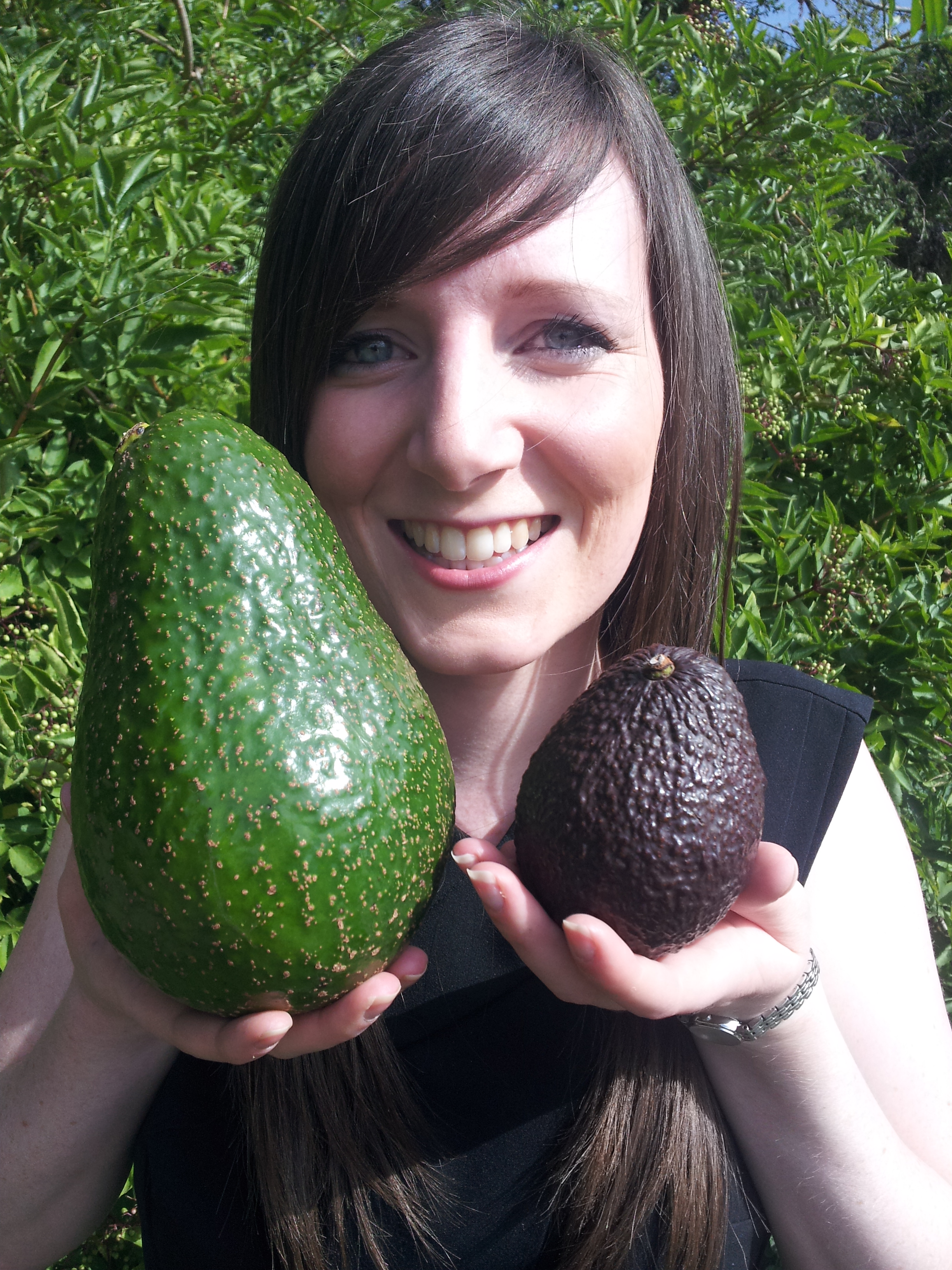
When I read that supermarket group Tesco was going to start stocking the world’s largest avocado, my first thought was that the word for it must already be in wide usage. OK, that was my second thought. My first thought was Yum.

But putting my greed to one side, I quickly Googled the word and discovered to my surprise that Avozilla does not appear to have been in any kind of common currency prior to this announcement. It’s not even in Wikipedia, and everything that’s anything is in Wikipedia. Except for Wordability of course, but that’s just a matter of time.

All of which makes me slightly sceptical about the Avozilla. The way it has been hyped and covered suggests it is a new variety of avocado. The press release trumpets that the fruit “is extremely rare and comes from just four trees grown by one of the world’s biggest suppliers of avocados, in South Africa.” Tesco salad buyer Emma Bonny said: “The Avozilla has a fantastic taste with a rich, juicy, buttery texture, and creamy flavour.” As well as its size, the difference in skin colour and texture are also used to highlight that it is a different variety.

Avozilla
Tesco salad buyer Emma Bonny with an Avozilla

Call me cynical, but isn’t this basically just a big avocado? Don’t you already get some avocados with dark skin and some with light skin? Aren’t all the best avocados buttery and creamy? Is this really a new variety?

The answer is surely in the word itself, and not just the fact that it appears nowhere else except in reference to this launch. New varieties are often amalgams of the different fruits which they represent, such as a Papple, or just some other word or scientific term altogether. But the only derivation I can think of for the Avozilla is Godzilla, and that the -zilla suffix is being used here to denote its monstrous size.

Not a normal way of naming varieties and not one I see catching on beyond the world of marketing spin. Applezilla anyone?

Selfies Come of Age

I have been pondering the word Selfie recently. Though not coined this year, it seems to have really emerged into public awareness in the last few months, with a number of mainstream publications focusing on the growth of them or the problems associated with their increasing prevalence. I have been weighing up writing about it for the last few weeks.

A Selfie, in case you don’t know, is a photograph that you take of yourself, normally with your phone, and then share with nearest and dearest via social media. A trend for some time, 2013 is the year when it has become cemented in the English language.

Oxford Dictionaries agrees. In the latest quarterly update to Oxford Dictionaries Online, Selfie has proudly taken its place as a new word. It’s one of a number of words that have taken a refreshingly short time to reach Oxford’s online annals, with Phablet, Space Tourism and Street Food others which seem to have been recognised relatively quickly.

There are also a couple of Wordability favourites making their debuts. Bitcoin was recognised earlier this year as an important word in the ongoing financial saga around the world, while last year’s triumphant Omnishambles has now sealed its emergence with its own entry.

Overall, it is an entertaining update. The challenge now is to write a coherent sentence feature Babymoon, Vom, Twerk, Flatform and Digital Detox. After all of that, I’ll need a glass of Pear Cider.

Will the Olinguito Ride the Hyperloop?

Two new words for brand new concepts have appeared on the scene this week, but that is the only thing that links them. What is interesting about them is how they are at almost opposite ends of the spectrum when it comes to the objects for which they have been coined.

First out of the blocks was the Hyperloop, the name of a putative high-speed link of the future between San Francisco and Los Angeles. Proposed by entrepreneur Elon Musk, the Hyperloop would place passengers in a vehicle which is propelled along a tube at enormous speeds, covering the distance between the two cities in half an hour.

Will this ever happen? At this stage, who can say, meaning that Hyperloop may be a word of much discussion in 2013, but could have absolutely no linguistic future because the thing which it describes may never exist. Of course if it does, Londoners undertaking tube travel may become very jealous of the version of tube travelling happening 8,000 miles away.

The nature of this word is diametrically opposed to Olinguito, which has also been unveiled this week. The Olinguito is a newly identified carnivore living in cloud forests in South America, the first newly named carnivore in 35 years.

So we have something that doesn’t exist with a name, and something which has always existed but has never had a name up to now. Both are great new words of this year. Something man-made versus something natural.

I suspect that the one which has had to wait much longer for recognition will be the one that makes it through to full lexical recognition,

Phubbing Becomes A Phenomenon

Lets be honest. We’ve all done it. I’m not proud of it but I’ve definitely done it. And I’ve had it done to me as well. What am I talking about? Phubbing.

Phubbing, an amalgam of phone and snubbing, is defined as ‘The act of snubbing someone in a social setting by looking at your phone instead of paying attention’. The word is the brainchild of Melbournian Alex Haigh, who has set up the hilarious Stop Phubbing website as a way of drawing attention to the practice and allowing people to fight back and stop it. So successful has this been that the term is now going viral.

Stop Phubbing
Anti-Phubbing poster

It’s a brilliant word, undoubtedly one of my favourites of the year. Why, I hear you ask? Well firstly, it passes the test of being a semantic gap needing filling. This is a modern phenomenon, it is an emerging aspect of modern life, and when you talk to people about it, they all agree they’re aware of it. Well they would agree if they weren’t so busy sending Tweets.

Secondly, it’s a great neologism in its own right and blends the right two words to get the new one. Phubbing retains enough of the sense of its ancestry to aid understanding and stand alone, and also sounds just judgmental enough to make its point. It is also infinitely better than other options. I don’t think phignoring or phold-shouldering would really have cut it.

And its usage is already taking off and moving away from the original source. The day after reporting the advent of the word, The Independent used it in perfect context in a story about how crossing the road is dangerous when you are glued to your phone.

So phubbing as both a concept and a word is here to stay. I think we can all agree that it’s rude and people shouldn’t do it. Unless they’re reading Wordability of course, in which case it’s absolutely fine.

Zero-Hours Contracts On The Rise

I’m not sure exactly how long zero-hours contracts have been around, but their sudden ascent to the front pages suggest this is a phrase that has found its place in history in 2013.

The contracts, which basically offer no guarantee of hours or pay to those employed on them, have been getting wider coverage over the last few months.

However, a new report that suggests that one million people are employed on such contracts has elevated the word to the top of public consciousness, suggesting it may prove to be a political hot potato for all parties over the next few months. It is certainly a term that we are not going to be able to avoid for the forseeable future and is a linguistically neat way of describing a very particular set of circumstances. Or is it too neat, and kind of spirits away the difficulties faced by people on these contracts in a simple phrase. The term potentially masks the reality of the issues.

Either way, expect to see it jostling near the top of words of the year lists at the end of 2013.

The Future of The

Here’s something I didn’t think I would be writing about on Wordability. The lifeblood of this blog is new words in the English language. Who knew that a proposal would come along for a new letter.

The source is unlikely – Australian restaurateur Paul Mathis. And in his sights is the word ‘The’.

Mr Mathis believes that in this day and age of Twitter and other short form messages, which has led to the shortening of a number of words, the word ‘the’ is so common that it should be replaced a new symbol, which he has designed as “Ћ”.

So determined is he to see this symbol adopted as a new way of typing ‘the’ that he has developed a smartphone keyboard app for it, though with Apple so far unwilling to embrace it, it may prove hard for the idea to get off the ground.

He said: “The Benedictine monks developed the modern version of the ampersand in the Middle Ages, when they were hand-copying religious texts. I’m not putting myself in the same league, but who knows – maybe in 500 years’ time people will be amazed that there was a time when we didn’t use ‘Ћ’.”

I think Mr Mathis is right – ‘the’ will not be replaced any time soon with its own letter. But the ampersand point is well made, and as text speak becomes more prevalent, and shortened forms of words more common, who knows whether we will see an evolution of the alphabet itself and the arrival of new symbols for the most common words in the language.

Don’t rule out the possibility that this is the very beginning of what might prove to be a fundamental change in the English language.

London’s New Way To Fly

Ambitious plans have been unveiled for tackling some of London’s most congested roads. But while I applaud the ambition, I am less sure about the new word which these proposals may unleash on an unsuspecting world.

A major part of the plan would see the six-lane flyover at Brent Cross covered over with a new pedestrianised area, with the road disappearing under the ground instead. Then new proposed highway has been dubbed a ‘Flyunder’.

I have often said on the cyber pages of Wordability that new words emerge when there is a linguistic gap which needs filling. But there are already some quite serviceable words to cover such a road. How about underpass. Or tunnel.

Flyunder may tick the box of making the proposal sound sexier and more 21st century, but it is what it is – a great big road under the ground. And we all know that underground, you can’t fly. Sadly, if it had been announced that there were plans to build a Burrowunder, it just wouldn’t have had the same ring.