Meggings – The Fashion Dreggings

They’re the latest thing to hit the high street. They’re leggings. For men. So they’re Meggings! Of course they are.

This piece of linguistic tomfoolery was probably the inevitable outcome once jeggings had taken a foothold in the market. The jeans/leggings combo may be a fashion success, but I fear they have opened the floodgates to what may become a new kind of lexical hybrid.

It is far from certain that anyone will ever wear Meggings, but if they do, we can only fear what might come next. Dress your dog in Deggings, combine them with a skirt and call them Skeggings, decorate them with breakfast and name them Eggings, stick them on a leotard and call them,er, Leggings. But you get my point.

Anyway, this is all a bit unnecessary. Surely they should just be displayed as leggings, albeit in menswear. After all, there are male and female equivalents of certain types of clothing and nobody has felt the need to differentiate them neologistically in the past. When women started wearing trousers, nobody thought to call them Wousers. Different kind of thing altogether, really.

The Top Words of 2012

And so the time has come for Wordability to reveal its word of the year. But I’m not quite going to do that. Because I don’t think that one word does justice to 2012. So in total, Wordability has five words of the year. And a new book – but more of that anon.

The danger of picking one word is that it only tells some of the story. The Oxford Dictionary choice of Omnishambles absolutely gives us a word that says a great deal about 2012. But what about the Olympics, and that incredible feeling that careered across Britain throughout that glorious summer. To ignore that is to miss a part of the year.

And should we go with a new word or something old which has resurfaced? Wordability has shown over the year that brand new words and redefinitions of existing words are equally important when it comes to semantic change in the English language. So I think it is important to include both.

So without further faffing, here are my top five words of the year:

New Words of the Year

Mother Flame: The journey of the Olympic Flame started the Olympics for real for most people in the UK, and the crowds who lined the streets throughout the country to see it were surprisingly large and enthusiastic. The whole process spawned a raft of new words associated with the procession.  Mother Flame, the original flame travelling with the torch and used to relight it when it went out, was my favourite.

Eastwooding: An odd choice? Yes. Eastwooding as a word was never destined to last more than five minutes. And yet what a five minutes. Spawned by Clint Eastwood’s extraordinary empty chair conversation with Barack Obama at the Republican Convention, Eastwooding became a social phenomenon as people raced to share photographs of themselves interacting with unoccupied items of furniture. I have chosen it as a word of the year because in many ways it is the quintessential demonstration of how a new word can arrive and thrive in our interconnected world. And then, just as quickly, fall off a cliff.

Gangnam Style: The music sensation of the year and a phrase that has entered the language. You only have to hear of anybody dancing Gangnam Style to know what kind of performance they are putting in, and plenty of famous people have been queuing up for their five minutes of strutting their horse-like stuff.

 Re-emergence of the Year

There were two contenders for this. Omnishambles, as we know, curried favour elsewhere. But I have plumped for Ineptocracy, a term for a form of government in which those utterly incapable seem to grab the top jobs. Like Omnishambles, it sums up the slightly random state of Government which seems to prevail in many countries this year, and the attitude towards them from the people. And from a Wordability point of view, Ineptocracy is the most viewed article and most searched for term across the blog in 2012, so it is clearly a word demanding of attention.

Redefinition of the Year

No dispute about this one – the furore over Misogyny in Australia takes this award. The global argument this led to about what the true definition of the word is, and whether Australian lexicographers were right to amend their definition, really encapsulates what semantic shifts tell us about changes in society.
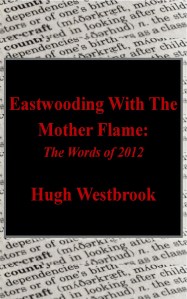
So these are my top five, but so many other words have caught my attention – Goalgasm, Lesula, Papple, Marmageddon, Swapportunity to name just a few of my favourites – that even a list like this does not do it justice.

So I have produced a book of the words of the year, which is available right now from the Kindle Store on Amazon, just by clicking here. In it you will find more on all these words, and a great deal more. It’s a portrait of not only the language change of the year but a picture of what has really mattered to us as a society over the last 12 months.

Sweden Eliminates Men and Women

There has been a fascinating linguistic development in Sweden, and one that poses a question for a possible future change in English.

Gender politics is a hot topic in the Scandinavian country, and it recently led to the publication of what was described as the country’s first gender neutral children’s book, Kivi och Monsterhund. The gender neutrality came from the use of a new personal pronoun instead of ‘han’ for he or ‘hon’ for she. The word that was used was ‘hen’.

Hen has now taken a step towards official recognition by being included in the country’s National Encyclopedia. So the question for English is: do we need a new word to be created to exist alongside ‘he’ and ‘she’ which allows things to be described without a potential user’s gender?

English already has alternatives. ‘They’ is often used when a person’s sex is unknown. ‘It’ is another possibility, albeit one that seems to depersonalise people. But I think in English, any change would purely be one of practicality, rather than linguistic politics, which seems to be the driving force behind the Swedish decision.

Which is not to say that English does not have inherent sexism built in, it is just that I don’t think this is it. The English language is full of what can be called unequal lexical pairs, where the male and female equivalents of a word carry more differences in meaning than just the gender difference. Think about master and mistress. On the surface, they should be equivalent titles, like Mr and Mrs. But a Master of Arts has expertise in an academic subject; a Mistress of Arts sounds like the kind of person who would charge a premium for personal services. And in that vein, a man who is active between the sheets is a gigolo, praised for his virility. Language unkindly has pejorative words like slut for the female equivalent – language summing up the prevailing sexist attitudes of centuries gone by.

So does language reflect thought or condition it? I think it is the former, though I have long been fascinated by the Sapir- Whorf hypothesis, which posits that the language you speak affects how you think, so if certain words are not present, your world view is affected. This is a complex subject, not easily dismissed, but the absence of a word does not stop a person having a thought. Instead, we should see language as a reflection of where it has come from and watch how changes in society then permeate through to everyday speech.

Which brings us back to Sweden, and a pronoun whose creation seems very clearly to represent a mood in the country, as well as being a great catalyst for a conversation about political correctness gone too far. Is this a change that is needed in English? Probably not. Could it be brought in even if it was needed? Definitely not.

There is one context in which it would be useful, however. The Wordability family will expand later this year with a second child. I currently refer to the growing baby as ‘he or she’, as I don’t want to commit myself, and as pointed out above, ‘it’ just seems too clinical and object like.

Maybe I should just adopt ‘hen’ for the foreseeable future.

Culturomics: The Challenge for Wordability

I have been thinking a lot about Culturomics recently. Frankly, it has given me a headache. But it has also reminded me that if Wordability were to be up to date with ever single new word that enters the English Language, I would be glued to my keyboard the whole time and would neither eat nor sleep.

Culturomics has existed as a word and a discipline for two years. It is a very exciting linguistic development, and one that is only possible because of advances in technology. With millions of books now existing in digital format, courtesy of Google, scientists are able to analyse this vast amount of data to derive conclusions about the English language that have never previously been possible.

The first paper, published at the end of 2010 in the journal Science (free log-in needed to view the link), analysed 4% of all published material and used this to give an indication of the number of words in the English language. The estimate came out at more than a million, far more than recorded by dictionaries.

This year, a new paper by Alexander M. Petersen, Joel Tenenbaum, Shlomo Havlin and H. Eugene Stanley has given Wordability something to think about. Rejoicing in the catchy title Statistical Laws Governing Fluctuations in Word Use from Word Birth to Word Death, the paper applies science to the life of words and comes up with rules to explain the birth and death of words and the evolutionary processes that govern their existence.

Leaving aside the many complex equations and use of Greek letters, the writers come to some interesting conclusions. More than 8,000 words entered the English language last year, so you can understand why Wordability will only track those that really start to hit the headlines. It also says that there is a change in the rate at which words are born and die, with more words dying off and fewer words coming in, though it says that those that do arrive have greater staying power because they describe completely new things, such as in the field of technology.

What is particularly interesting is the way that evolutionary theory can be applied to words. As the authors say, “words are competing actors in a system of finite resources”. Factors such as being favoured by modern spell checkers can given a word “reproductive fitness” and allow it to survive against other words of a similar semantic bent.

I have thought about this paper quite a lot, and find myself wondering if it will actually end up marking a point in time and that the evolutionary rules are about to change. Is the technology which allows Culturomics to flourish and these observations to be made now going to be the agent which changes that evolutionary process?

The authors say that it takes around 30-50 years for a word to be fully accepted and to either make it into a dictionary or disappear into linguistic obscurity. I wonder whether this will now change, and a new pattern will start to emerge. I have bemoaned in the past how long it sometimes takes dictionary makers to recognise words which have gained significant currency. In our interconnected world, where ideas and words can fly across the globe and become accepted almost instantly, the evolutionary pattern identified by the authors may start to change. I suspect it may become quicker for words to become accepted, and that the survival characteristics that will govern this will also change. Words that are slightly silly, that have the capacity to be shared on social networks, that describe an action people can participate in, will be the ones that evolve rapidly and see off the other competing words around them.

It is a fascinating concept that words fight the same survival battles as species on earth. In the 21st century, it will be interesting to see what factors allow them to survive.

Why Dinosaurs and Birthdays are Banned

The New York department of education has been receiving a great deal more publicity than it could possibly have imagined following the release of a recent edict.

Officials have banned the use of 50 words from future tests in order to allow “students to complete practice exams without distraction”. And it is the nature and reason surrounding many of those bans that is causing, frankly, bemusement.

So exams will no longer be able to use the word ‘Birthday’ in case any Jehovah’s Witnesses, who don’t celebrate birthdays, are put off their work; ‘Dinosaur’ is out, not a word the creationists will want to see; ‘Pepperoni’, because it’s junk food; ‘Computers in the home’ and ‘homes with swimming pools’, as not every child could afford such luxuries; ‘Celebrities’, frankly, I haven’t seen any attempted explanation for this one. And so it goes on, and the complete list is quite something to behold.

Now I’ll admit, this type of thing is not normal Wordability fare, as it is not celebrating the creation of an entertaining new word. But language change is as much about words going out of fashion as coming into fashion, so I have found myself intrigued by this story.

And, to be honest, a little worried. New York officials have clearly defended themselves and even pointed out that words like ‘Hurricane’ or ‘Wildfire’ are banned in Florida because of local worries there. But banning words, proscibing language that is or is not acceptable, smacks of a dangerous level of control and a worrying sense of governance.

Language change is a natural phenomenon. It cannot be forced. Thankfully, people in the major English-speaking countries of the world do not live under a language policy that attempts to control people by making certain words illegal. We all come to know that some words cause offence and shouldn’t be used, but this kind of thing can be taken too far and can undermine efforts to outlaw words which are genuinely offensive.

The officials may also want to look at the nature of the criticism they have received, and what it says about the way language is actually used. People have been laughing at them. The reaction is one of derision. And that is because the words they are trying to ban are so basic, so fundamental to everyday conversation, that to ban them is almost to render language useless. Added to that the concepts are so normal that they cannot be banned, and it can’t be assumed that their linguistic removal will suddenly mean that children no longer know about them.

Issuing rules about banning words, when the words that are chosen are so grossly inoffensive to begin with, simply invalidates any reasonable message that people are trying to get across and confirms that people know how language changes – gradually, and not by force.

UPDATE: New York’s education officials have now changed their mind and ditched the banned word list following the raft of adverse publicity. I like to think that Wordability played a tiny part.

How The Turkeys Got Stuffed

To celebrate the holiday season, Wordability brings you a festive short story:

It was headline news when turkeys voted for Christmas.

Farmer Colin Walters had assumed the ballot papers in the turkey coop were the work of ironic kids. But then he noticed how the turkeys were jostling each other to get as much feed as possible, and when he joked “you really did vote for Christmas”, he was staggered when one replied “it was about time”.

Within days, Barry the Turkey was on television, explaining how turkeys had finally decided to accept the inevitable and acknowledge they were merely Christmas fodder for the masses.

People were not sure what amazed them more – that turkeys were so self-sacrificing, or that Barry could talk. Whichever one it was, this show of intelligence convinced many that these sentient beings could not adorn their Christmas table, and that year, nut roasts ran short on supermarket shelves.

Buoyed by his supporters on radio and the internet, Barry described his love for language and launched his war on cliche. To that end, he unveiled his chocolate teapot, specially tempered to avoid melting. Shortly afterwards, he flew to the Arctic and sold a snow machine to a group of eskimos.

But when he returned and checked out his legions of fans on website forums and phone-in shows, he found they had changed. His murdering of their basic phrases had deprived them of the only way they had of expressing themselves, and suddenly angry invective trailed off into oblivion as the self-styled arbiters of modern-day opinion found they had no resources with which to finish their sentences.

And so Barry became a figure of hate as a popular movement to turn him into twizzlers was formed. His achievements were forgotten and turkeys went back to eating the minimum of what was put in front of them.

Barry locked himself up and threw away the key.

What is Wordability?

There is no such word as Wordability. But then again, there is. Because I’ve just used it. So let’s start again.

Wordability is the ability of a language to create and assimilate new words. English is particularly adept in this regard. English has great wordability. And that is the subject of this blog.

Of course, I made that definition up. But when I was toying with blog titles, Wordability emerged as a currently non-existent word which nonetheless sounded like it should exist. Moreover, it felt like it aptly summarised what I was trying to get across. And that is that we should celebrate the English language’s remarkable ability to create new words. It skilfully adds prefixes and suffixes to existing words, it borrows with reckless abandon from other languages, and it brutally ascribes new shades of meaning to old words. And myriad other things as well.

In some ways, I am an unlikely champion of the ever-changing nature of language. I am linguistically pedantic by nature, and can rant with the best of them over an error or usage which I find aurally offensive. But as a post-graduate linguist, I learned to acknowledge that language is defined by its users, not by books, and that it changes all the time according to what speakers are doing. I am both a pedant and a non-pedant by turns. If only there were a word for someone who can straddle both states simultaneously. Bi-pedant? Schizopedant? Pedant-on-the-Fence? All suggestions welcome.

If you search for wordability, you won’t find it in any official dictionary, so it can’t currently be added to the more than one million words in English that have been identified by the Global Language Monitor. It does appear in the online Urban Dictionary, which defines it as “being able to create a new word and having the skill to place it in casual conversation, without anyone else noticing that it’s not really a word.”

When I found that definition, I almost ruled out Wordability as my title. But The Urban Dictionary is not an official arbiter. It is an admittedly wonderful collection of words and usages contributed by online users around the world. But it has no actual jurisdiction if I wanted to choose a different meaning. So that’s what I did.

I did briefly toy with alternatives. Wordalicious? Too much like a description of cake. Wordaging? Too much like a definition of some depraved sexual activity. New Words in the English Language? Too much like something that would simply make you go to sleep. So Wordability it was.

What did surprise me was finding a punchy web address to support it. Wordability.com was gone, snapped up by a Canadian transciption service. Wordability.co.uk was registered to a yet to be revealed online presence. Wordability.ltd.uk, which hadn’t occurred to me anyway, was taken by an online game called Wordability, which appears to be a variant on Scrabble, its main innovation seeming to be that it cares little which direction your word runs in, so long as it runs.

But wordability.net was available, and is now starting its quest for some of the odder and more entertaining new words and usages entering the English language. Let the journey begin.