Exclusive: New Words on Oxford Radar

The recent coverage of the inclusion of Twerking in Oxford Dictionaries’ latest online update showed just how much people genuinely care about the state of English and the words that we use.

But lexicography moves on, and the guardians of the Oxford lists are already looking at what the next new words to be included might be.

In an exclusive interview, Wordability spoke to Fiona McPherson, Senior Editor, Oxford Dictionaries, who revealed some of the words which are currently being tracked by lexicographers and which may be the ones which feature prominently in updates of the future. You can watch the full interview here:

So to summarise, the words she selected are:

Bacne – basically, acne on your back

Hatewatch – an old Wordability favourite, first identified last year. The practice of watching something you really don’t like, and chatting to your friends about it while hating it.

Dosant – a cross between a doughnut and a croissant

Legsie – hot on the heels of Selfie’s recent inclusion, a photograph you take of your own legs. One can only imagine where this will end, but politeness means I will decline to suggest it

Appisode – an online episode of a television show

Phubbing – one of the great new words of this year, a personal favourite and one which has already entered everyday use in my household. Phone snubbing, using your smartphone when you are supposed to be talking to someone else

Nocialising – See above

Meme – not a new word, but a new sense, as Meme, a cultural idea which passes from person to person, now starts to become a verb

Lolarious – LOL branches out into its own verb. Not sure what David Cameron’s version would become.

So that’s the latest list – now we sit back and wait to see which of them finally makes it all the way through the selection process.
You Say TomTato

If I told you that somebody had invented a plant which grows both tomatoes and potatoes, you’d think I was making it up. Or ask me what the point of it was.

But the TomTato plant has indeed gone on sale in the UK. Plant one and you will get a bumper crop of sweet tomatoes on the top half, while the roots will sprout copious potatoes.

I have to say that I find the idea of this kind of grafted plant somewhat peculiar and it leaves me wondering what linguistic delights we may have to look forward to in the future. Brocberries, auberfigs, caulicumbers anyone?

For now though we will simply have to enjoy a plant which can yield us both chips and ketchup simultaneously.

Twerking Has Not Killed English

Oxford Dictionaries Online had a major PR success recently, when its quarterly update included the word Twerk, just as Miley Cyrus was hitting international headlines for performing the provocative dance move at the MTV Awards.

Twerking, for those of you who have been hiding under a duvet for the last month to avoid it, is officially defined as “to dance to popular music in a sexually provocative manner involving thrusting hip movements and a low, squatting stance.”

Of course, there were those who bemoaned this development as the death of the English language, or others who criticised lexicographers for responding to the news reports by adding the word in. Then there were those who don’t know the difference between Oxford Dictionaries Online and The Oxford English Dictionary, and proclaimed that Twerk had made it to the OED’s hallowed pages. Which it hasn’t. Not yet, anyway.

Now that the twerking dust has settled I feel it my duty to acknowledge this furore, and also to note that while Twerking has been around for 20 years, 2013 is the year of its populist birth, the year that it really came into public consciousness. It’s a bit like Fracking in that respect, an old word for an established technique for extracting fuel that has emerged front and centre in 2013.

Undoubtedly Twerking will feature as one of the words of this year, when such lists come to be compiled, but it certainly shouldn’t be winning any garlands. This is not the year of its birth, merely the year of its recognition, and while it has undoubtedly played a big part in 2013, other terms have been more prominent and will prove to be more deserving.

And as for the accusation that Oxford Dictionaries jumped into Twerking for its update because of the news agenda, think again. It takes much longer than a couple of days for a new word to be added, and the coincidence of the Cyrus dance and the Oxford announcement was nothing more than that – coincidence. And if you don’t believe me, Fiona McPherson, Senior Editor, Oxford Dictionaries, confirmed this to Wordability. And here’s the video to prove it:

Dictionary Gone, Dictionary Still to Come

The changing nature of English vocabulary has been neatly summed up by two recent stories from opposing ends of the linguistic spectrum. Both give us an insight of how our dictionaries might look over the next few years, but reached their conclusions in contrasting fashions.

The first was research by Disney’s Club Penguin into the language used by teenagers online. The result, unsurprisingly, is that for the most part, their parents don’t understand it. So Disney has published a Digital Dictionary as part of its overall online safety campaign as a way of helping parents to understand what their offspring are actually talking about.

So no longer will words like Keed, Dub and Derp be mystifying, while parents will be able to understand that in this context, Sick is good and Jelly is bad, and that is not just because of the after-effects of eating too much trifle.

The interesting thing for language watchers of course is whether the words in this specific dictionary have enough staying power to cross over into mainstream dictionaries, and whether this listing is just a passing fad that will fade into history, or is instead a tantalising glimpse of the OED in 50 years’ time.

And talking of 50 years, research by Lancaster University has given us an idea of how much language has changed over the last 50 years. They analysed millions of books, articles and speeches to come up with a list of the 2,500 most common words in the English language, and compared it with a list compiled half a century ago.

The results were not necessarily that surprising. Marriage, Religion and God are all on the decline, Sex and Celebrity are on the increase. Words such as Mobile, Internet and Computer are fairly obvious new arrivals.

The list of disappeared words really does capture the imagination and speak of a world now disappeared. Servant, Plough, Gaiety, Telegraph, Mill, Coal – all are redolent of times gone by. It is good to see Hunger going, but maybe the departure of Handshake points to a decline in manners.

So while the lexicographers of the future consider adding Yolo, Spinout and Noob to their pages in years to come, if they have to make space in printed editions, will Grammar, Comb and Bless be the things that make way? It is a sneak peek of the dictionary of tomorrow.

Is it a Fruit or is it a Monster?

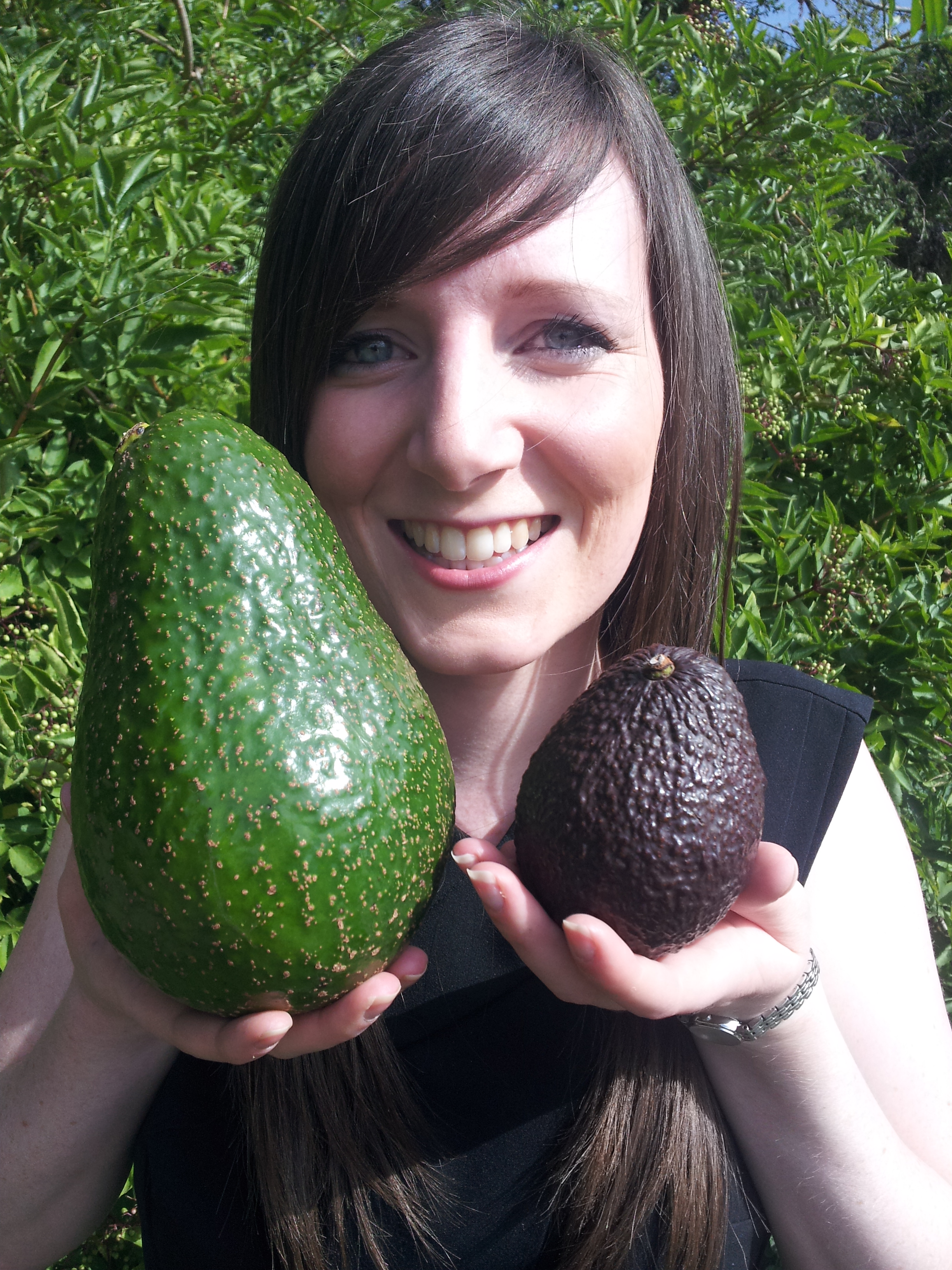
When I read that supermarket group Tesco was going to start stocking the world’s largest avocado, my first thought was that the word for it must already be in wide usage. OK, that was my second thought. My first thought was Yum.

But putting my greed to one side, I quickly Googled the word and discovered to my surprise that Avozilla does not appear to have been in any kind of common currency prior to this announcement. It’s not even in Wikipedia, and everything that’s anything is in Wikipedia. Except for Wordability of course, but that’s just a matter of time.

All of which makes me slightly sceptical about the Avozilla. The way it has been hyped and covered suggests it is a new variety of avocado. The press release trumpets that the fruit “is extremely rare and comes from just four trees grown by one of the world’s biggest suppliers of avocados, in South Africa.” Tesco salad buyer Emma Bonny said: “The Avozilla has a fantastic taste with a rich, juicy, buttery texture, and creamy flavour.” As well as its size, the difference in skin colour and texture are also used to highlight that it is a different variety.

Avozilla
Tesco salad buyer Emma Bonny with an Avozilla

Call me cynical, but isn’t this basically just a big avocado? Don’t you already get some avocados with dark skin and some with light skin? Aren’t all the best avocados buttery and creamy? Is this really a new variety?

The answer is surely in the word itself, and not just the fact that it appears nowhere else except in reference to this launch. New varieties are often amalgams of the different fruits which they represent, such as a Papple, or just some other word or scientific term altogether. But the only derivation I can think of for the Avozilla is Godzilla, and that the -zilla suffix is being used here to denote its monstrous size.

Not a normal way of naming varieties and not one I see catching on beyond the world of marketing spin. Applezilla anyone?

The Cost of Changing Your Name

It has been the best month I can ever remember for stories about names. Wordability has written in the past about how changing the name of something changes how we see it. What has been interesting this month is to see how many times names have been changed because of the demands of sponsors, and what impact this has had.

First there is the positive, and Farnborough Town’s deal with bookmaker Paddy Power. To get the money, all of Farnborough’s players had to change their names by deed poll. So instead of  Reece Jones, Stephen Laidler and Scott Donnelly read George Best, Paul Gascoigne and David Beckham, while Pele and Lionel Messi are all, genuinely, in the line-up. Manager Jose Mourinho just adds to the comedy. The result of all this is an entertaining story and something genuinely amusing.

Compare this to the reaction to Merthyr Tydfil, who signed a sponsorship deal with an electronic cigarette firm and renamed their ground the Cigg-E Stadium as a result. No laughs this time, instead controversy about the promotion of something which has unknown ramifications on health.

And then there was the name change story which never was. Tennis star Maria Sharapova was supposedly going to change her name by deed poll to Sugarpova for the duration of the US Open in order to promote her Sugarpova line of sweets. Of course this was never going to happen, and simply provided superb publicity for the product, but the idea of the umpires announcing ‘Advantage Miss Sugarpova’ was absurd enough to be ridiculed globally.

So what does all this go to show? That as naming rights become an increasingly important part of sponsorship deals, the name that you choose is absolutely vital. I have said before that we become used to names and our sense of what a person or place is like is governed by what their name is, so to change that is to change our very perception of that entity. In all these cases, perceptions have been changed by the name changes – Farnborough’s players are imbued with ability that they probably don’t have, but may even play better because of their new monikers; Merthyr’s directors find their ground may be perceived as an unhealthy place to go; and Maria Sharapova would have been, well, just silly really.

It was also the month that the latest lists of the most popular names in Britain were unveiled, with Harry and Amelia’s continued lead slightly masking the changes happening underneath. It is not so much that newer names are coming into vogue, it is more that names like John and Rebecca have dipped out of the top 100, which shows how naming fashions are changing at the moment.

But perhaps the most intriguing story came from Tennessee, where a judge, who was not even supposed to be ruling on the subject of a child’s first name, nevertheless ordered that he could no longer be called Messiah, and had to be known as Martin instead. He felt that it would be unfair on the child to grow up with this name in a predominantly Christian locale, adding that Messiah is a title, not a name.

This story above all others shows that what somebody or something is called directly impacts on how we see them. Quotes from the child’s mother suggest she simply saw him as her son with a name she liked the sound of. The growth of Messiah as a first name in the States confirms many agree with her. And yet the perception of that child was different in the judge’s eyes and he saw a different future for that person as a result.

Having named my own child in the last few months, I know just how onerous a responsibility naming can be. And this month’s rash of stories proves the ramifications of getting it wrong.

Selfies Come of Age

I have been pondering the word Selfie recently. Though not coined this year, it seems to have really emerged into public awareness in the last few months, with a number of mainstream publications focusing on the growth of them or the problems associated with their increasing prevalence. I have been weighing up writing about it for the last few weeks.

A Selfie, in case you don’t know, is a photograph that you take of yourself, normally with your phone, and then share with nearest and dearest via social media. A trend for some time, 2013 is the year when it has become cemented in the English language.

Oxford Dictionaries agrees. In the latest quarterly update to Oxford Dictionaries Online, Selfie has proudly taken its place as a new word. It’s one of a number of words that have taken a refreshingly short time to reach Oxford’s online annals, with Phablet, Space Tourism and Street Food others which seem to have been recognised relatively quickly.

There are also a couple of Wordability favourites making their debuts. Bitcoin was recognised earlier this year as an important word in the ongoing financial saga around the world, while last year’s triumphant Omnishambles has now sealed its emergence with its own entry.

Overall, it is an entertaining update. The challenge now is to write a coherent sentence feature Babymoon, Vom, Twerk, Flatform and Digital Detox. After all of that, I’ll need a glass of Pear Cider.

Will the Olinguito Ride the Hyperloop?

Two new words for brand new concepts have appeared on the scene this week, but that is the only thing that links them. What is interesting about them is how they are at almost opposite ends of the spectrum when it comes to the objects for which they have been coined.

First out of the blocks was the Hyperloop, the name of a putative high-speed link of the future between San Francisco and Los Angeles. Proposed by entrepreneur Elon Musk, the Hyperloop would place passengers in a vehicle which is propelled along a tube at enormous speeds, covering the distance between the two cities in half an hour.

Will this ever happen? At this stage, who can say, meaning that Hyperloop may be a word of much discussion in 2013, but could have absolutely no linguistic future because the thing which it describes may never exist. Of course if it does, Londoners undertaking tube travel may become very jealous of the version of tube travelling happening 8,000 miles away.

The nature of this word is diametrically opposed to Olinguito, which has also been unveiled this week. The Olinguito is a newly identified carnivore living in cloud forests in South America, the first newly named carnivore in 35 years.

So we have something that doesn’t exist with a name, and something which has always existed but has never had a name up to now. Both are great new words of this year. Something man-made versus something natural.

I suspect that the one which has had to wait much longer for recognition will be the one that makes it through to full lexical recognition,

Not the End of the World. Literally

There has literally never been a reaction like it. The last bastion of linguistic pedantry knocked over. Reams of invective across the media. And why? Because the Oxford English Dictionary has done its job.

Alleged misuse of the word ‘Literally’ is one of the favourite bugbears of those who delight in nothing more than correcting other people’s grammar and bemoaning the apparent desecration of our beautiful language. Literally means ‘in a literal manner, exactly’, rather than its increasingly common usage as a word of emphasis and exaggeration, they say.

Except that the OED disagrees, and has in fact disagreed since 2011. It’s just that nobody noticed until this week that the definition had been extended to include the sense of emphasis, reflecting the way the word is actually used by speakers today.

Of course I wholly endorse the extended definition. As I have said literally thousands of times, language changes and those who document this need to recognise that evolution and record it, which is what has happened here.

What is funny about this story is that it seems to be the straw which has literally broken the camel’s back. There has been a wonderful outpouring of emotion on the subject. The alleged misuse of literally is the linguistic touch paper which stokes up all pedants, so this is the story which has enraged them more than any other.

But of course it is not the death of English as we know it, as some have suggested. It is just an acknowledgement that the English language is always changing, as the strap line of an excellent blog on new words points out.

Those who are upset by this change should literally get over it.

Phubbing Becomes A Phenomenon

Lets be honest. We’ve all done it. I’m not proud of it but I’ve definitely done it. And I’ve had it done to me as well. What am I talking about? Phubbing.

Phubbing, an amalgam of phone and snubbing, is defined as ‘The act of snubbing someone in a social setting by looking at your phone instead of paying attention’. The word is the brainchild of Melbournian Alex Haigh, who has set up the hilarious Stop Phubbing website as a way of drawing attention to the practice and allowing people to fight back and stop it. So successful has this been that the term is now going viral.

Stop Phubbing
Anti-Phubbing poster

It’s a brilliant word, undoubtedly one of my favourites of the year. Why, I hear you ask? Well firstly, it passes the test of being a semantic gap needing filling. This is a modern phenomenon, it is an emerging aspect of modern life, and when you talk to people about it, they all agree they’re aware of it. Well they would agree if they weren’t so busy sending Tweets.

Secondly, it’s a great neologism in its own right and blends the right two words to get the new one. Phubbing retains enough of the sense of its ancestry to aid understanding and stand alone, and also sounds just judgmental enough to make its point. It is also infinitely better than other options. I don’t think phignoring or phold-shouldering would really have cut it.

And its usage is already taking off and moving away from the original source. The day after reporting the advent of the word, The Independent used it in perfect context in a story about how crossing the road is dangerous when you are glued to your phone.

So phubbing as both a concept and a word is here to stay. I think we can all agree that it’s rude and people shouldn’t do it. Unless they’re reading Wordability of course, in which case it’s absolutely fine.